






Audi Revolut F1 Reveal
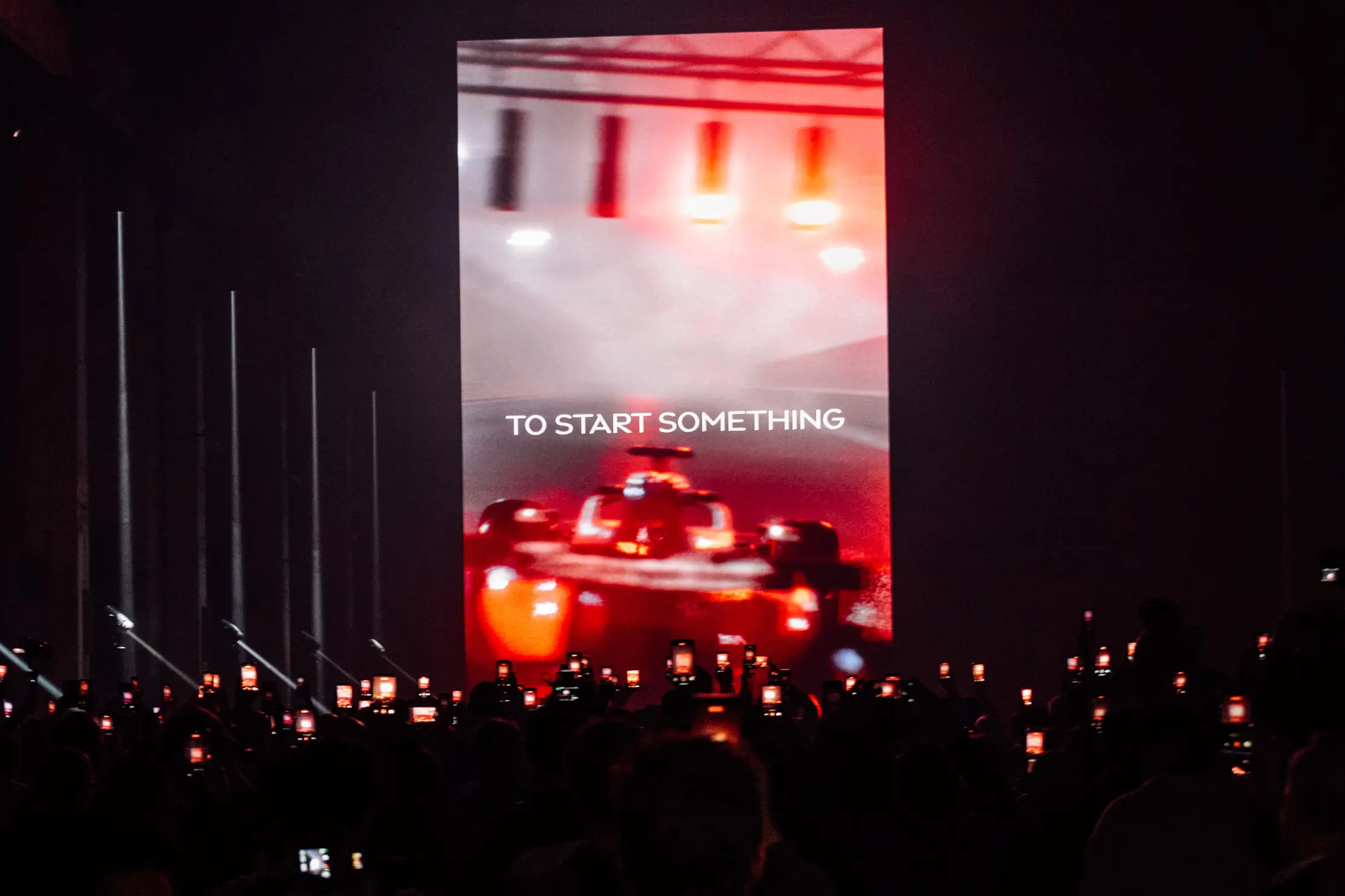
AUDI | F1 Reveal
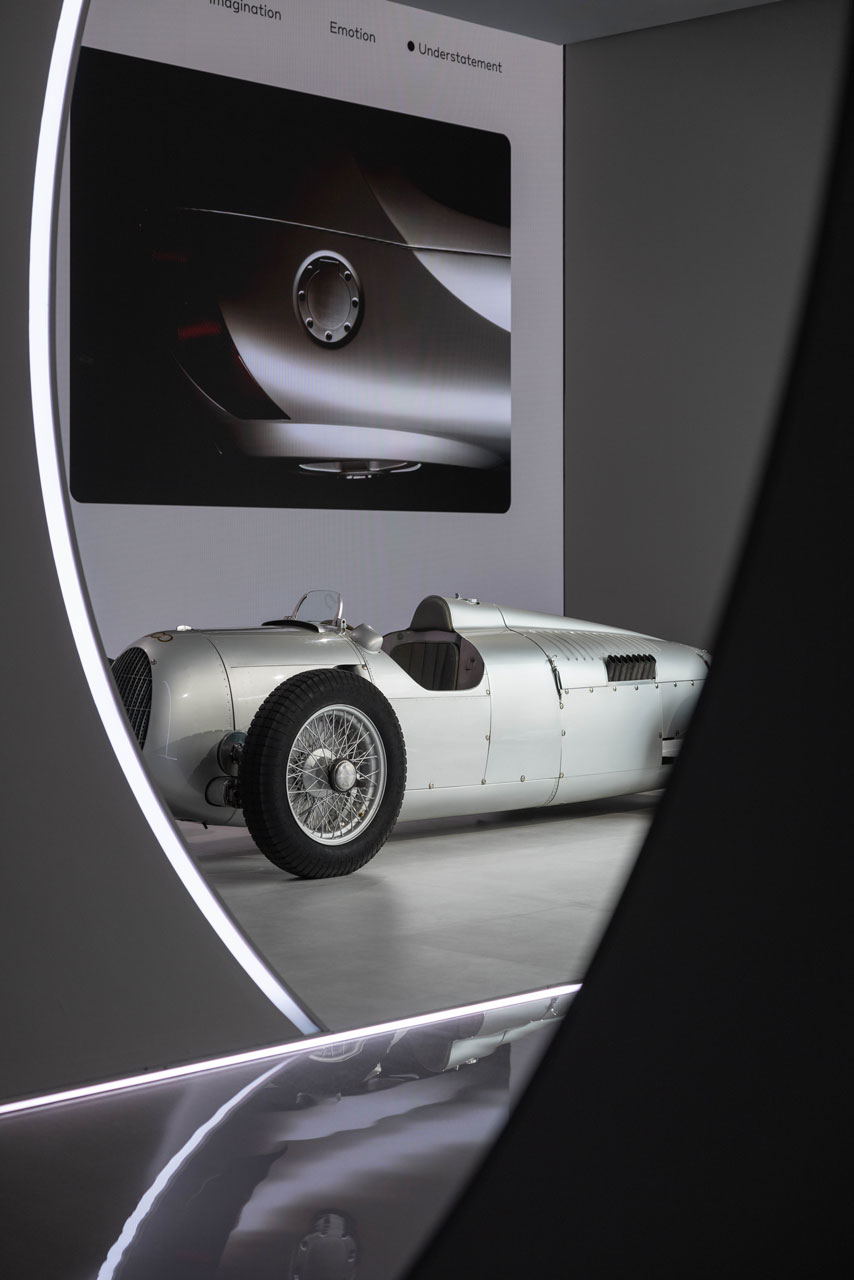
Feel Audi
AUDI | IAA mobility
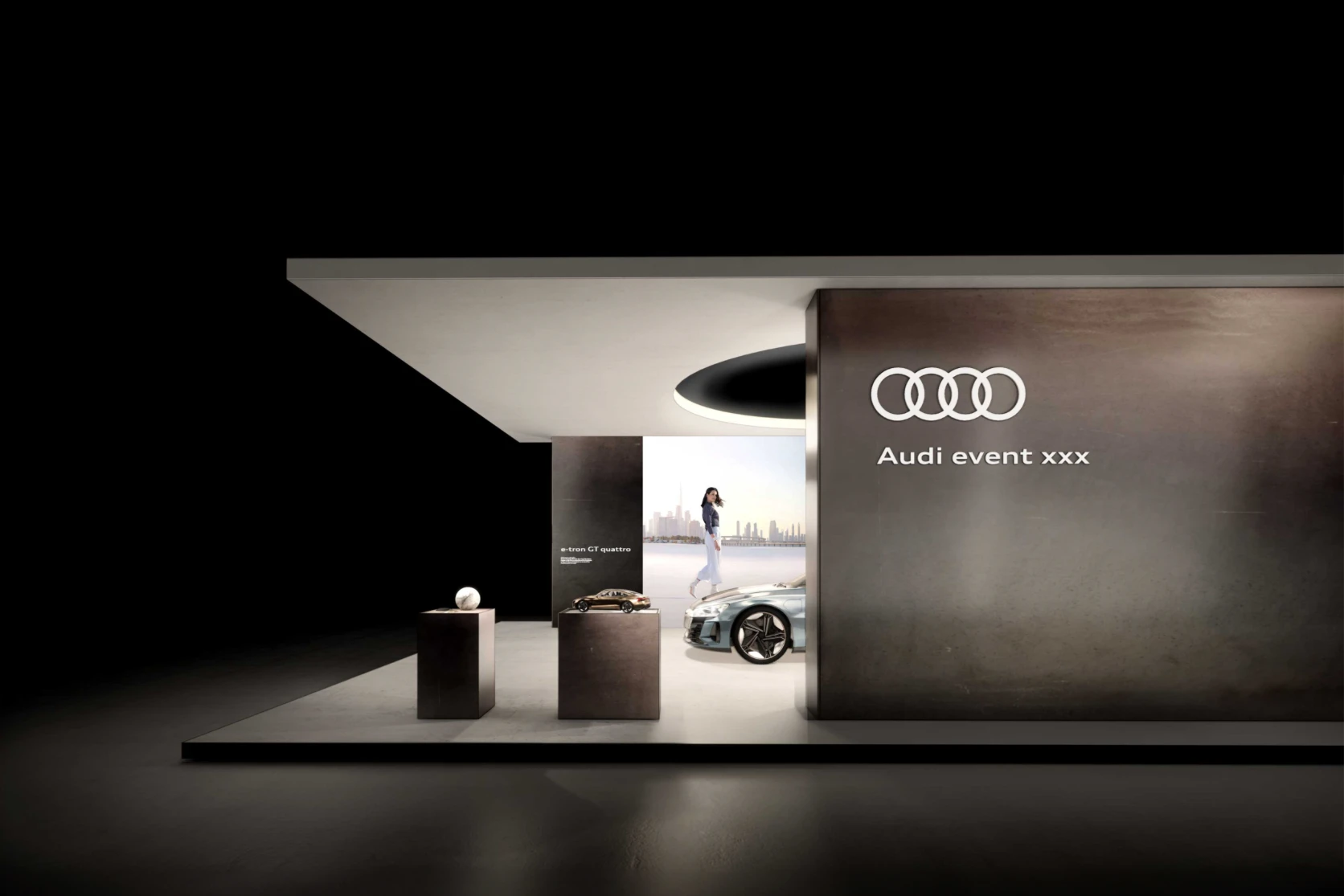
Audi Brand in Space Guideline
AUDI | Guideline
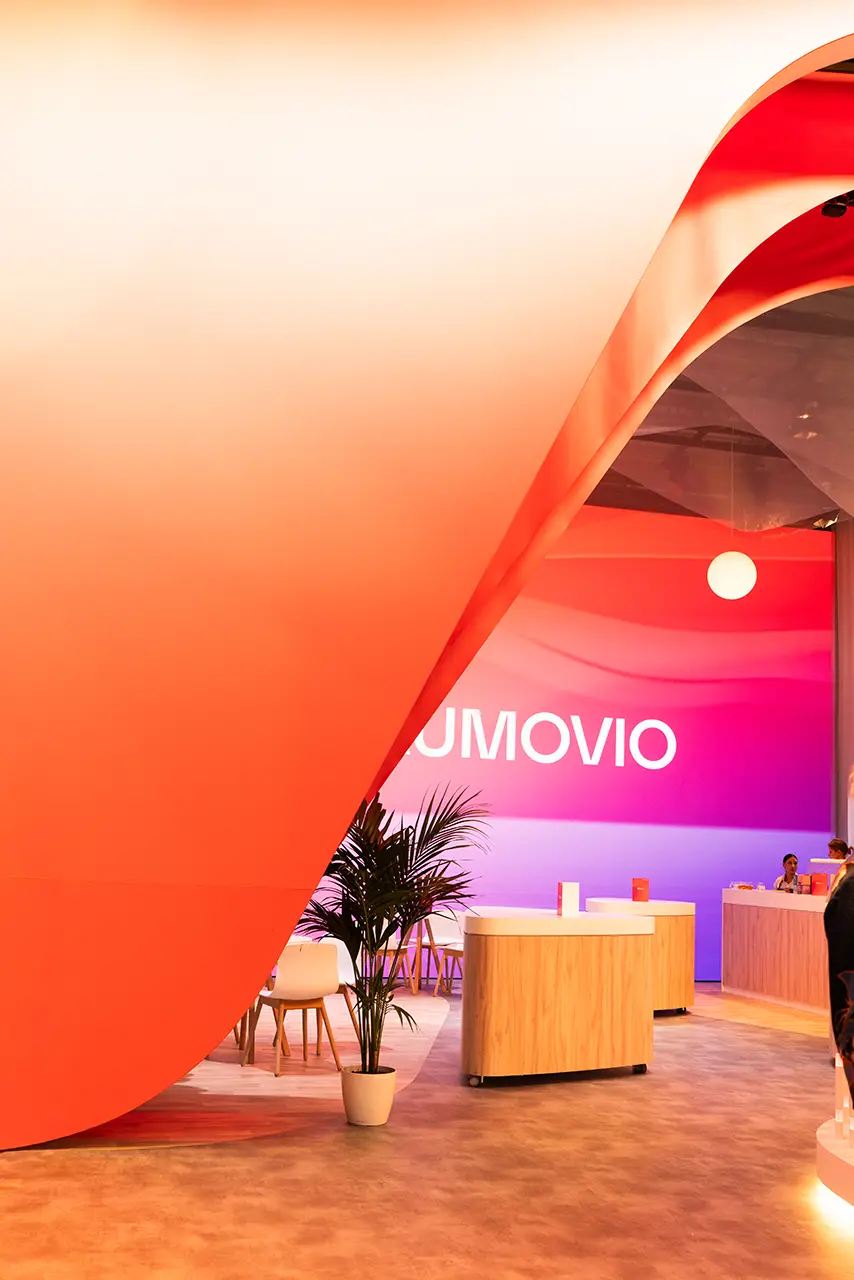
Inspired by Future. Driven by Technology.
Aumovio | IAA

Brand centre, meeting place and event location in Nanjing
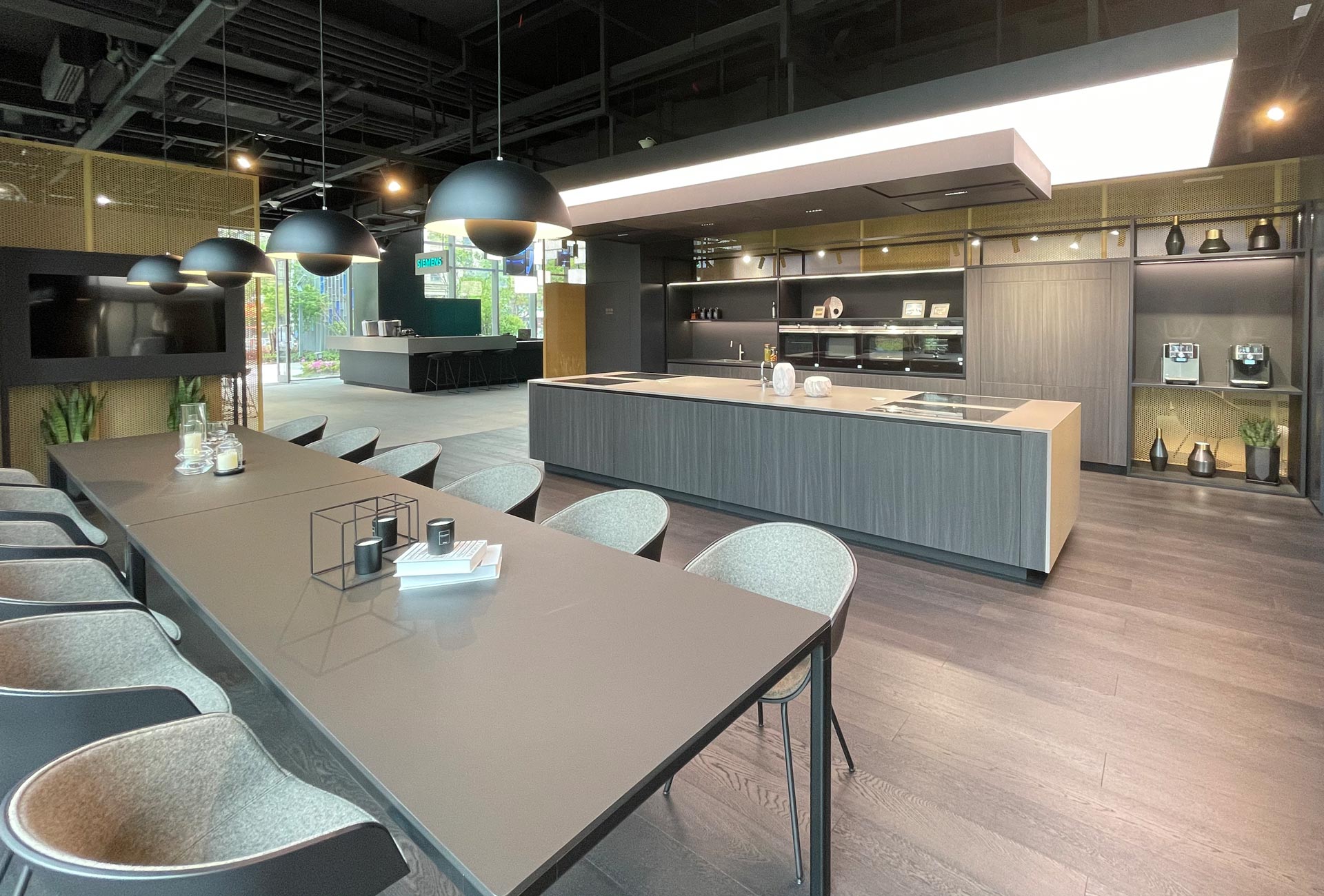
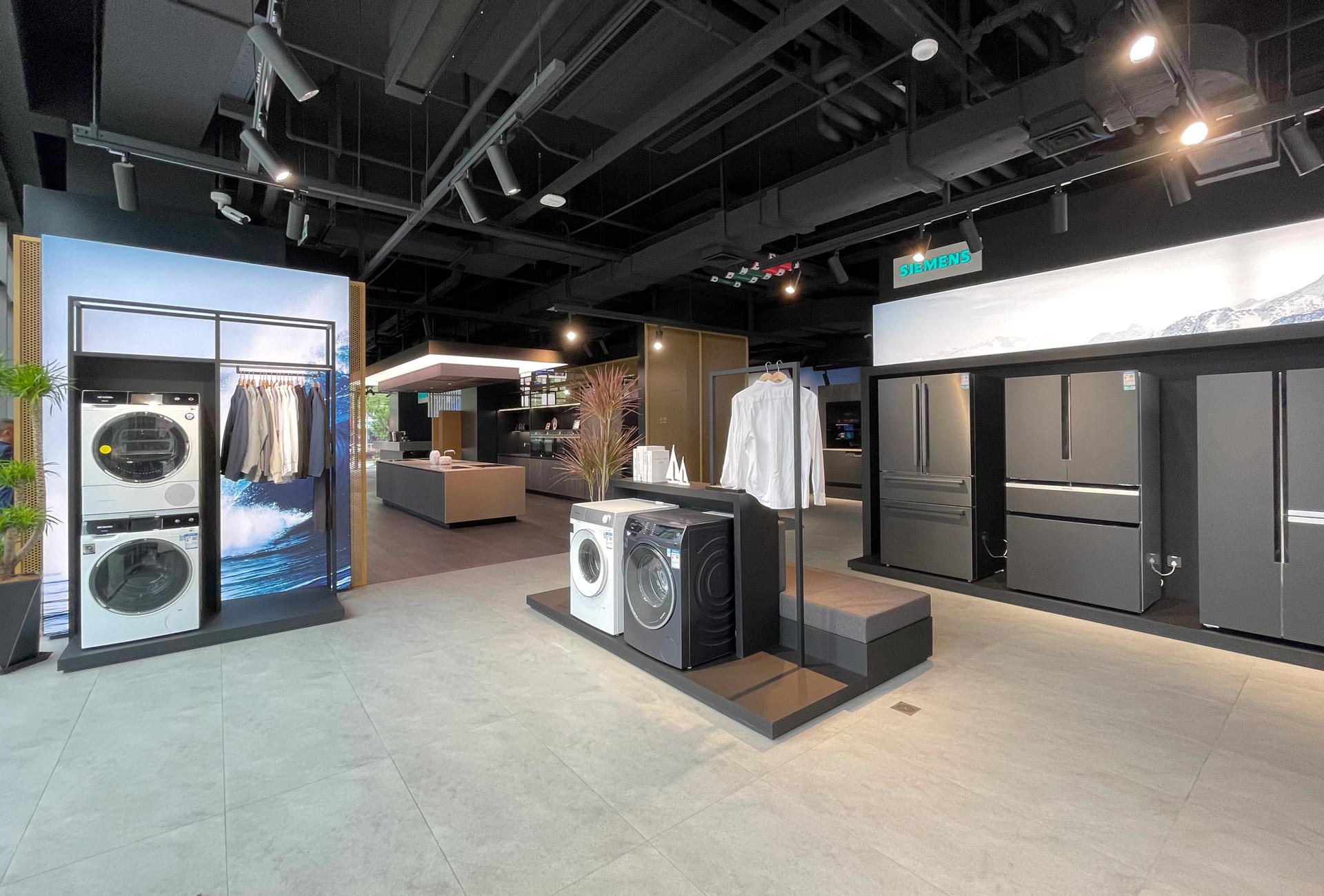
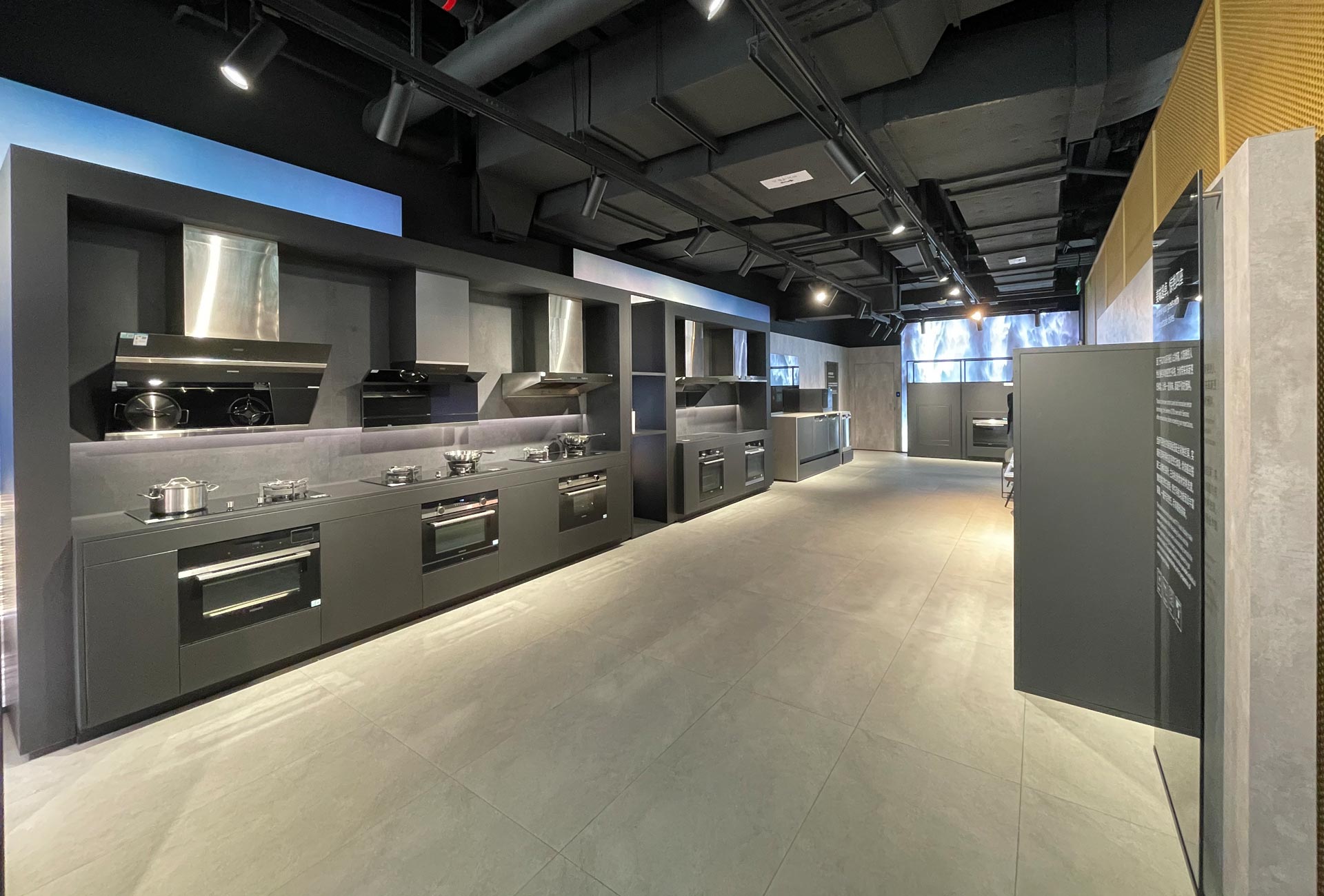
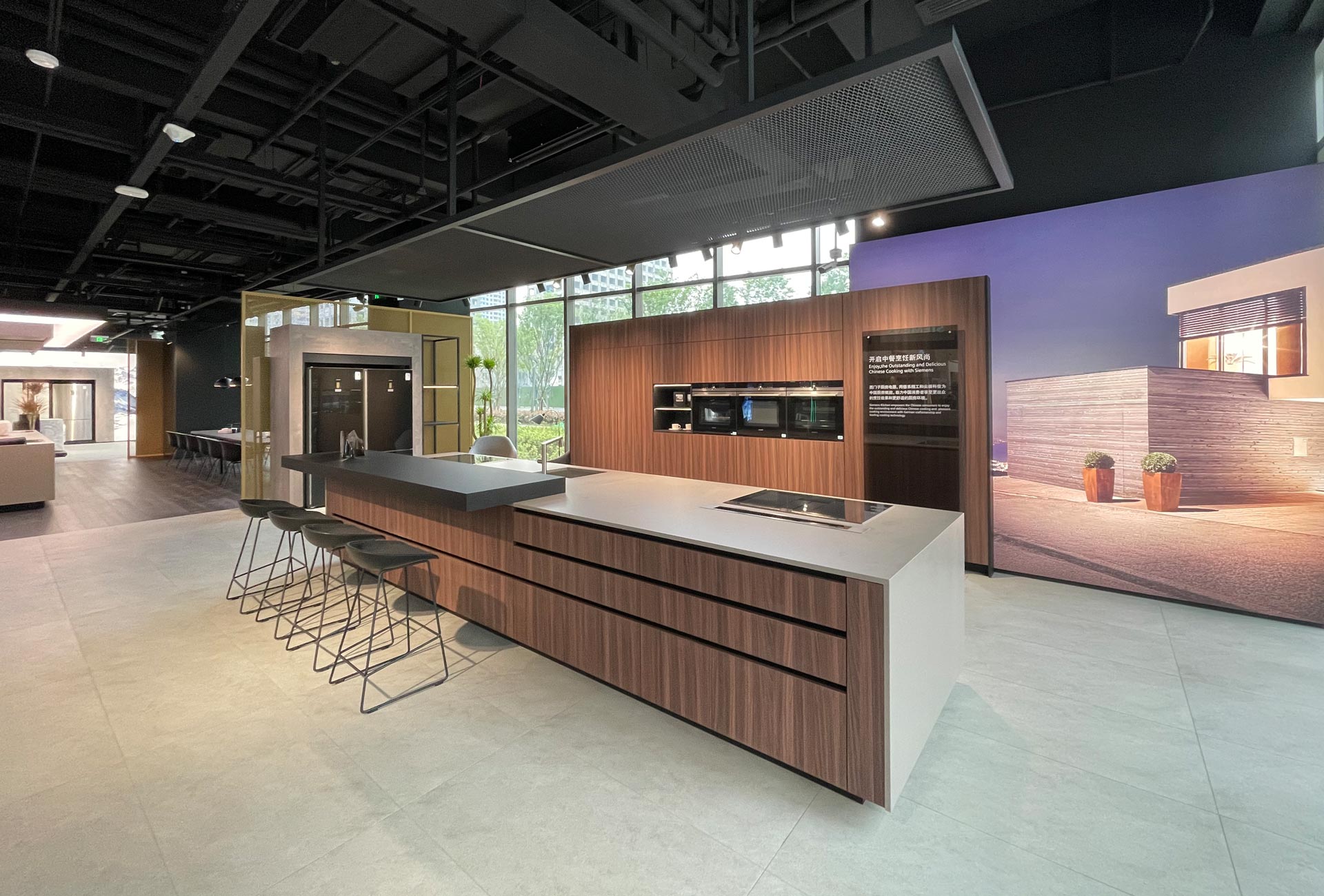
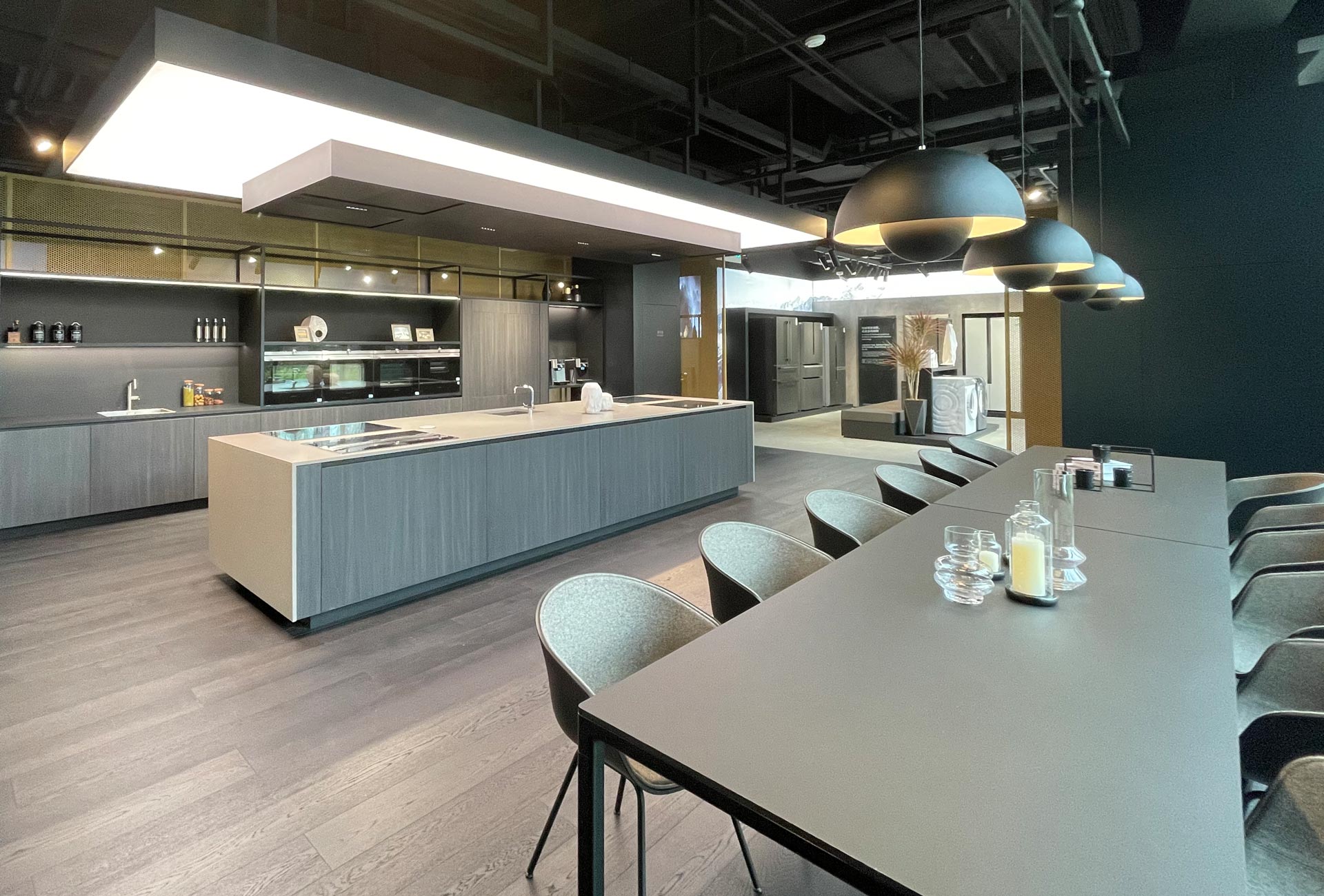
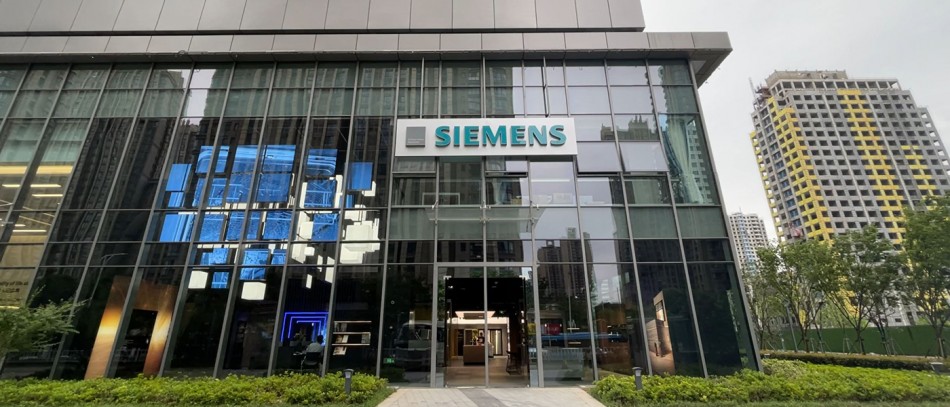
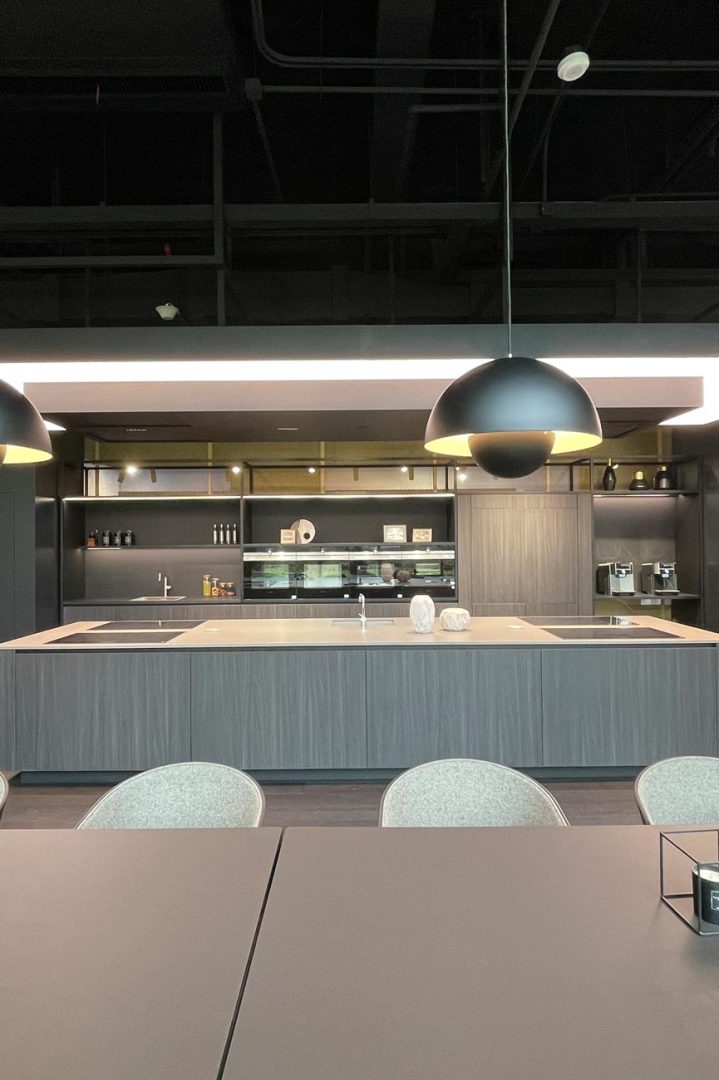
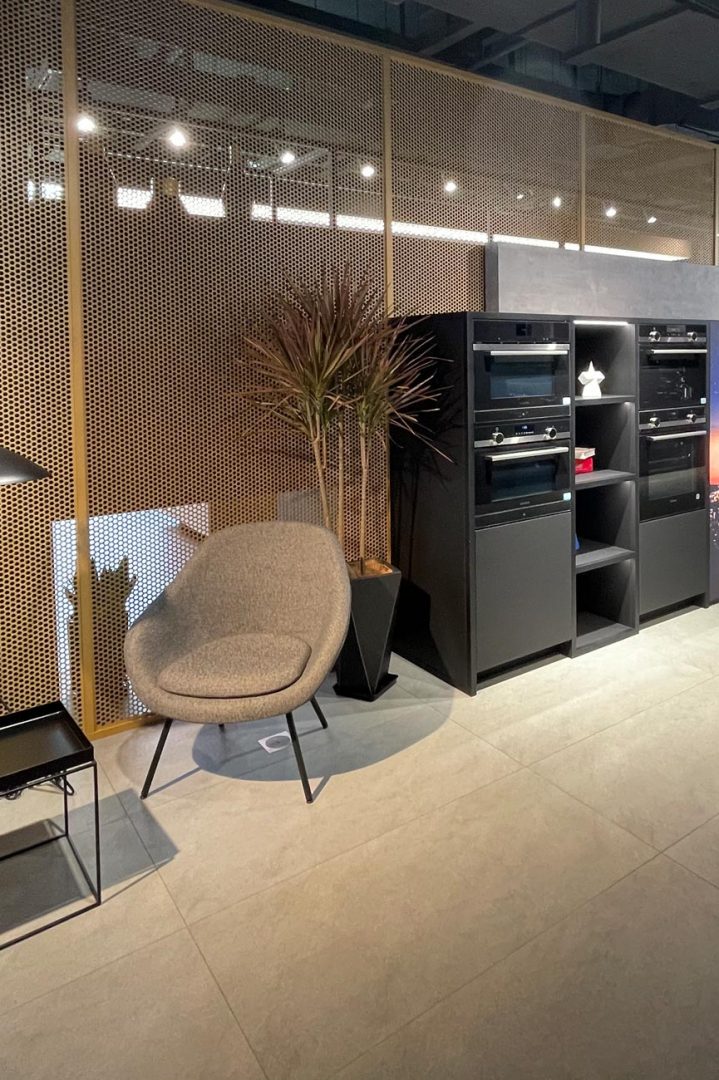
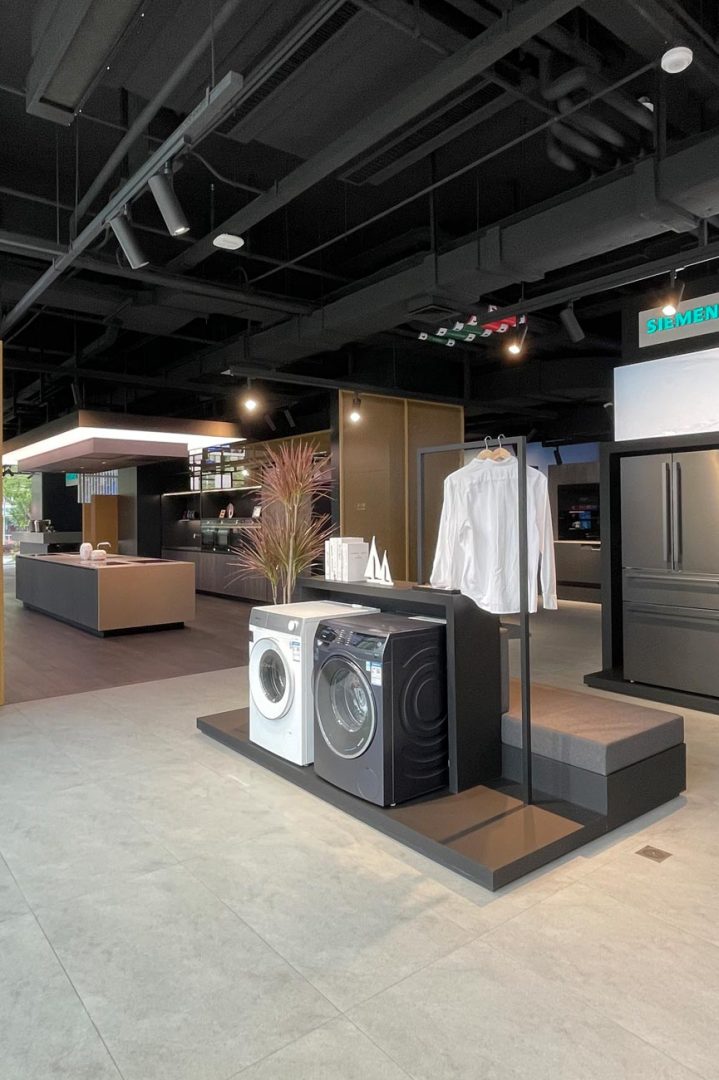
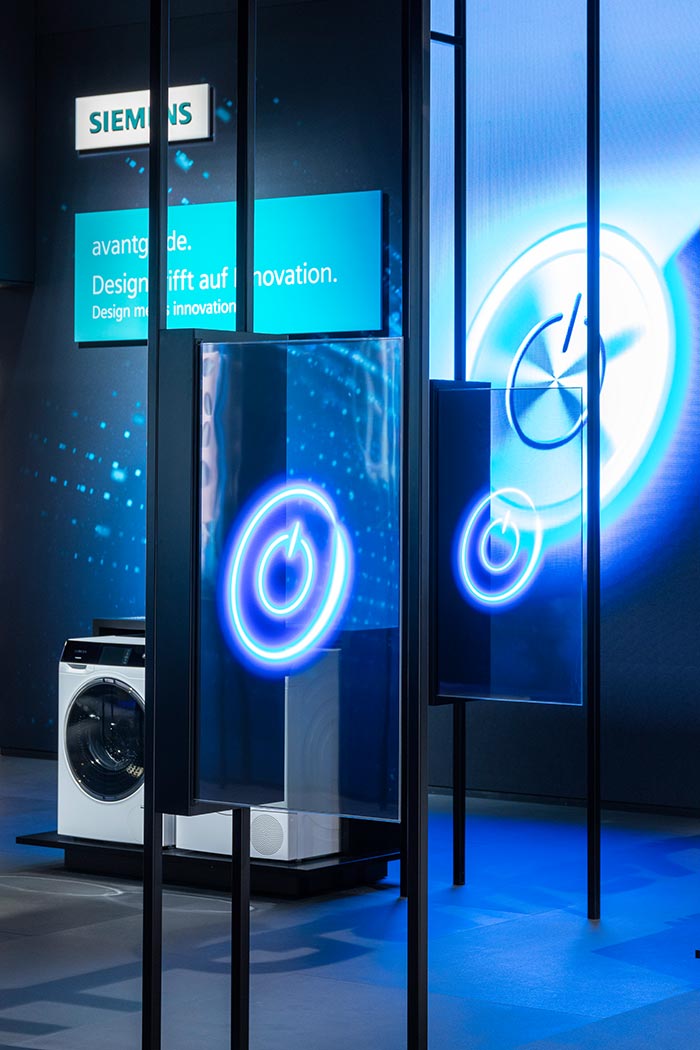
In addition to the Siemens showroom in Shanghai this is now our second footprint that we are leaving for our customer Siemens Hausgeräte in China! The Experience Center in Nanjing near Shanghai is a brand centre, meeting place and event location combined. The design concept is based on the interactive experience of the Siemens brand and combines all topics around the brand core Exciting Possibilities.
“Hier brauchen wir noch ein gutes Zitat“
The central contact point for all visitors is the brand reception with integrated coffee bar.
Above it hovers the brand sculpture, which carries the Siemens core messages out into the urban space. We realised the concept, design, technical details, media content and implementation.
Not only the products on display reflect Siemens’ expertise in design, technology and innovation, but also the interior design. Surfaces, colours and materials of the six Experience Areas fit into a coherent design concept.
From now on, the Experience Centre will be intended to be a venue for internal and external trainings, press and sales events as well as an internal film studio to bring the message “Exciting Possibilities” to all target groups – live and on site.
Projekte, Inhalte und Themen, die sie auch interessieren könnten:
AUDI | F1 Reveal
AUDI | IAA mobility
AUDI | Guideline
Aumovio | IAA
Ruf uns an:
+49 89 157997-0
Oder schreib uns:
info@schmidhuber.de
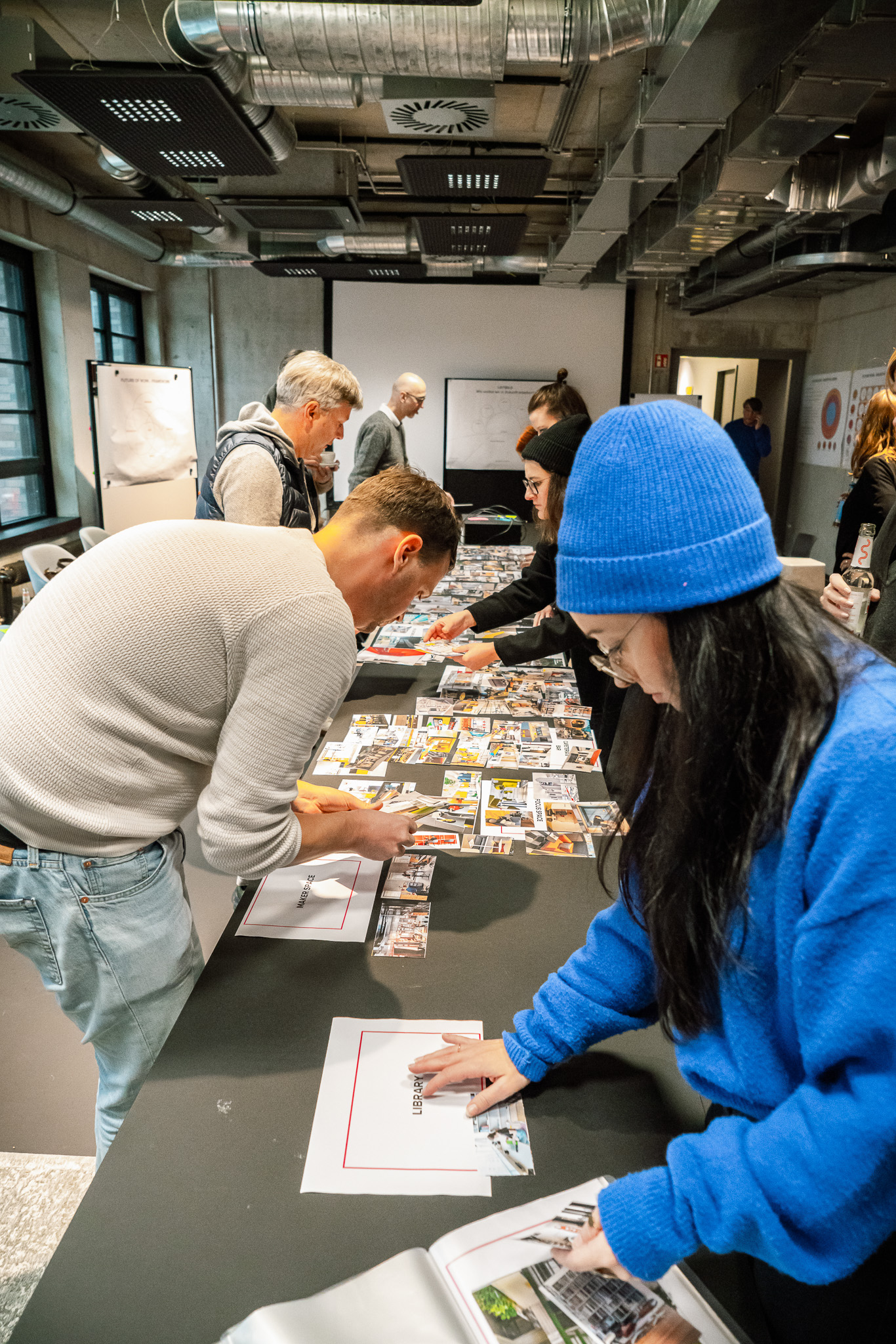
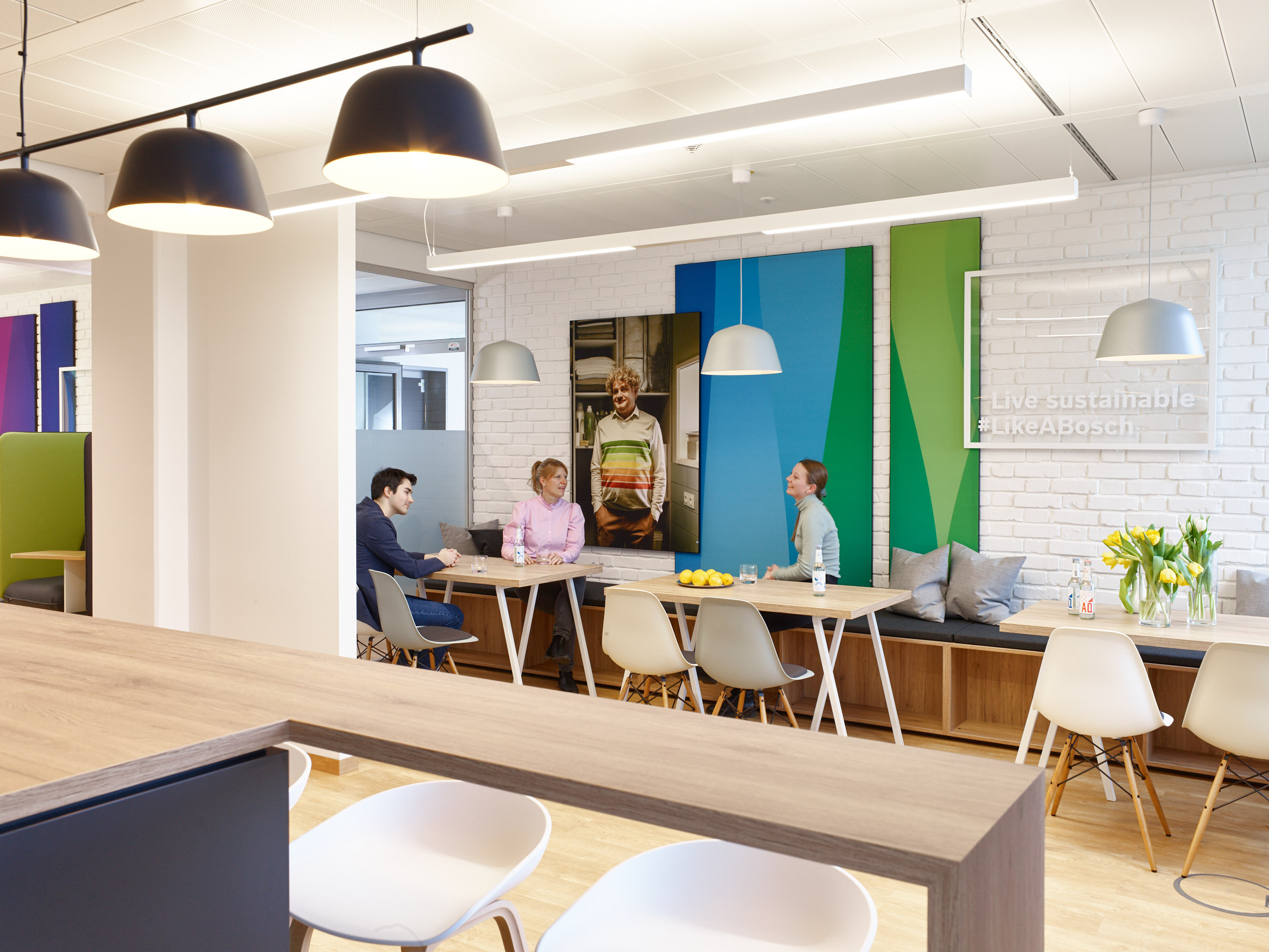
or rather New Working Culture?
The drivers of the movement are diverse and huge. Generational change, societal cultural change, digitalisation, new process methodology or simply a pandemic.
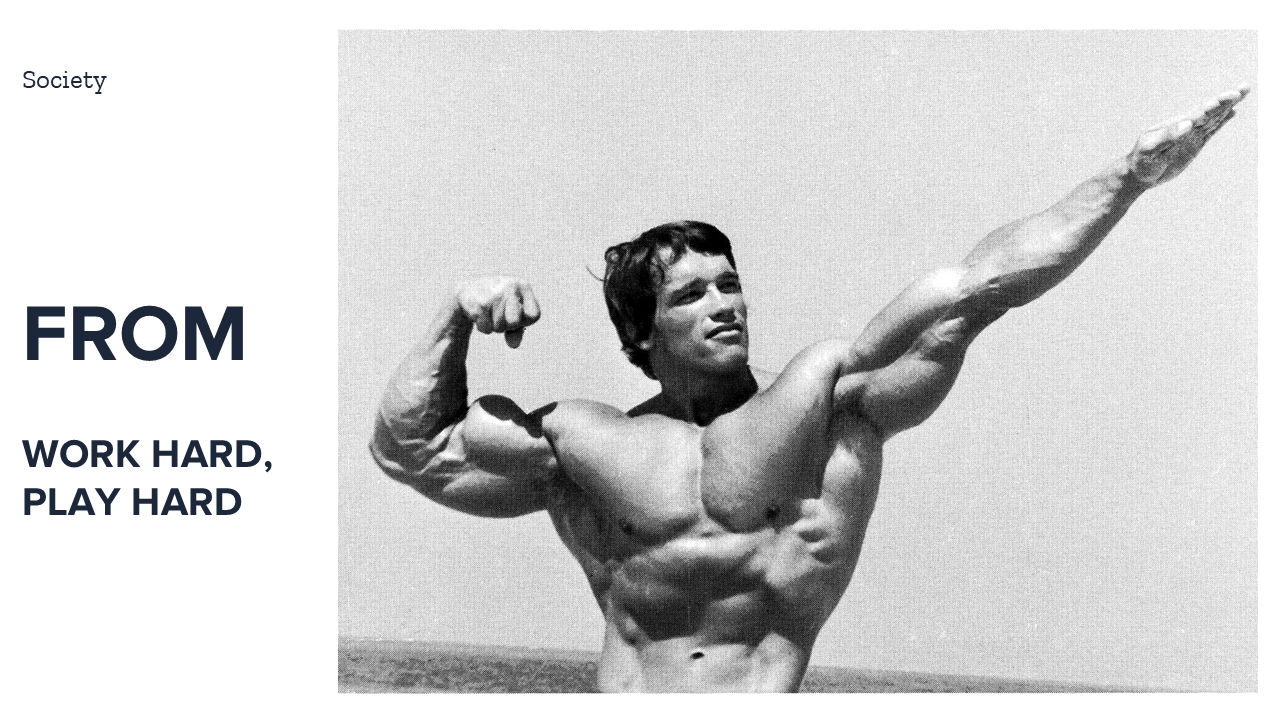
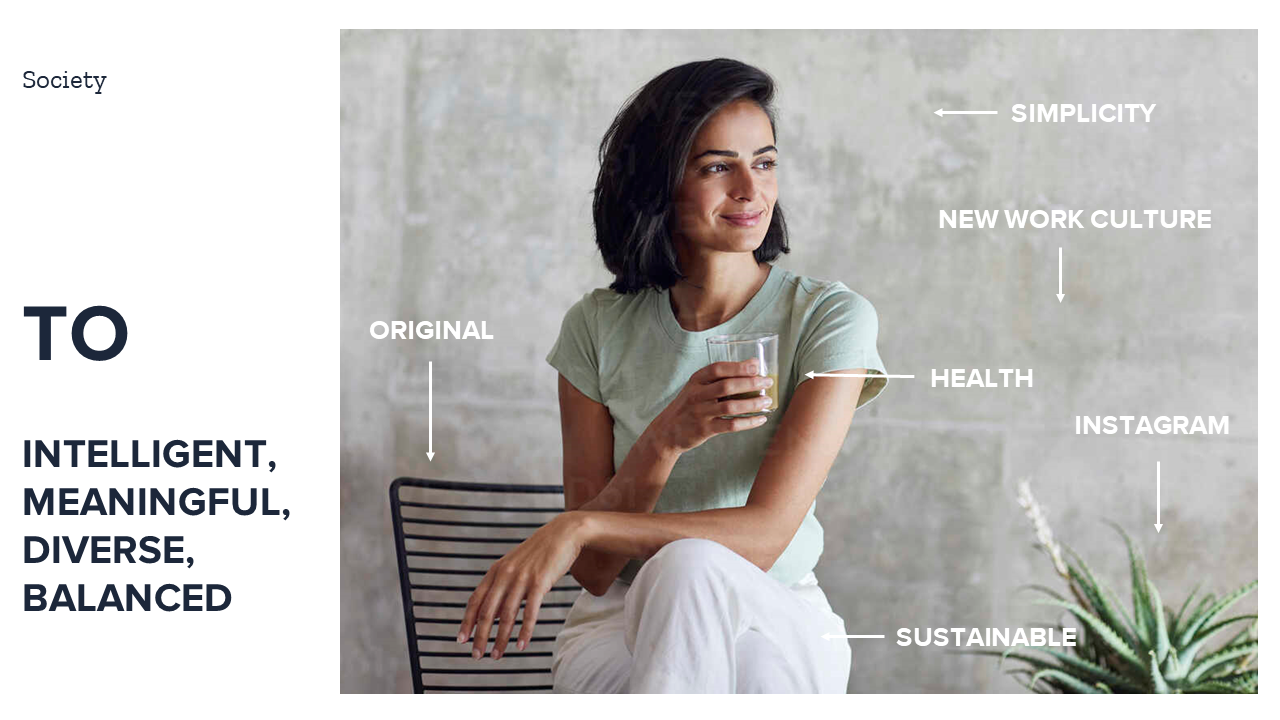
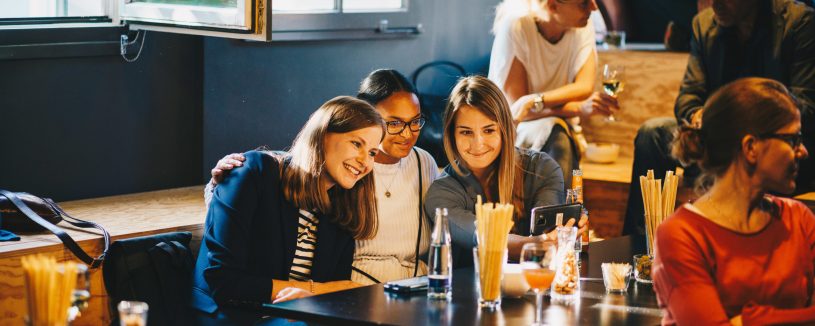
Organisations are increasingly looking inwards, to the core of their existence, to their people and their lived corporate culture. The nature of cooperation is experiencing a renaissance. Hardly any HR department is still called Human Resources. It’s about the talent management of the future. About bringing together the right personalities in a mostly very flexible and collaborative way, and often only for a limited time, and letting them grow together.
Even with hardcore digitalised and process-optimised clients, terms such as “people over process” are becoming more and more common. Active measures are being taken for intercultural encounters between companies, such as meetings without an agenda or even one-hour meetings in which the agenda may only consist of private topics. A counter-movement to over-processualisation? An attempt to replenish our “social account”, which we have been using poorly for years, from which we have only been withdrawing, and not only during the pandemic?
The focus of our work must always be on the people for whom such a culture is created. I believe in people-based working.
In any case, the examination of the topic of work-human-culture under the working title New Work is experiencing a huge change in perspective. Whereas in the past it was considered in the triangle of forces of digitalisation – HR – real estate with the focus mostly on increasing efficiency or saving costs, today the issue is considered on a much more significant and effective level. It is about thinking corporate mission statements with the right personalities and a new attitude towards collaboration. Establishing a suitable environment and knowledge culture. Generating new meaning in work and living it with all employees. As an employer, to make clear why collaboration adds value to me personally and enriches and develops me on different levels of my life.
At some point, space also plays a significant role in this, and that is why I am writing this post. As a specialist for communication in space, I have helped develop many brands in recent years in the direction of their consumers, target groups and markets and set them up for the future. The now (re)discovered direction of this discipline towards the “inside” brings up a field of activity which, in my opinion, has not yet become tangible in terms of its importance and potential.
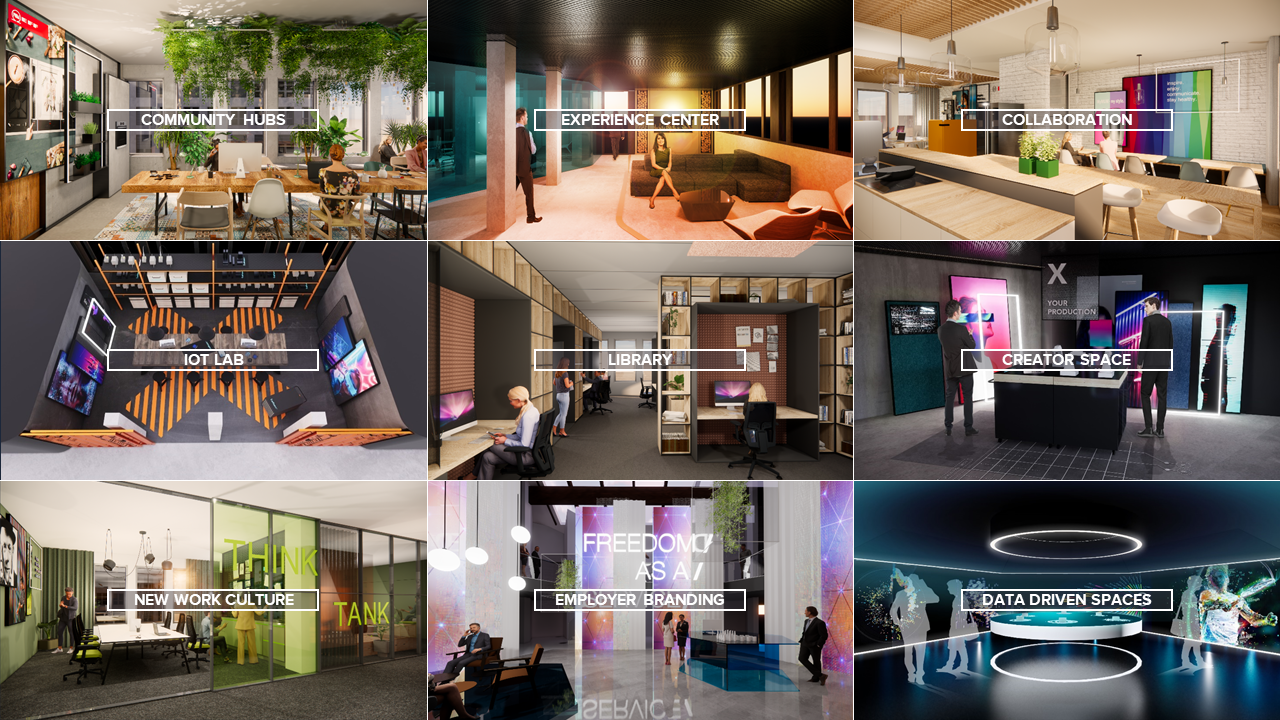
Whether it is about turning employees into motivated brand ambassadors, establishing new cultures of cooperation and joint development or creating a clear basis for consciously supporting the mission statement and thus the corporate goals – space can do it.
Places and spaces can mean much more for brands and systems than simple (employer) branding measures or process-supporting “housings”. Spaces tell stories, create identity, provide support and orientation and thus have a significant influence on one’s own actions.
With this knowledge in the background, we design solutions in the broad field of “New Work” that create sustainable values and convey attitudes. Many works of the last few years have become true hybrids, have gained clarity and goals during the processing phase or have undergone change and now drive several levels of our clients. Whether in the service of brand communication, for sales optimisation or also with an impact direction of knowledge culture and collaboration. The redefinition of the office function during and especially after the pandemic was also super exciting.
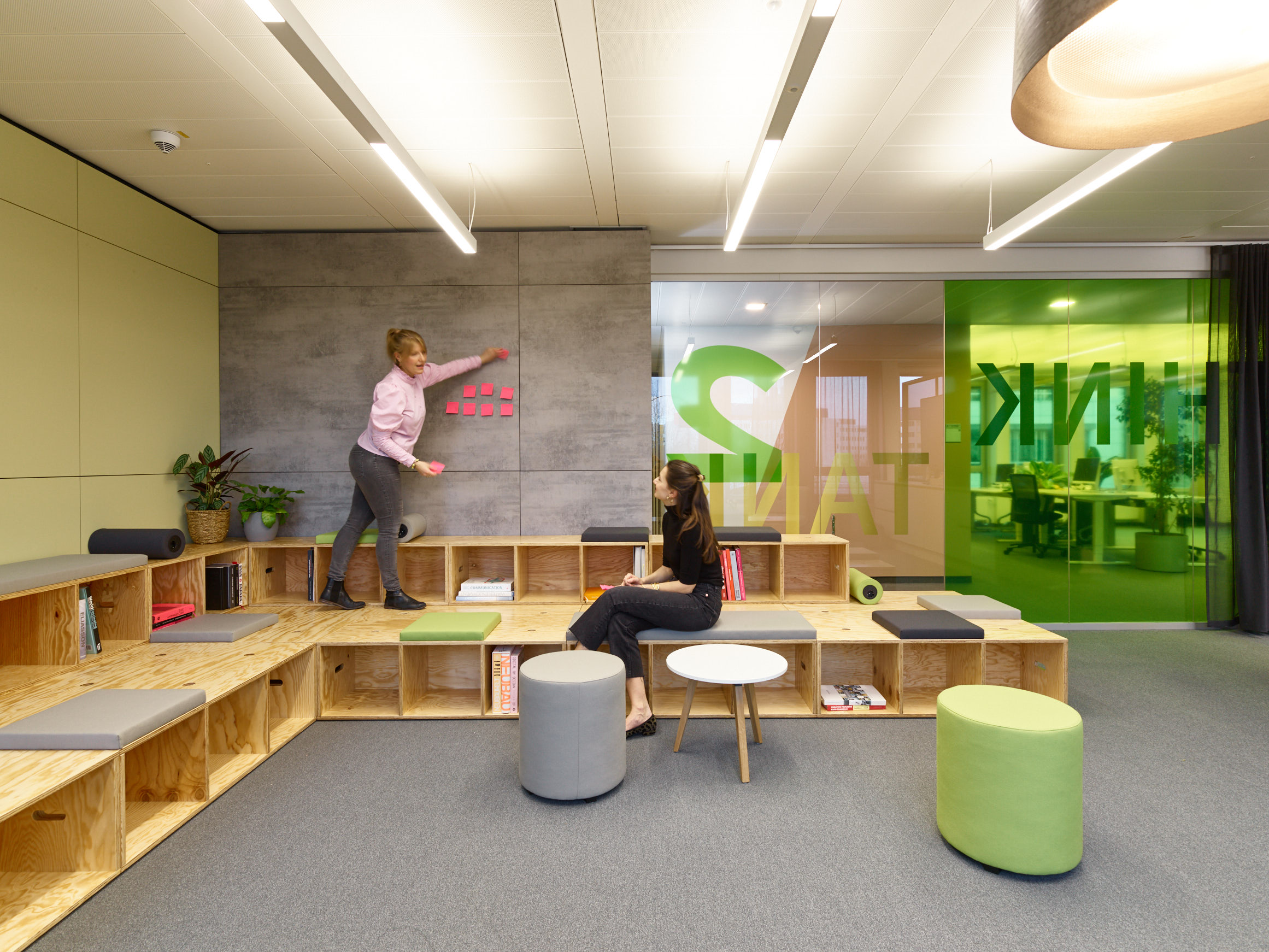
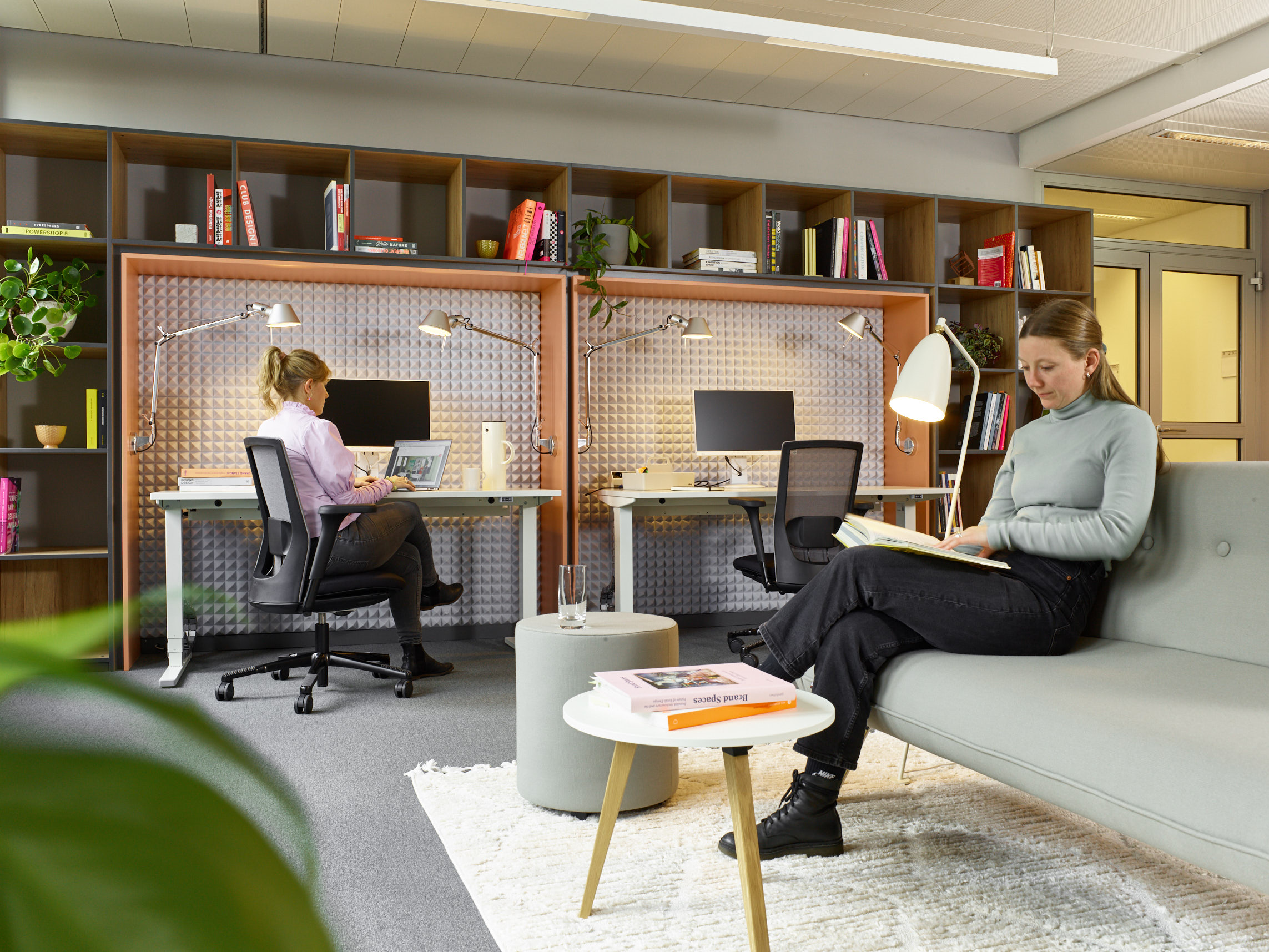
Interesting is, despite sophisticated methodologies and all the prior knowledge, the solutions are usually not easy to categorise and also have a limited lifespan. System approaches such as “activity-based working” or non-territorial workplace cultures can generate added value in some areas. However, when applied to a similar company of the same sector and size, they can fail spectacularly. Many successful transformations therefore use a very differentiated and also empirical approach. And very few have the opinion that a New Work culture will ever reach a stable end point.
I am fascinated by the multidimensionality and growing importance of the topic, especially against the background of generational change, the meaningfulness of work and the currently very accelerated virtualisation of cooperation.
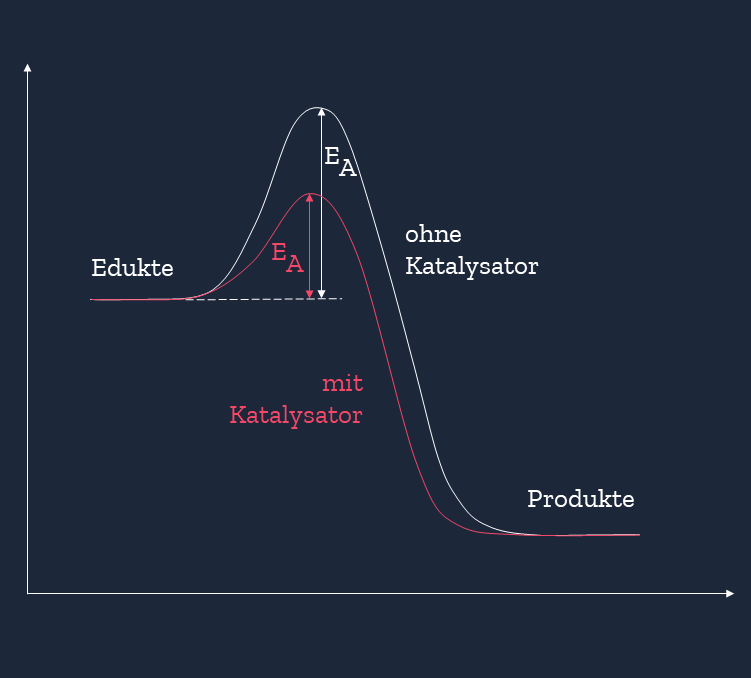
The drivers of the movement are diverse and huge. Generational change, societal cultural change, digitalisation, new process methodology or simply a pandemic.
Projekte, Inhalte und Themen, die sie auch interessieren könnten:
Ruf uns an:
+49 89 157997-0
Oder schreib uns:
info@schmidhuber.de
Keeping the pace of change
It’s hardly news that digitalization represents a number of challenges to retail: The changes are for all to see. But they follow on from a tradition of change — one that’s seen grocery stores become supermarkets and supermarkets become department stores and then malls. Teleshopping habits and mail order companies started a shift away from physical retail stores years ago. And online shopping has picked up where they left off. But this level of disruption is by no means over: More than ever, retailers are fighting to retain customers — frantically offering incentives and benefits.
“What’s most important is helping clients to comprehend the advantages of the ecosystem economy and its associated retail services. Afterall, they’re numerous. But for clients to be able to recognize and appreciate the benefits of digital processes, they need to be clear.”
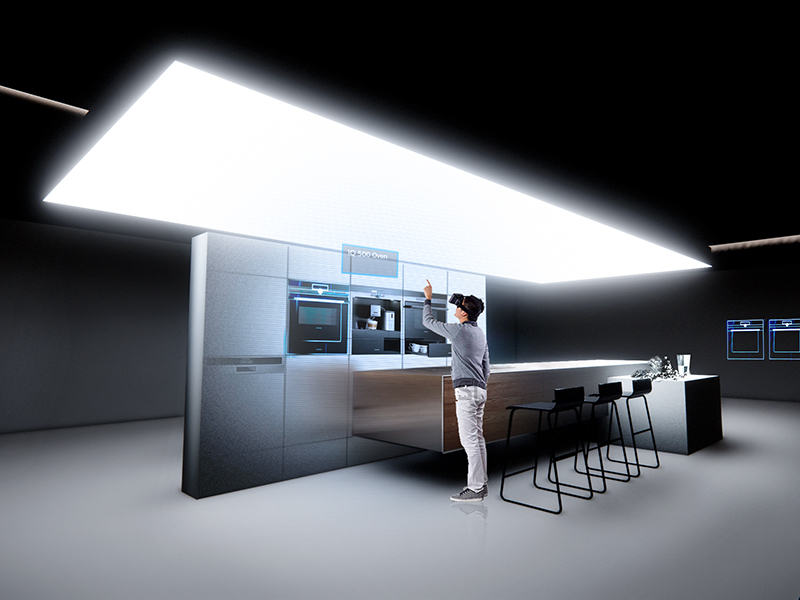
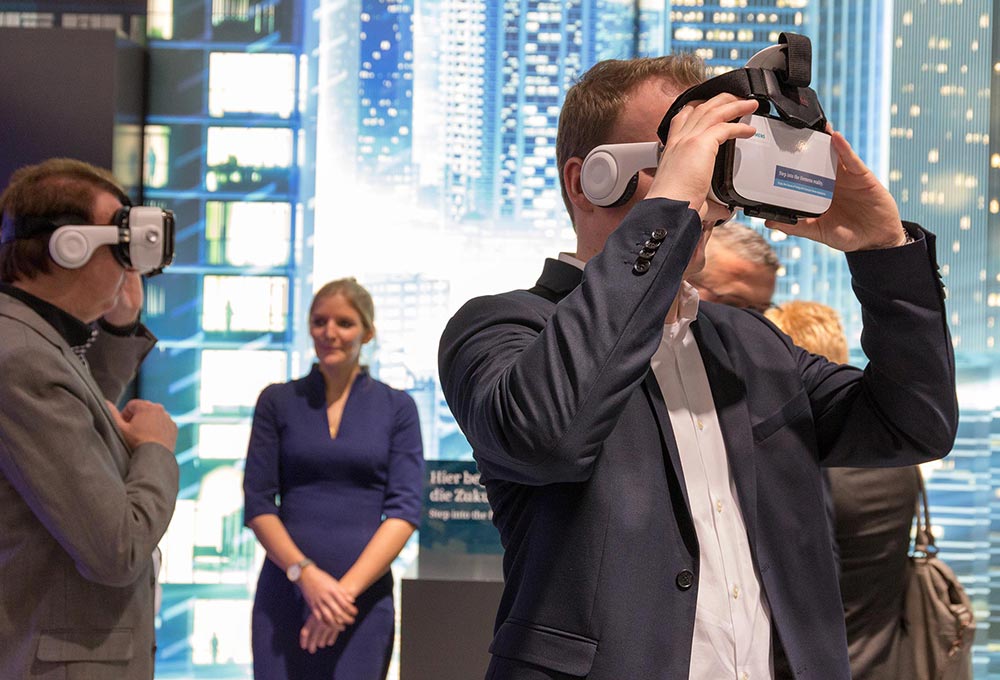
Anyone looking at current survey results amongst retailers can see where things are headed: 75% of retailers think that in 10 years’ time payment systems will be redefining their sector. No one need ever wait in a long line again—they’ll simply leave the shop and the amount for their goods will be automatically deducted from their bank account—powered by the data held in their digital profile. More than half of those asked believe stores will become showrooms where products can be tested and then ordered from the retailer’s online store. And here’s another compelling figure: One in two assume that the value add of goods on offer will increase noticeably with the use of virtual reality and that store opening hours will need to mirror those online—24/7.
But what does this mean for the development of design?
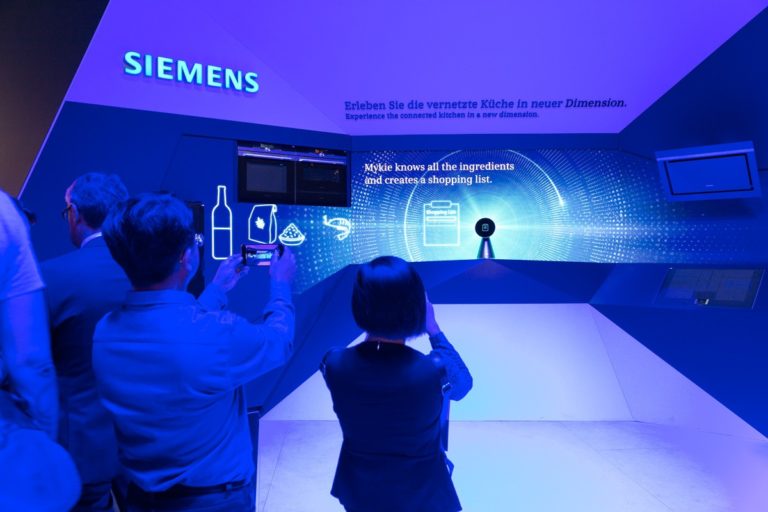
At the Expo Milan 2015 the supermarket of the future was on display. Coop and Amazon Go presented their vision of the physical store very clearly: And to meet every day needs they are all about information, service, time and environmental awareness. Interactive displays offer all kinds of information imaginable on ingredients, recipe suggestions, product origins and ecological footprints. Not to mention provide essential navigation support through the store itself and its various offers.
The logistical advantages are obvious: Purchasing behavior can be processed in real time via a merchandise management system, as can the customer’s need for information. This sees the customer elevated to more than a just a user. It makes them an enormously important contributor to the system. And the reason why is clear: With digital transformation and the permanent exchange of data, customers can provide information and feedback about their experiences. As well as what can be improved. And yet in contrast to Asia, this level of transparency is (still) viewed critically in Germany. Even though it represents a huge service advantage through which supply and demand can be balanced faster—making it more customer-centric than ever before.
Alongside redesigning the shelves and in-store signage, focus naturally falls on the checkout area—after all this is where the time factor comes into play. Through the connection established between the customer’s smartphone and the supermarket’s digital payment system, queues are a thing of the past. The customer’s purchases are automatically recorded and the amount debited from their customer account.
Jan Domin, Associate Partner at SCHMIDHUBER, thinks it’s the digital aspect of design that counts the biggest now in physical retail stores: “What’s really important is exploiting the advantages of this ecosystem and making all of its numerous associated commercial services transparent to the customer. The digital process must be clear to the customer so that they learn to recognize and appreciate the personal benefit”. Retail techniques are changing online all the time and are then adapted to meet challenges offline. This means that digital change only becomes visible after a certain time delay. “We, as designers, are almost exclusively still working in the transition between online and offline—waiting until this change process is complete. But we can already start to see some of the great potential that lies around the corner. Think of the space that will become available if, for example, large supermarkets and parking spaces become surplus to requirement. If the supermarket comes to us or we pick up our orders at a drive-through—there’s tremendous space being created “.
But let’s not forget the other areas of physical retail stores that are also being affected by change. “In the past, stores placed special emphasis on product presentation, but today communicating themes or messages are more important. The aim is to answer the customer’s questions about personalized services, for example, or on the theme of sustainability. This is how you convince your customer of your brand”, says Michael Ostertag, Managing Partner at SCHMIDHUBER. “We have to be aware that in the future physical stores will mainly be there to influence purchasing decisions. We are going in the direction of flagship stores that work together with an online retail platform”.
“Whereas shops once placed special emphasis on product placement, today dialogue plays a much more important role. This is about responding to customers’ concerns whatever they are. Whether it’s the need for personalized services, sustainability, or something else—you create brand loyalty when you engage in two-way communication.”
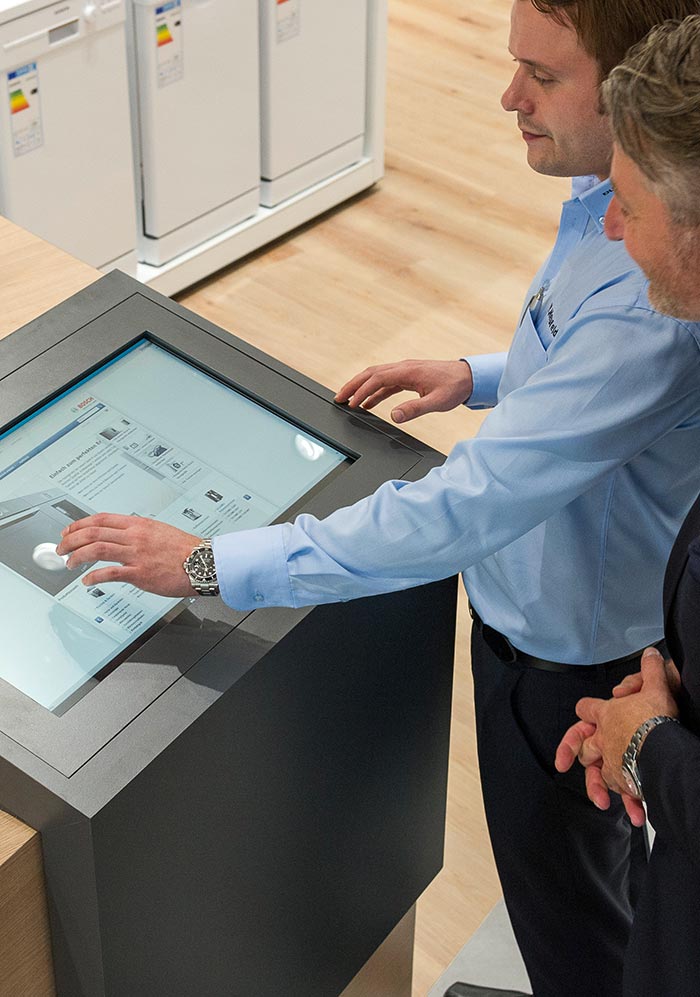
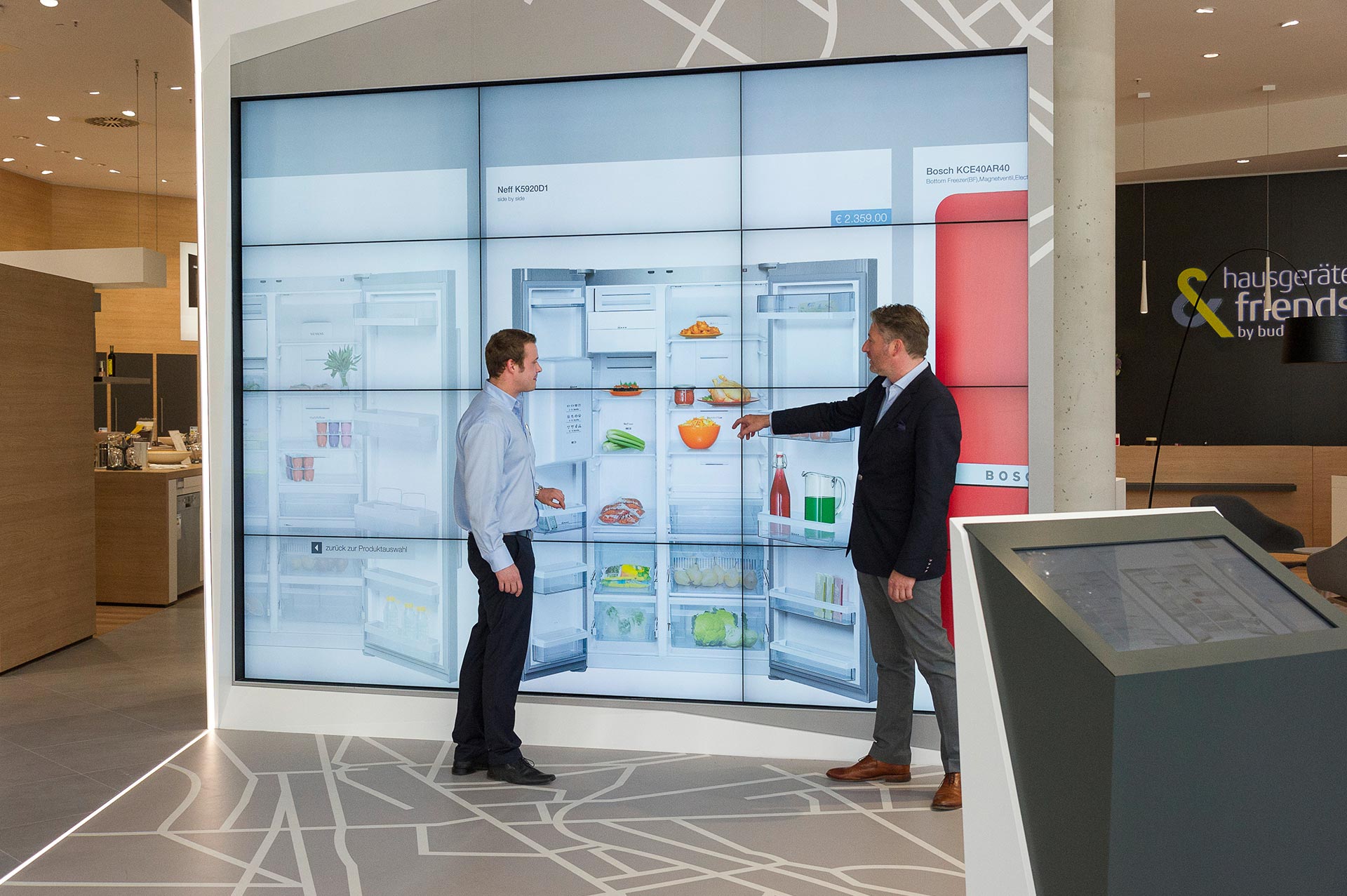
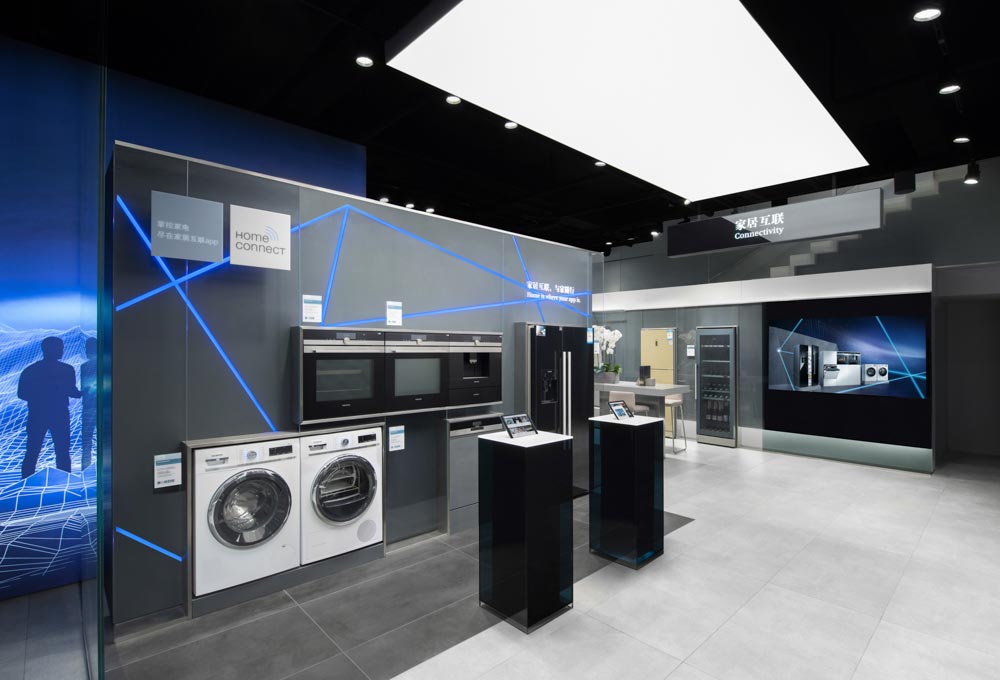
An experiment into the field of store architecture was kicked off some time ago in Hamburg in 2015. HAUSGERÄTE & FRIENDS was an attempt by a household appliance retailer to combine classic retailing with online shopping components. The stores were equipped with digital product configurators as well as displays, which made it possible to experience all appliances in their original size. This experience world — backed by digital technology — formed the center point of the shop. It was intended to cover the entire spectrum of customer needs through virtual reality with the added value of a physically present salesperson. This concept went exactly in the right direction by combining all the advantages of physical retail such as; personal advice, more trust in local dealers, and clear service lines, as examples, with an infinite range of online retail products. It comes as no big surprise that the concept proved not to be a long term success.
“The change isn’t worth it” and “The customer isn’t ready yet” are the sentences most often heard when explaining why visionary projects such as these aren’t pursued. Michael Ostertag explains: “Real purchasing behavior cannot be captured digitally. There is still a noticeable lack of empirical data. Ultimately, it comes down to taking a more long-term perspective: Retailers must be prepared to wait out the period between now and customer’s purchasing behavior changing.
The potential is huge — retailers just need to take a risk and a deep breath — and it will pay off in the future”.
This article is based on a lecture given by Jan Domin, Associate Partner at SCHMIDHUBER, for the IHK Regensburg on August 1, 2018.
Projekte, Inhalte und Themen, die sie auch interessieren könnten:
AUDI | F1 Reveal
AUDI | IAA mobility
AUDI | Guideline
Aumovio | IAA
Ruf uns an:
+49 89 157997-0
Oder schreib uns:
info@schmidhuber.de
An opinion of Michael Ostertag
The industry is feeling a change. Again. Rumour has it that the royal road to success leads through experience. Every brand is charged with a promise of adventure, satisfaction or security. It all depends.
I see it differently. Don’t get me wrong – I love adventures, contentment and security, but I also love something else: honesty. Authenticity is a value and a promise in which everything else is included, because you mean what you say and stand by who you are. My thesis is therefore: Identity BEATS Experience, because identity gives security. Experiences are only meaningful if they are unmistakably tied to a brand.
I don’t want to wait until the question Identity VERSUS Experience is decided by the market. Because I see it as my actual job in a creative agency to communicate brands in such a way that they are understandable and sustainable.
Authenticity is a value and a promise in which everything else is included, because you mean what you say and stand by who you are. My thesis is therefore: Identity BEATS Experience, because identity gives security. Experiences are only meaningful if they are unmistakably tied to a brand.
At SCHMIDHUBER, a creative-analytical experiment always comes first. We ask ourselves the classic basic questions: What is a brand? What makes it credible? What distinguishes it from its competitors? What associations should it evoke in the customer? Or formulated differently: What is the identity of the brand we are communicating?
A leap back in time is helpful to understand in which direction our industry is developing. It is no longer enough to use the unique selling proposition of the brand essence as an argument to force the customer’s buying decision. The design, user-friendliness, technical possibilities and forms of presentation of the suppliers of a product group are too similar for that.
Distinctive features about the consumer product are not a sufficient brand message. In addition, the speed innovation launches is now extremely high. Focusing on a specific product does not seem to make much sense for this reason alone.
Yes and no. Yes, because what the modern understanding of brands could assume for a long time, namely that their success is shown by the fact that a target group recognises them by their product characteristics, is no longer valid on its own. No, because it is at least as relevant that target groups differentiate in a much more sustainable way. Today, customers are no longer mainly interested in distinguishing themselves through a brand; the offers are too similar for that and the customer is much better informed. Purchase decisions therefore depend on more than a brand promise, they depend on the brand delivering what it promises.
Experiences strengthen the brand if they are related to it. Only identity has become obsolete. And experience will follow. That’s why we check the enthusiasm for experiences and always think about the necessary feedback to the brand. So that it doesn’t get lost in the fair of possibilities. At SCHMIDHUBER, we call this renitence: we notice trends and stick to using the existing possibilities to turn them into opportunities. With common sense. With experience and passion. Honestly.
”Wir nehmen Trends wahr und bleiben dabei, die vorhandenen Möglichkeiten zu nutzen, um sie in Chancen zu verwandeln. Mit gesundem Menschenverstand. Mit Erfahrungswerten und Leidenschaft. Ganz ehrlich.“
Projekte, Inhalte und Themen, die sie auch interessieren könnten:
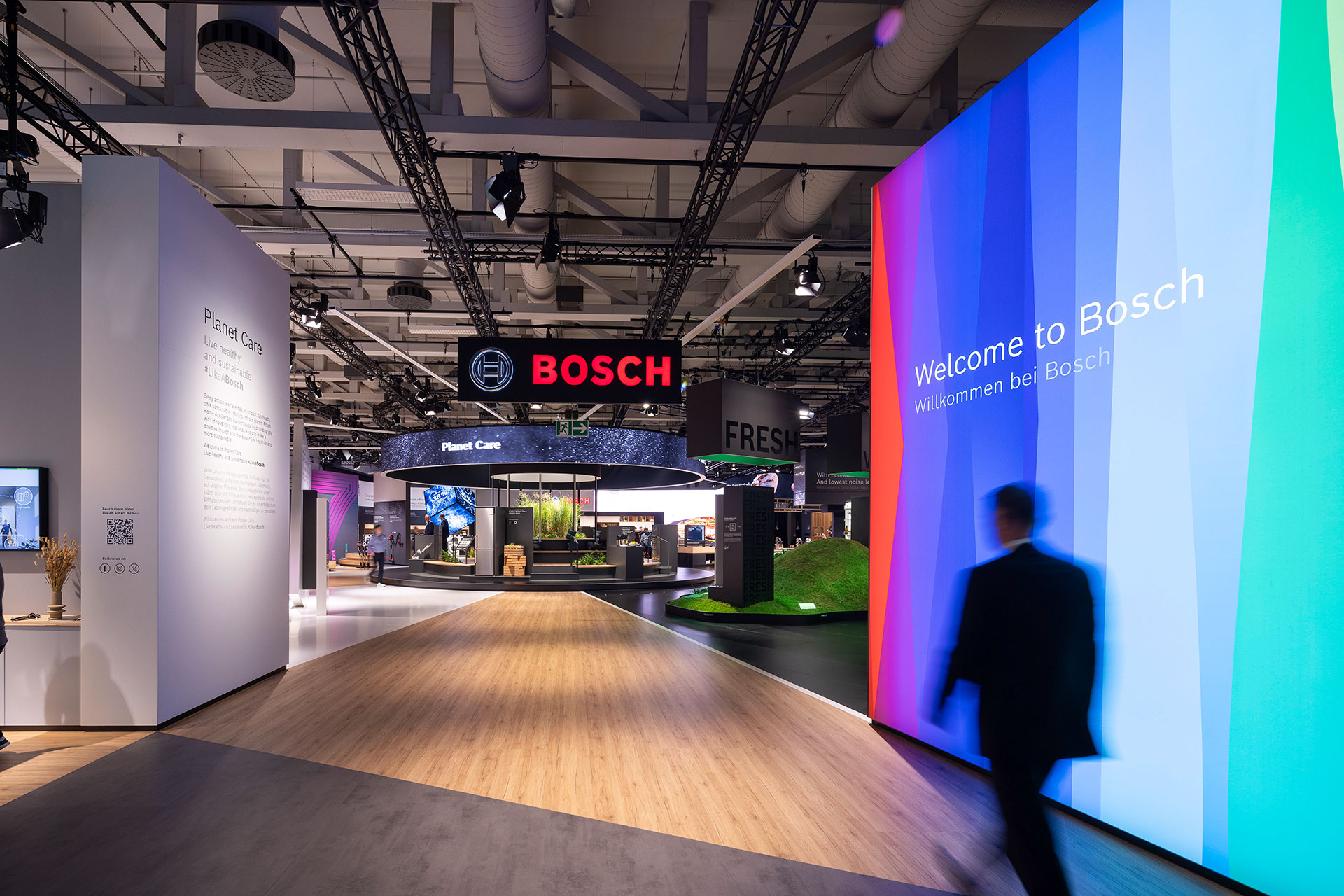
BSH | IFA
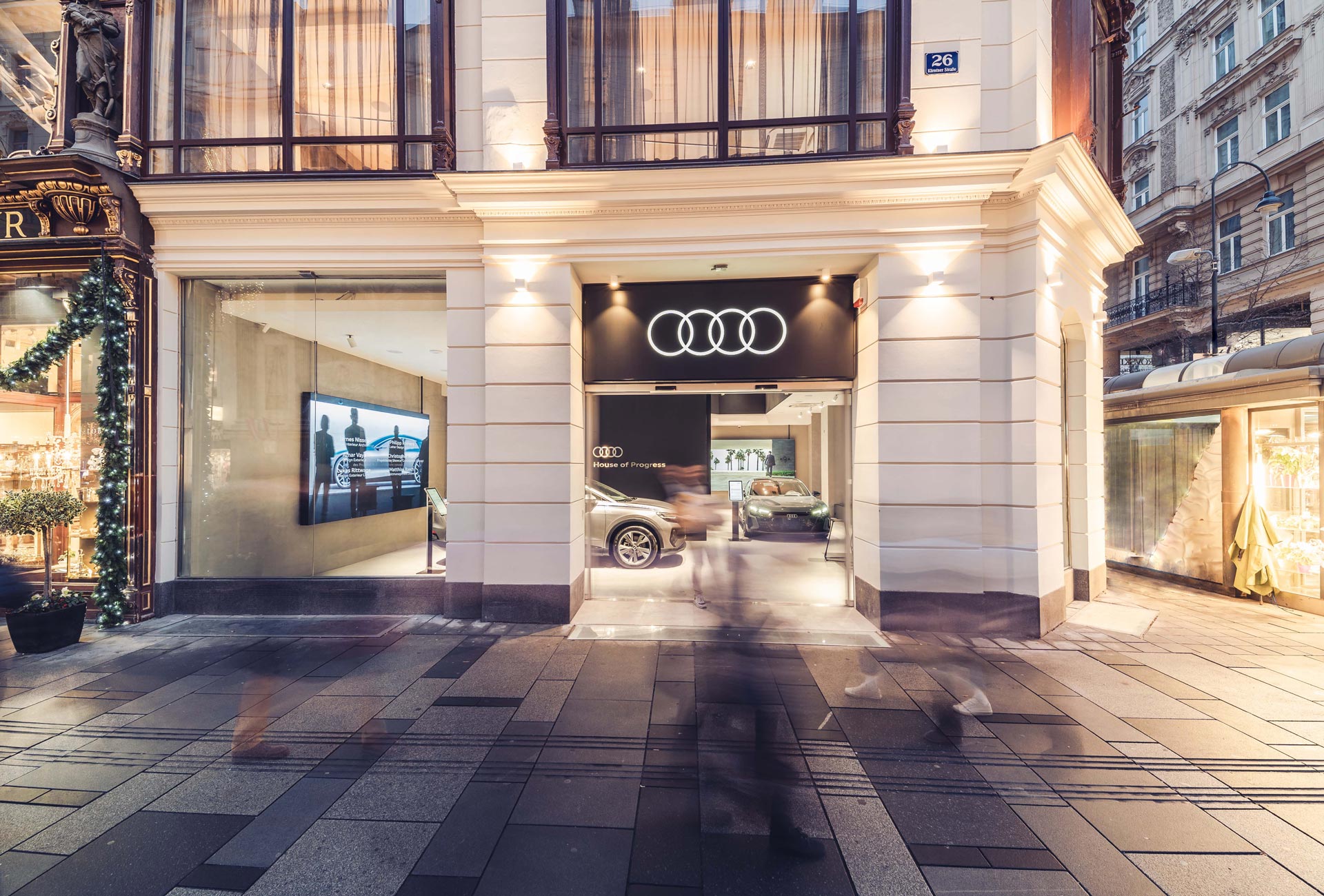
Audi | HoP Vienna
Michael Ostertag
Ruf uns an:
+49 89 157997-0
Oder schreib uns:
info@schmidhuber.de

The future of Sales
The point of sale is no longer a space for shopping. It has developed into a place that inspires people, invites them to linger and offers an experience that far exceeds the desire for consumption. It is a point of excitement, a point of communication and a point of perception.
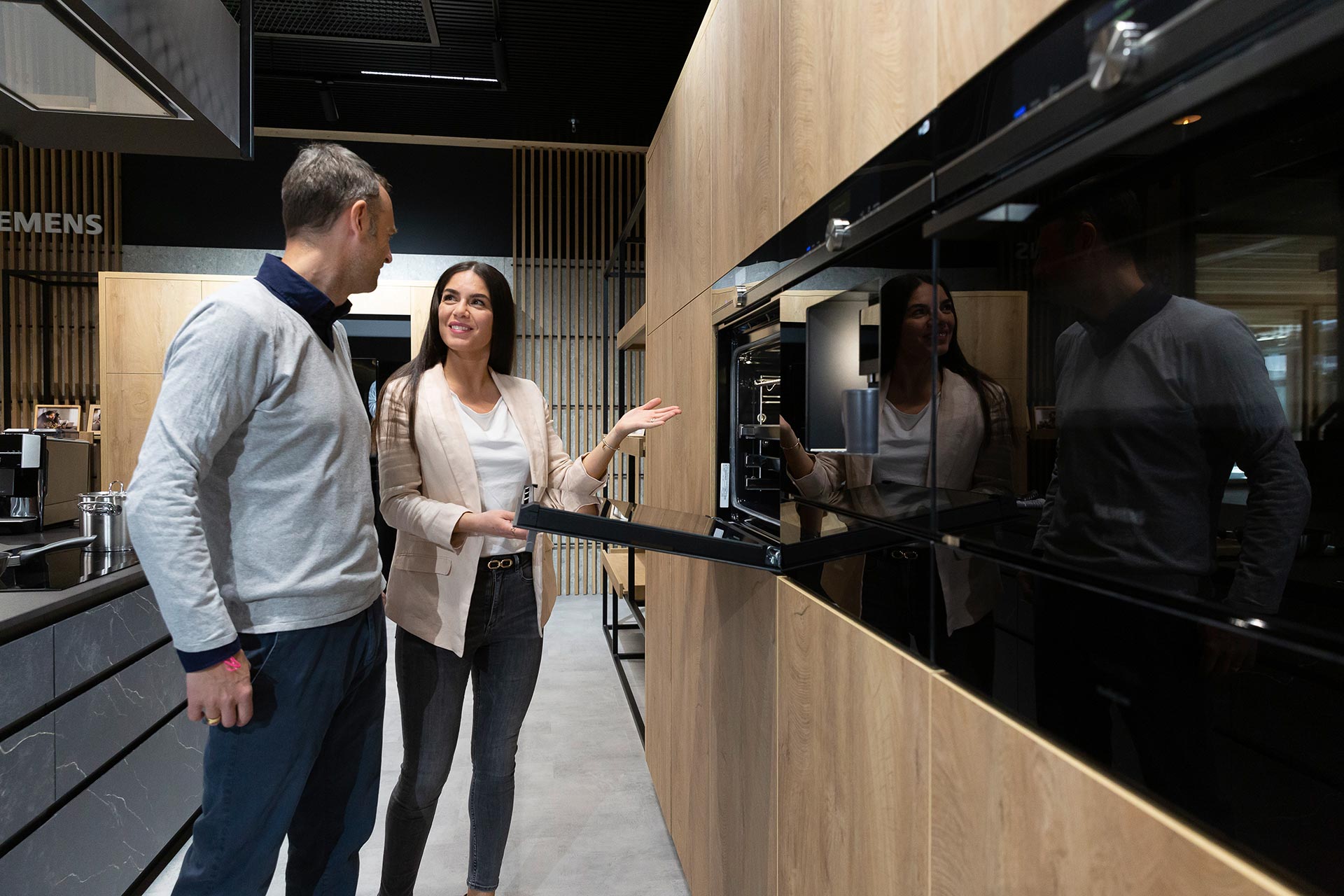
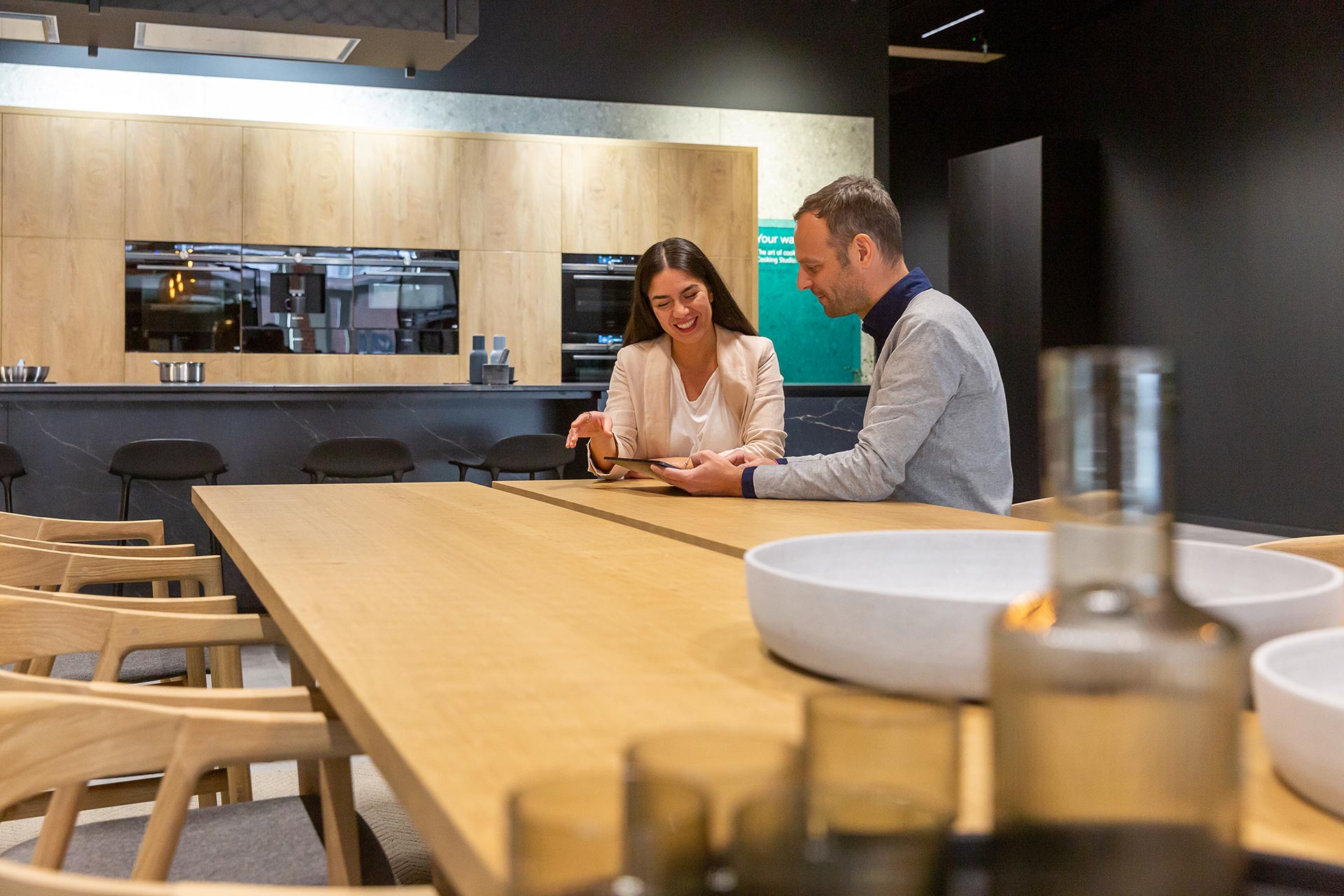
The classical shopping experience gives way to sensual perception, stimulated exchange and an intensive experience. But how are the spaces designed that surround this newly defined place? What does this mean for the brands and products that are presented in this environment? And what answers do architects and designers find to the questions posed by this new kind of presentation?
“We used to enter the world of brand communication through design and space. Today we use the leading themes of the market as well as the stories of the brands that make them up and that can be told and staged.”
IF: Mr Ostertag, for more than 30 years SCHMIDHUBER has been involved in the creative staging of brands in space. How has your tasks and your way of working as a designer changed during this time?
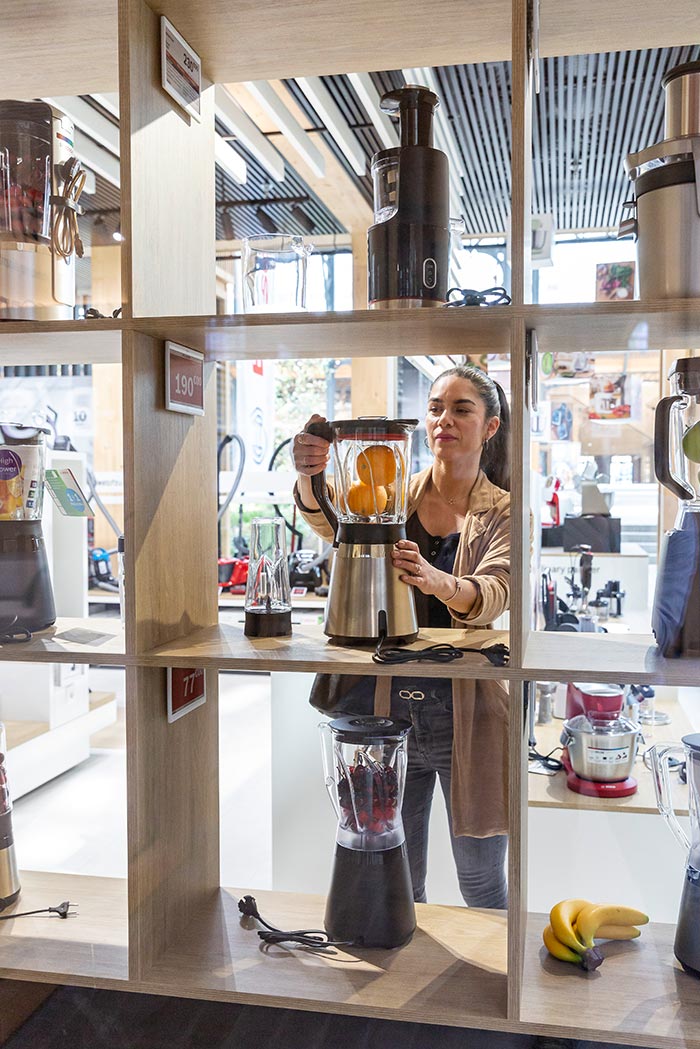
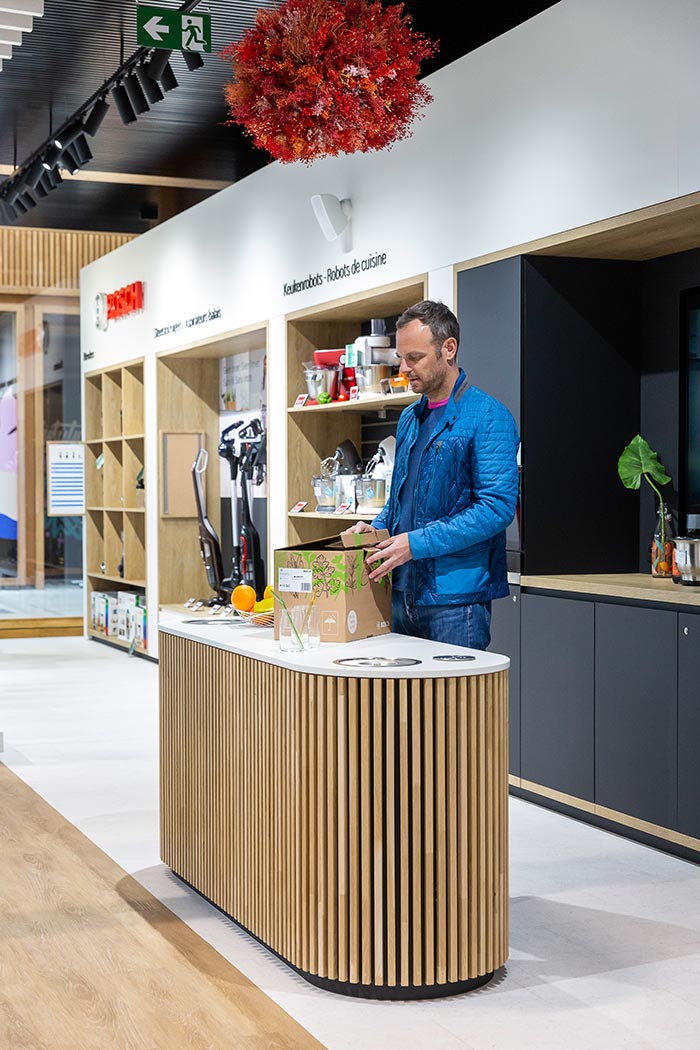
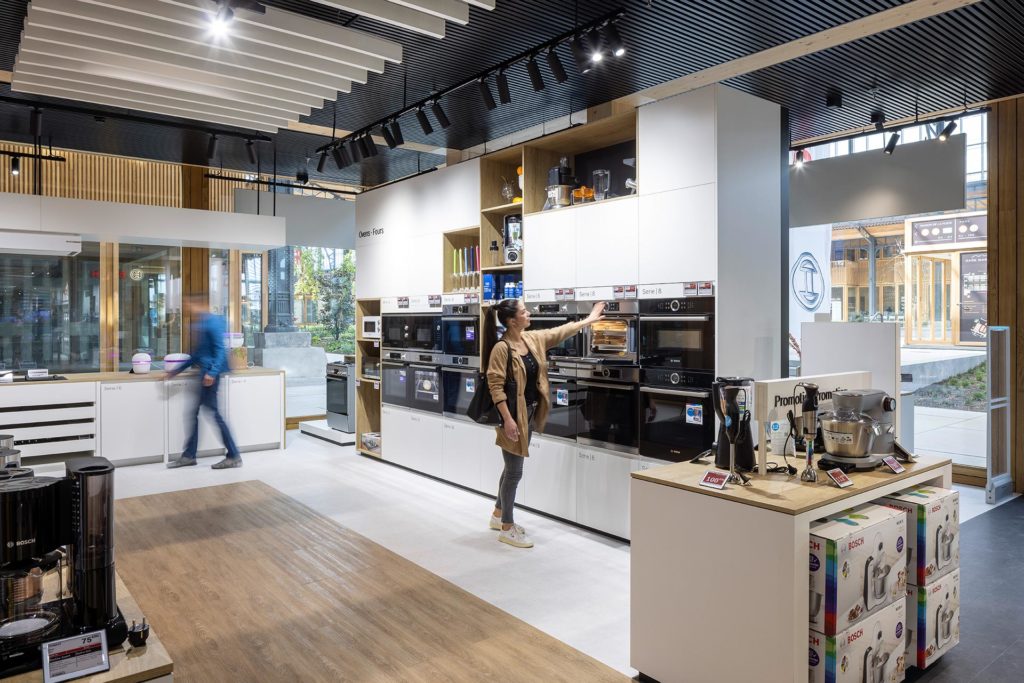
Michael Ostertag: We used to enter the world of brand communication through design and space. Today we use the leading themes of the market as well as the stories of the brands that make them up and that can be told and staged. So we have moved more into brand development and storytelling, and only then develop the spaces and designs to go with it.
IF: So is it okay to say that you work as consultants in the first step and only become designers as the project progresses?
Michael Ostertag: We see ourselves more in the field of brand consulting – a mix of brand communication and a design agency. In addition to architects and designers, we also employ communication strategists to connect brand communication with design, experience and architecture.
A few years ago, we developed a core idea – the four D’s – for this approach to projects. They stand for Discover, Dimension, Design and Deliver and represent a simplified structure that organises our internal processes without restricting creativity. They basically describe the path from strategy and concept to design and implementation.
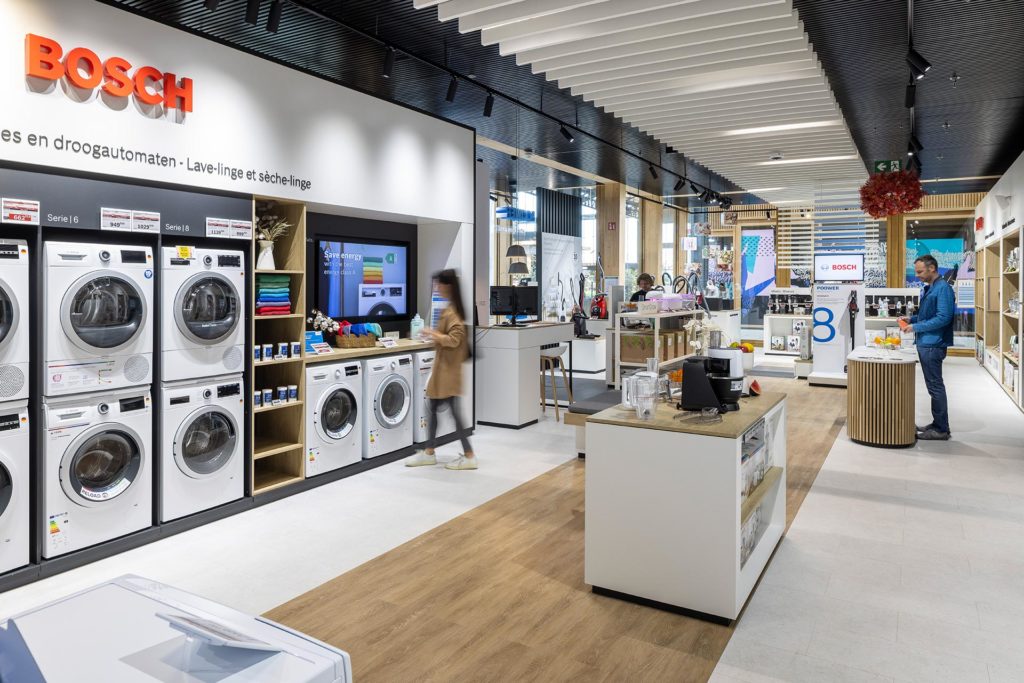
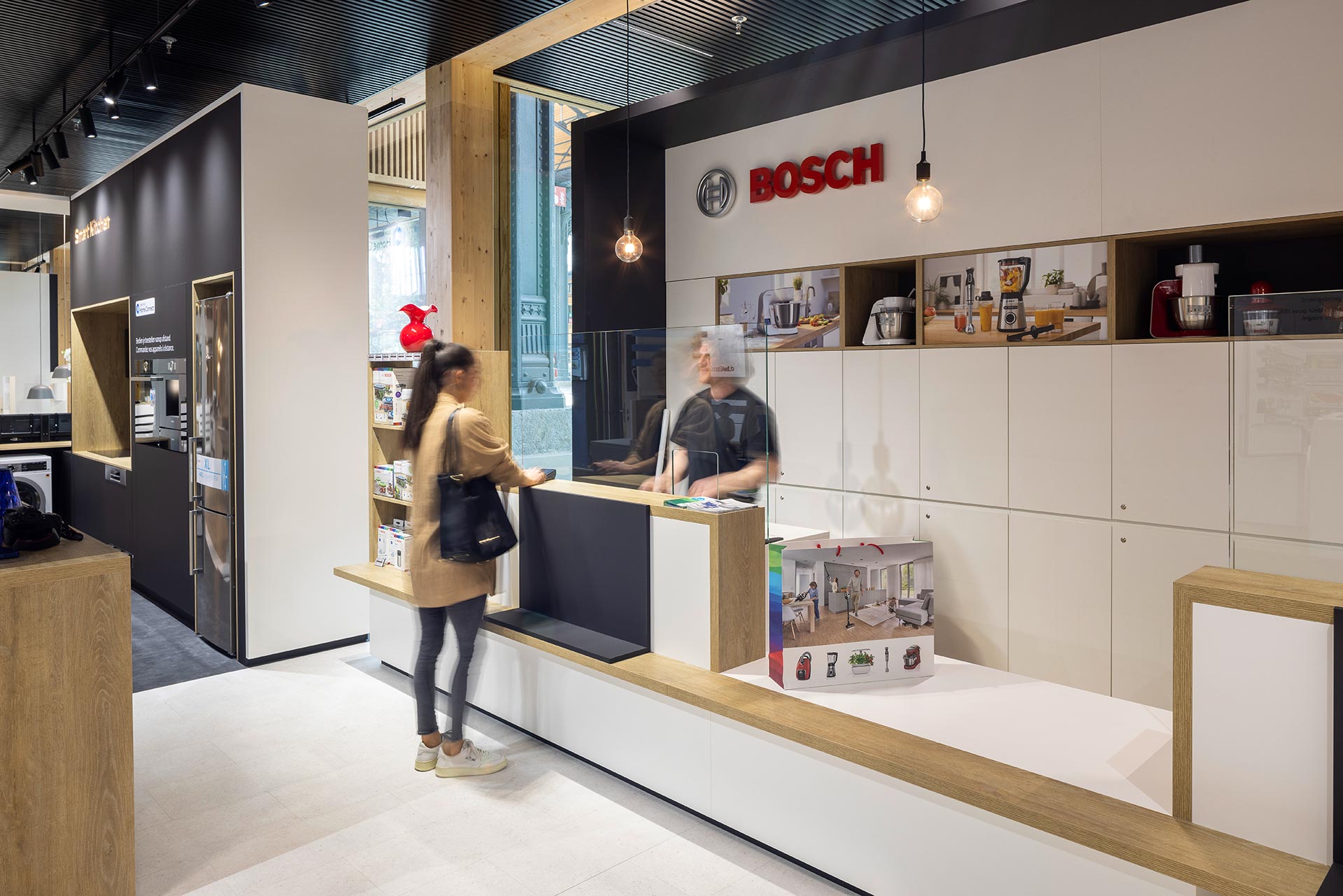
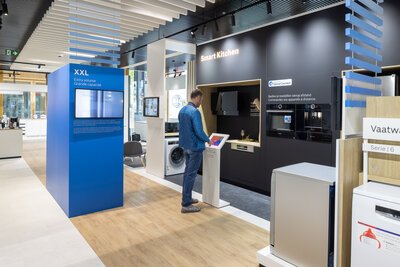
IF: Your “speciality” is the staging of brands at trade fair stands, in pop-up shops or showrooms. How is the integration of new technologies in this area or how important is the use of new media, especially in this “fast-moving” industry?
Michael Ostertag: The fast pace of life sometimes pushes us to the limits of brand strategies, because you have to take the customer on a targeted path in communication. If this changes completely every year, trust in a brand also breaks down. Large corporate architecture projects are planned for 20 to 40 years and accordingly designed to “age”. This is different from temporary architecture such as trade fair stands or pop-up stores, where we are lucky enough to always be able to present the brand with its finger on the pulse of time. We have to deal with technology in a completely different way in this area and can import and use new technologies from other industries. For this, we have also connected strongly with research and teaching in recent years.
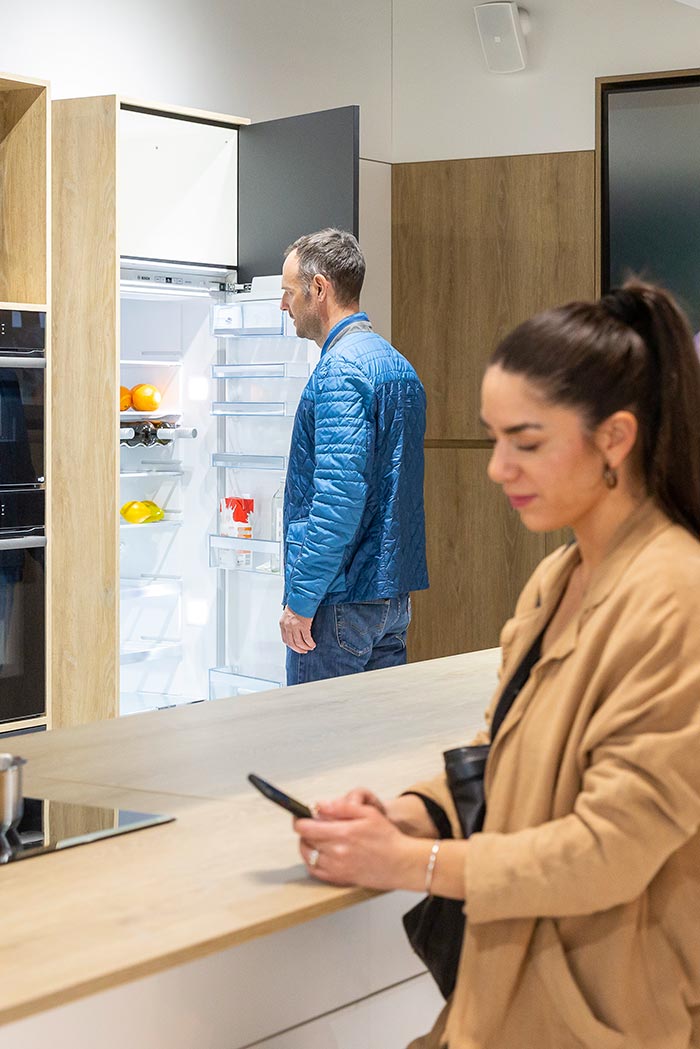
IF: How difficult is it to work for a brand in the field of tension between long-lasting concepts and staging on the pulse of time?
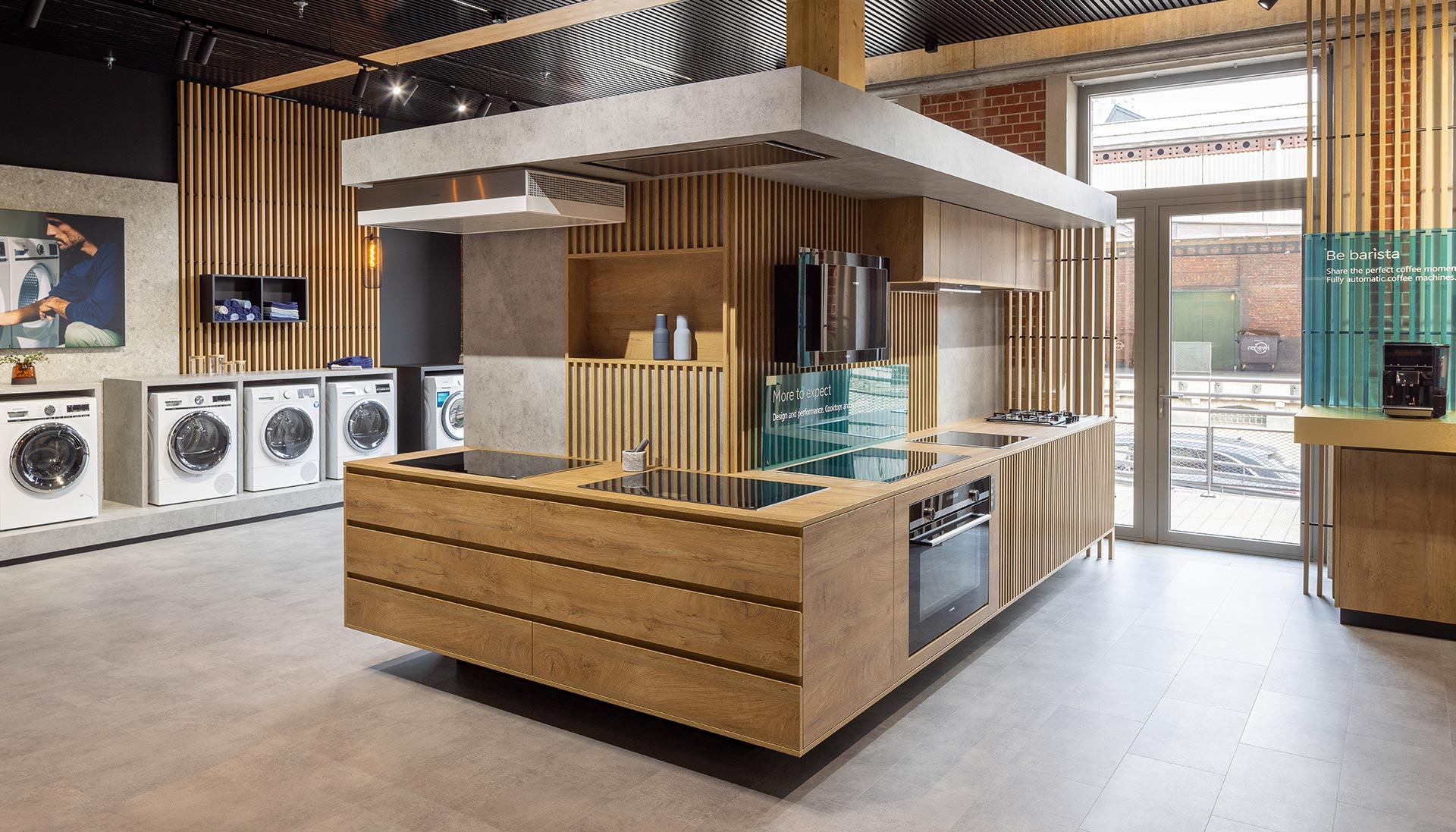
Michael Ostertag: There are no longer any long-lasting concepts or a lasting brand strategy in this sense. A current topic that also concerns me a lot is that we are only addressed with short-term experiences and no longer have long-term goals – also in brand communication. But this also means that trust in brands is lost to a certain extent. The purchase decision, which used to be very much associated with the values of a brand, is now triggered by “superficial” incentives in our noisy, experience-rich times. But that’s exactly why, in addition to current key themes, you need a strong brand identity. And in my opinion, this will experience a renaissance in the next ten years. Because the questions: “What does a brand stand for?”, “What makes a brand authentic and credible?” and “What does it offer me personally?” as well as the fundamental attitude of a brand will again become more of an influencing factor for people’s brand affiliation.
“The questions: “What does a brand stand for?”, “What makes a brand authentic and credible?” and “What does it offer me personally?” as well as the fundamental attitude of a brand will again become more of an influencing factor for people’s brand affiliation.“
Projekte, Inhalte und Themen, die sie auch interessieren könnten:
Starfinanz
Siemens | Virtual Launch
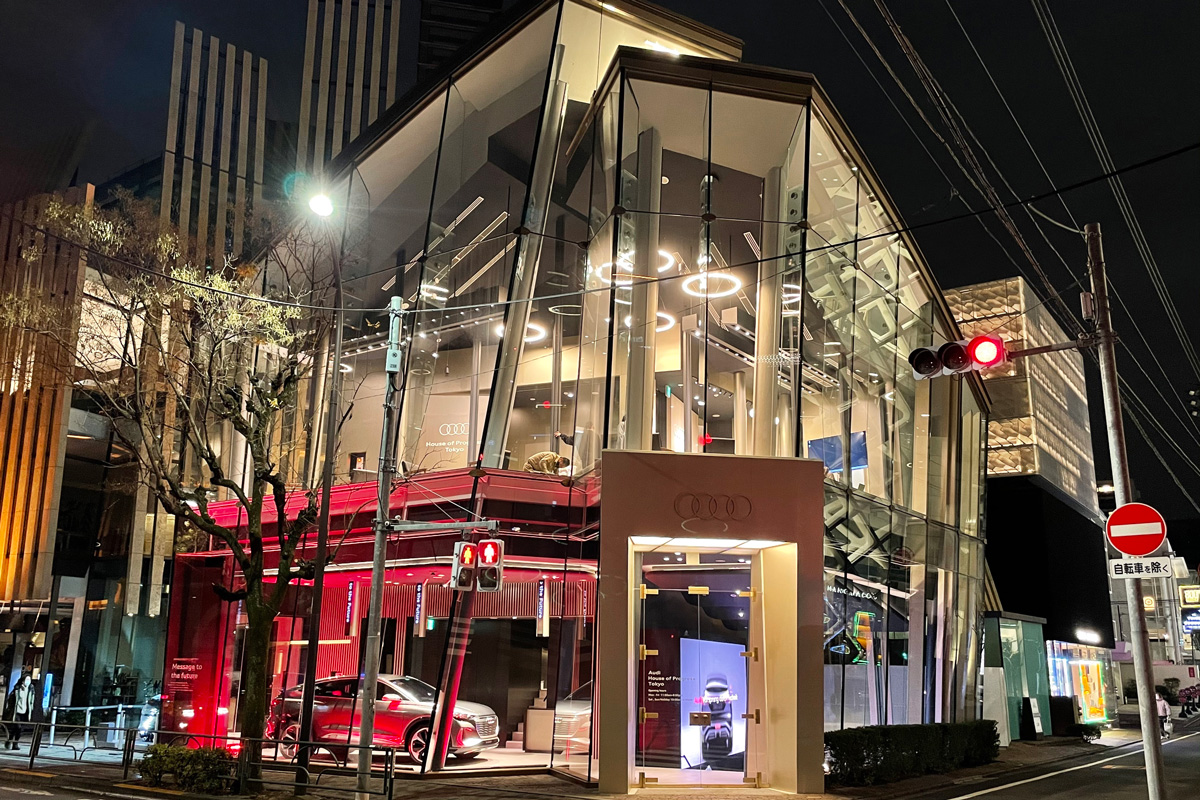
Audi | HoP Tokyo
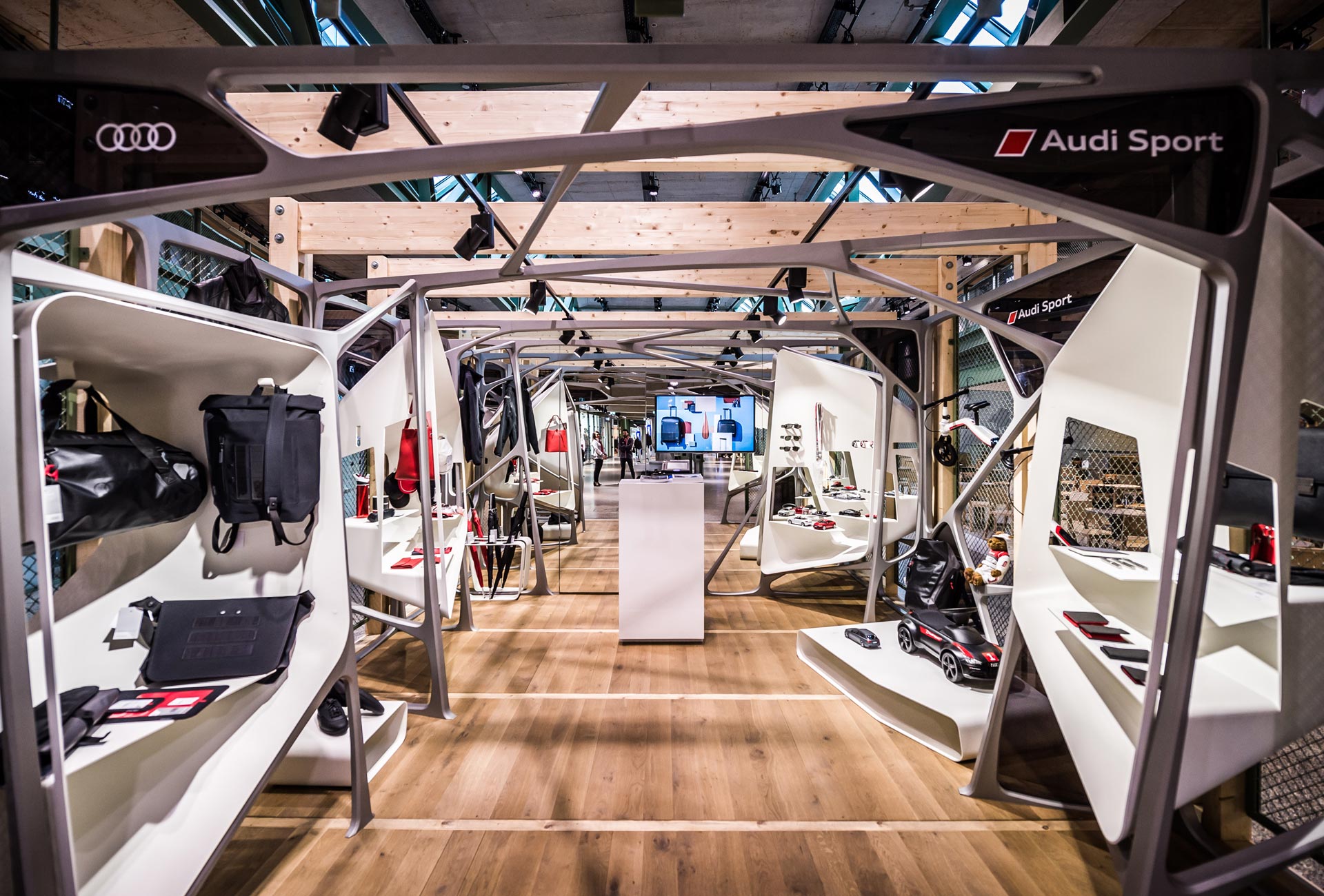
Audi | Pop Up Store
Ruf uns an:
+49 89 157997-0
Oder schreib uns:
info@schmidhuber.de
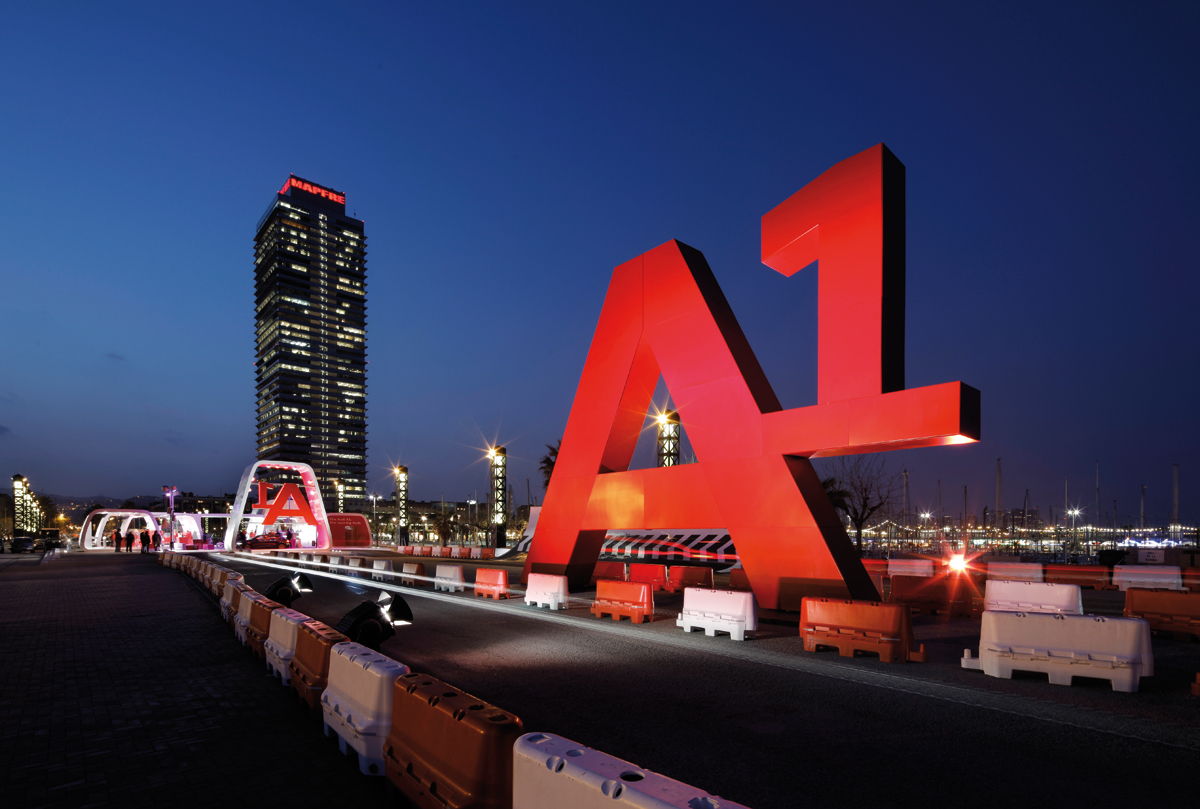
A1 Driving Experience in the heart of Europe
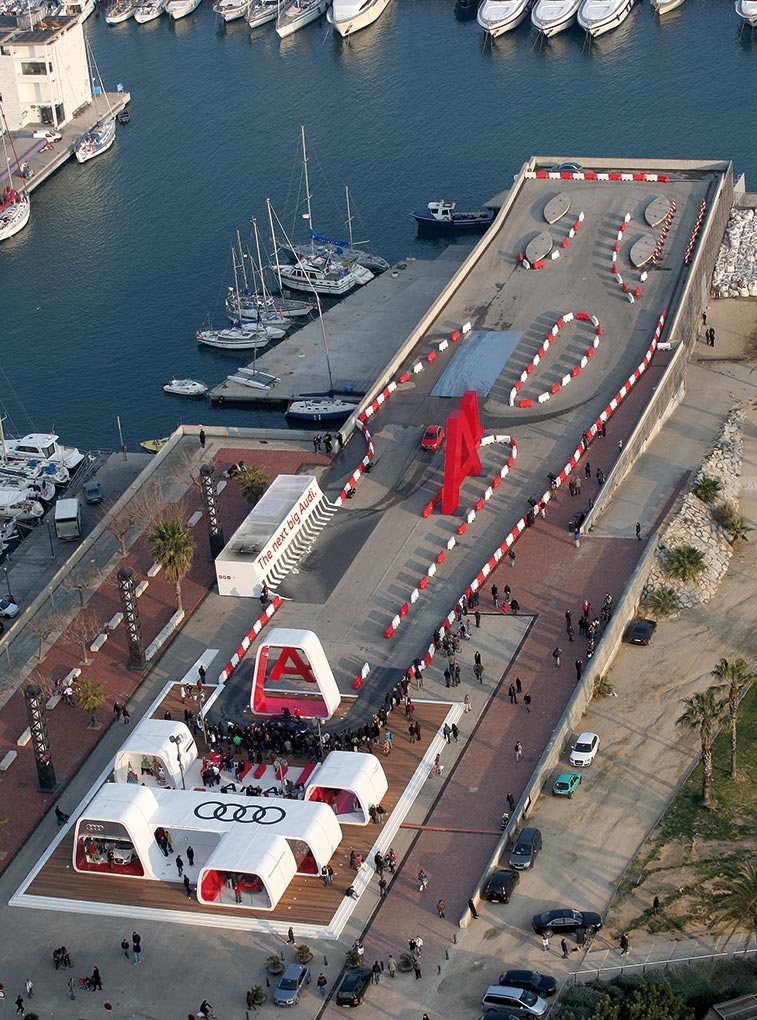
A mobile-modular brand experience for Audi A1. The conception: „To be where the customer is“, in the major cities of Europe. AreA1 combines scalable buildings and cross-media information and entertainment.
The design language of the modules was inspired by the A1’s single-frame radiator grill that forms a strong and recognizable modular brand architecture. The different kit from 165 to1,000 sq m are flexible in configuration and size. The 10 meters wide x 8 meters tall Audi A1 landmark illuminated Barcelona’s entire coastline.
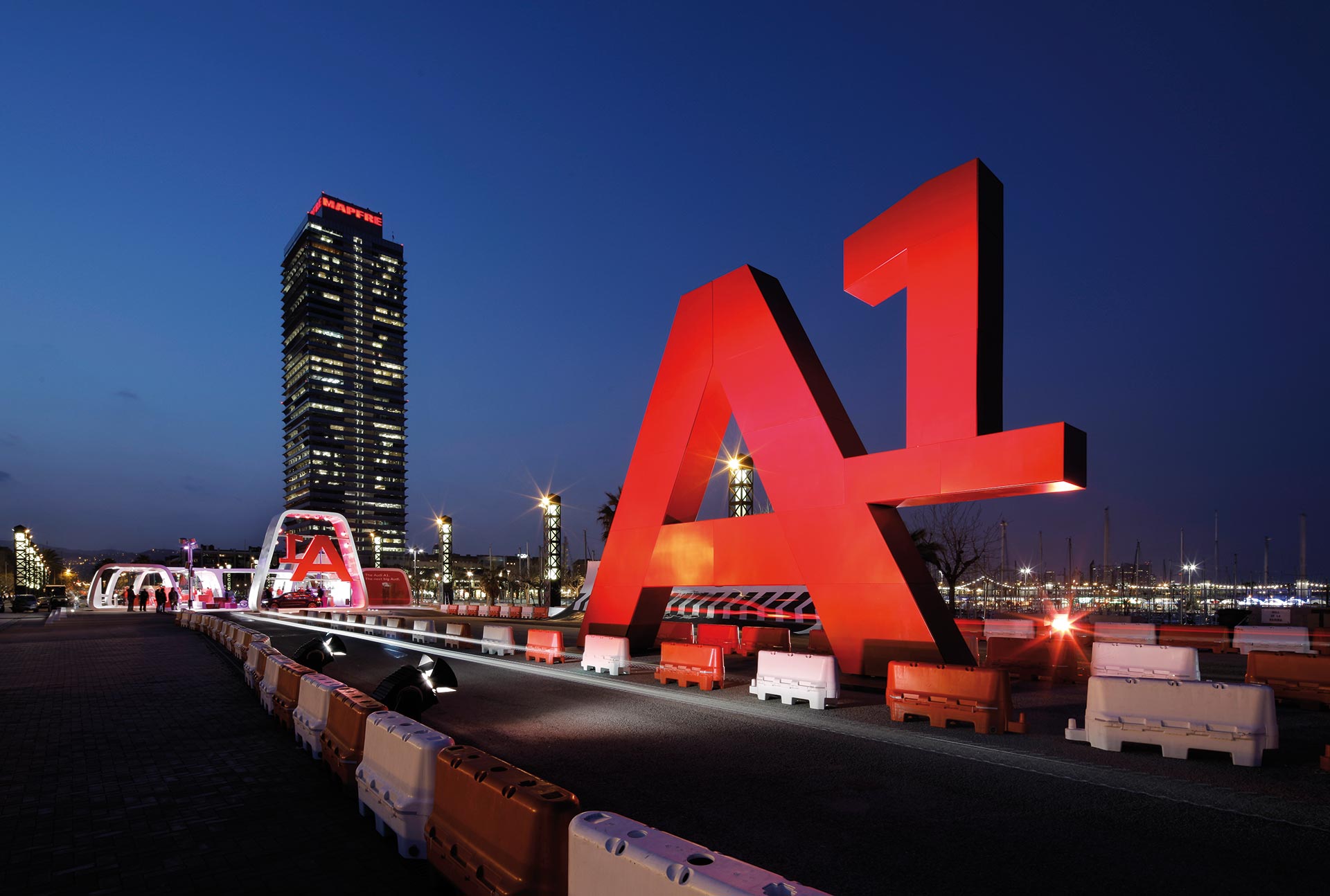
Instead of using conventional display equipment with scaffolding, spotlights and loudspeakers, the AreA1 Road show consists of a single, distinctive design space, exemplified by high-quality materials, surfaces and workmanship. The lighting rigs were designed exclusively for AreA1, with programmable light and sound systems to ensure a spectacular show at night. The customized display furniture was specially developed and is suitable for outdoor use. A true urban island in Barcelona’s prime location.
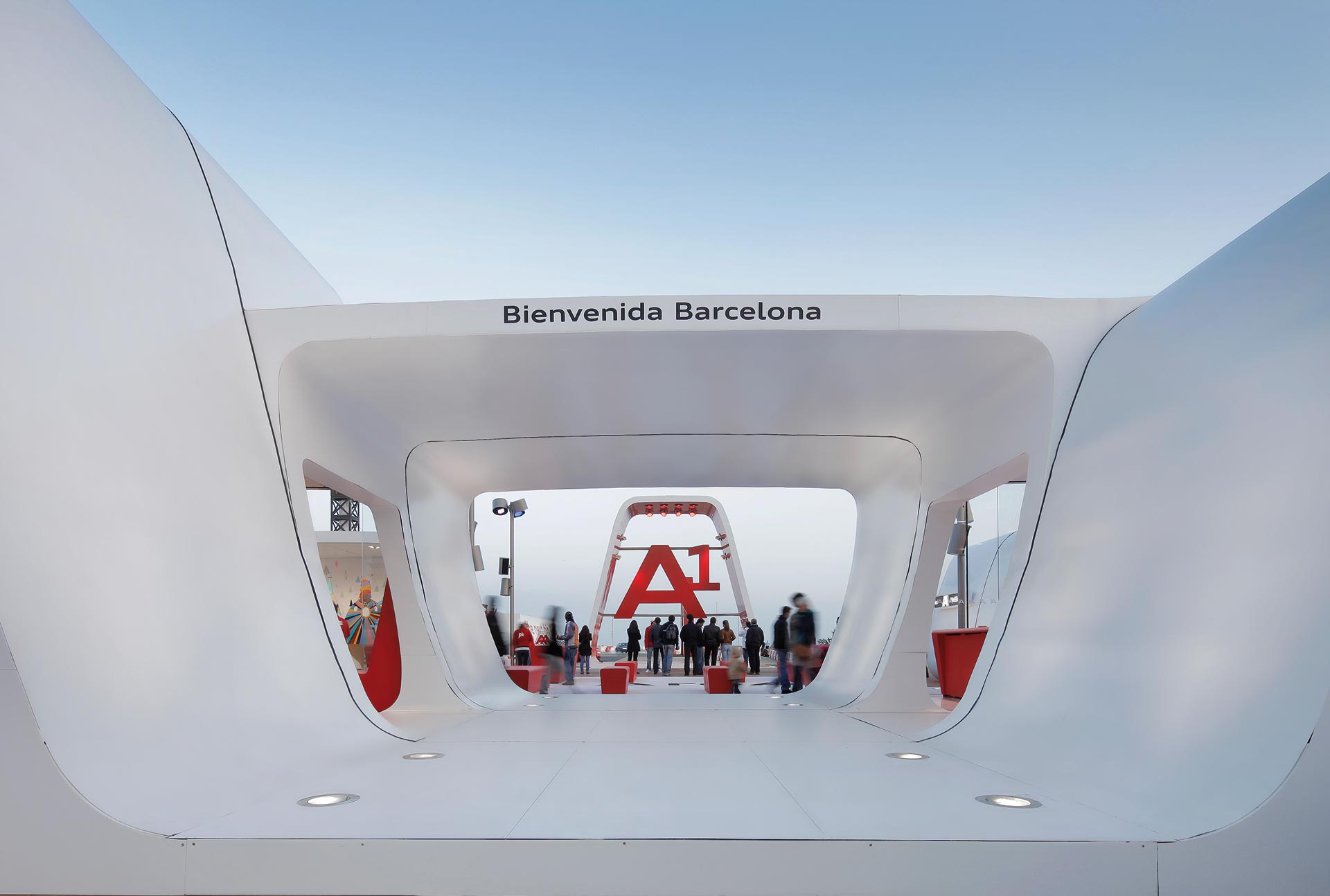
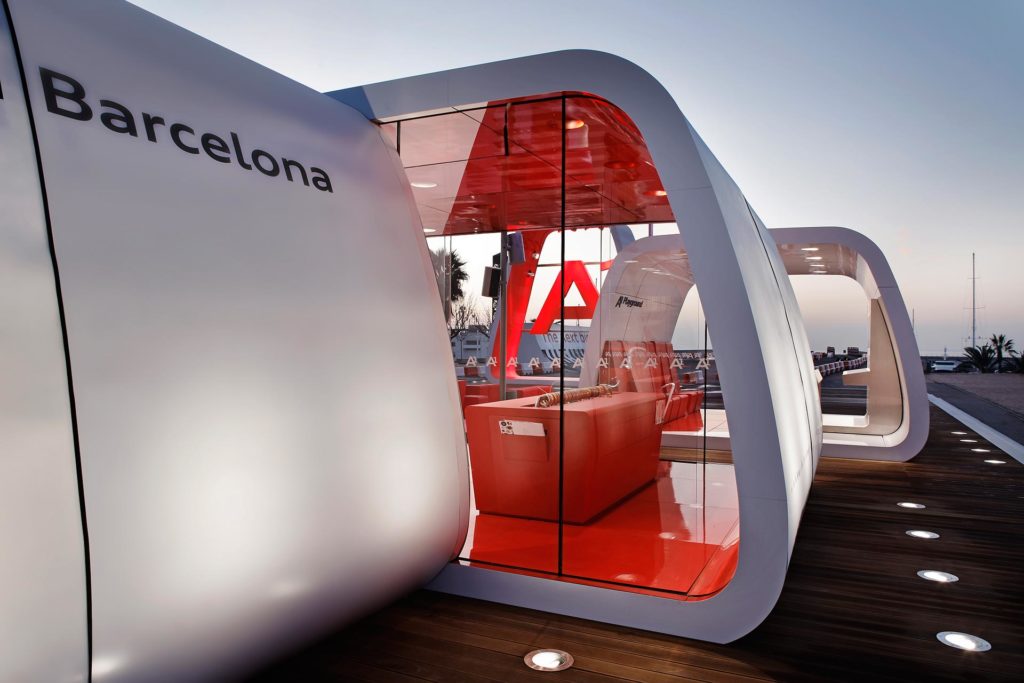
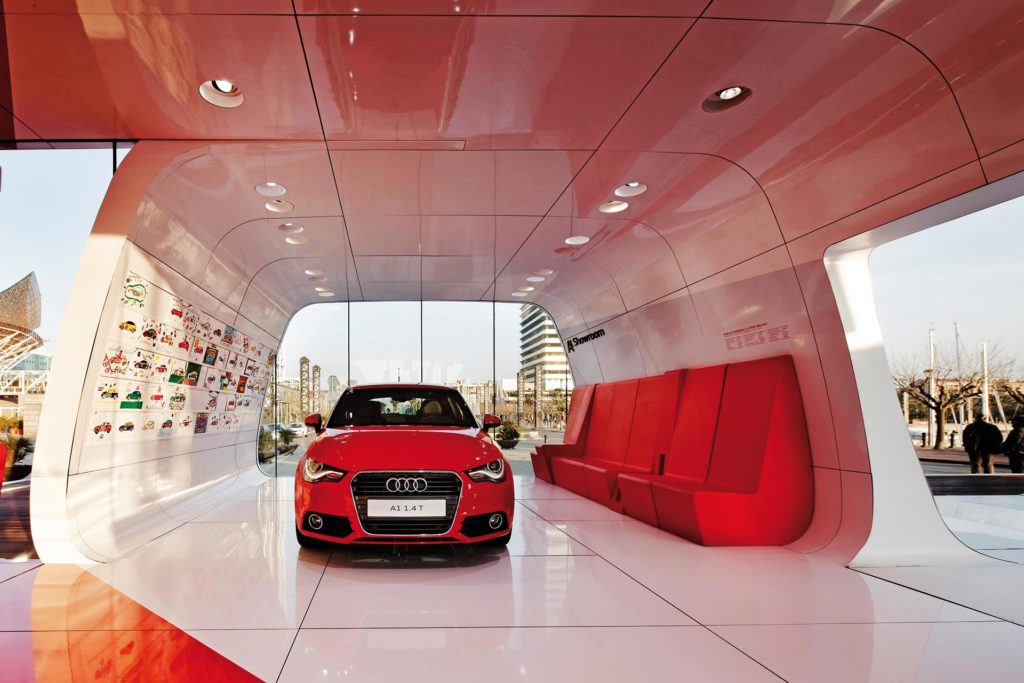
The design language of the modules was inspired by the A1’s single-frame radiator grill that forms a strong and recognizable modular brand architecture. The different kit – from S (165 sq m) to XL (1,000 sq m) – are flexible in configuration and size, and produce a variety of spatial compositions, as well as open and closed perspectives. The AreaA1 Roadshow also features a 10 meters wide x 8 meters tall Audi A1 landmark that illuminates Barcelona’s entire coastline.
The lighting rigs were designed exclusively for AreA1, with programmable light and sound systems to ensure a spectacular show at night. The customized display furniture has clear edges and no visible joints or seams, and was specially developed for the occasion and is suitable for outdoor use. The hard-foam material from which the desks and other furnishings are molded, is coated with a special rubber material to form a surface that delivers a unique and striking feel. The entire structure sits on a slightly elevated 25 m x 34 m stage that is also constructed from high-quality materials. The stage integrates all the elements to create its own unique brand space in the middle of an urban environment – a true urban island in Barcelona’s prime location.
“Our focus at the AreA1 roadshow was to develop a concept, which could be applied irrespective of the urban space around it. The ability to thrill customers is the marketing strategy of the future. That’s what we design spaces for.”
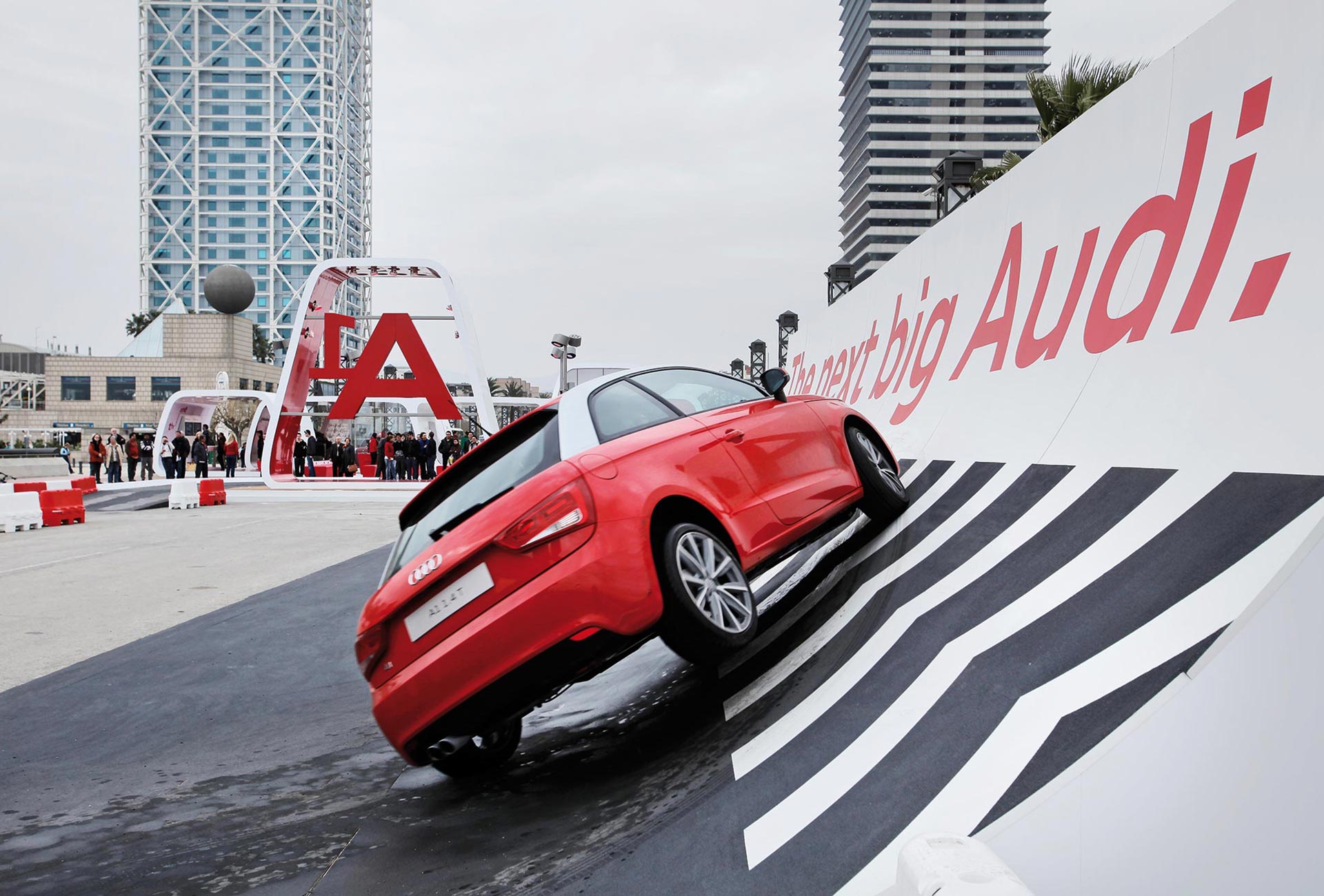
Exhibition areas designed to display product information, vehicle configuration and connectivity issues in a lively and engaging manner: The „A1-Marketplace“ with jukebox, digital greetings, WLAN, water ice is the place to chill. „A1-Lab“ shows interactive configuration, connectivity, info. „A1 Workshop“ attracts creative people. „A1-Playground“ invites to efficiency-contest. „A1-Gallery“ integrates local artists. „A1-Driving Experience“ is a shotgun ride on the extreme course with instructors.
Projekte, Inhalte und Themen, die sie auch interessieren könnten:
Ningbo | Exhibition Center
Audi | Dealer Meeting
Audi | Exclusive Lounge
Samsung | IFA
Ruf uns an:
+49 89 157997-0
Oder schreib uns:
info@schmidhuber.de
An urban meeting space in the heart of Ningbo
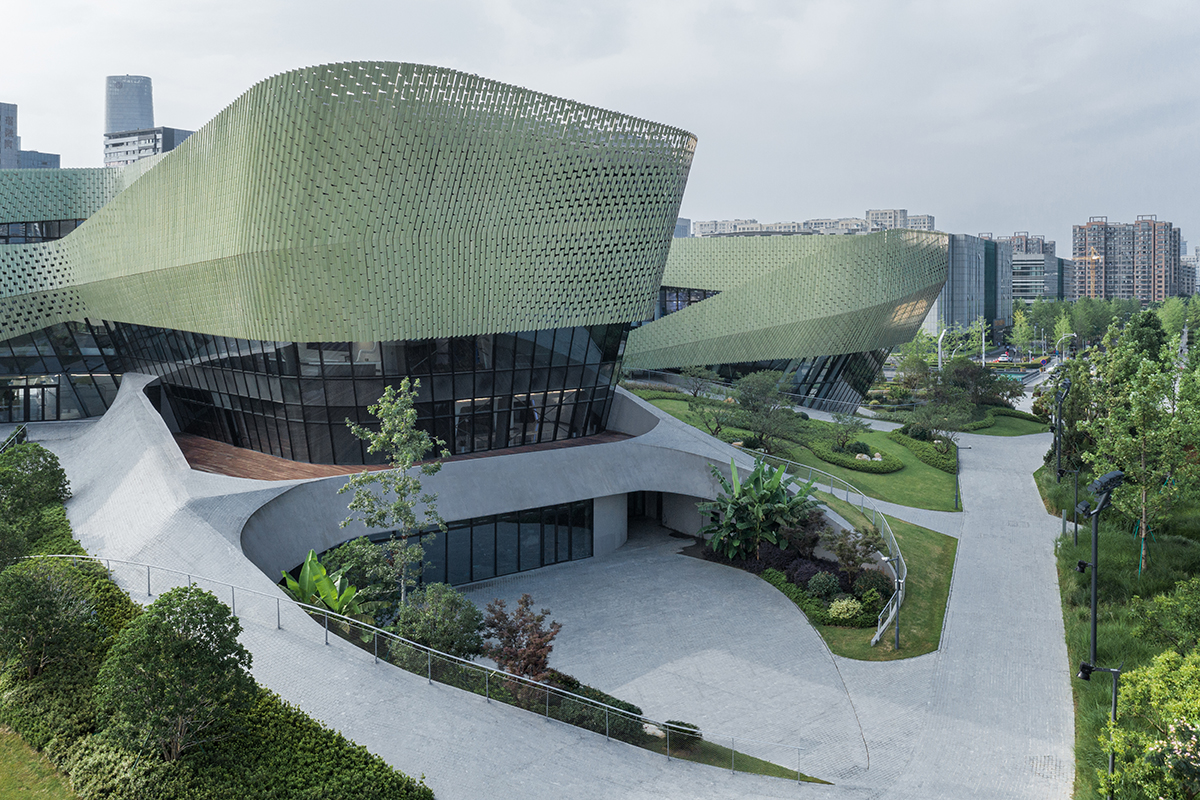
Prompted by surging urban growth in many of the nation’s larger cities, the Chinese “Urban Planning Museums” are generally intended to communicate important city planning and development issues to the public. The Ningbo Urban Planning Exhibition Center interprets this concept by way of a forum-like design in which discussions between politicians, professionals and the public may take place. In the new Center, the lines between citizens and decision-makers are blurred; visitors are given rare access to the inner-workings of their city. Our goal has foremost been to create an engaging, accessible public space in the new district, and thereby strengthen both physical and social ties between the local government and community. Playze and Schmidhuber have won the invited competition to design the Urban Planning Exhibition Center in Ningbo, China.
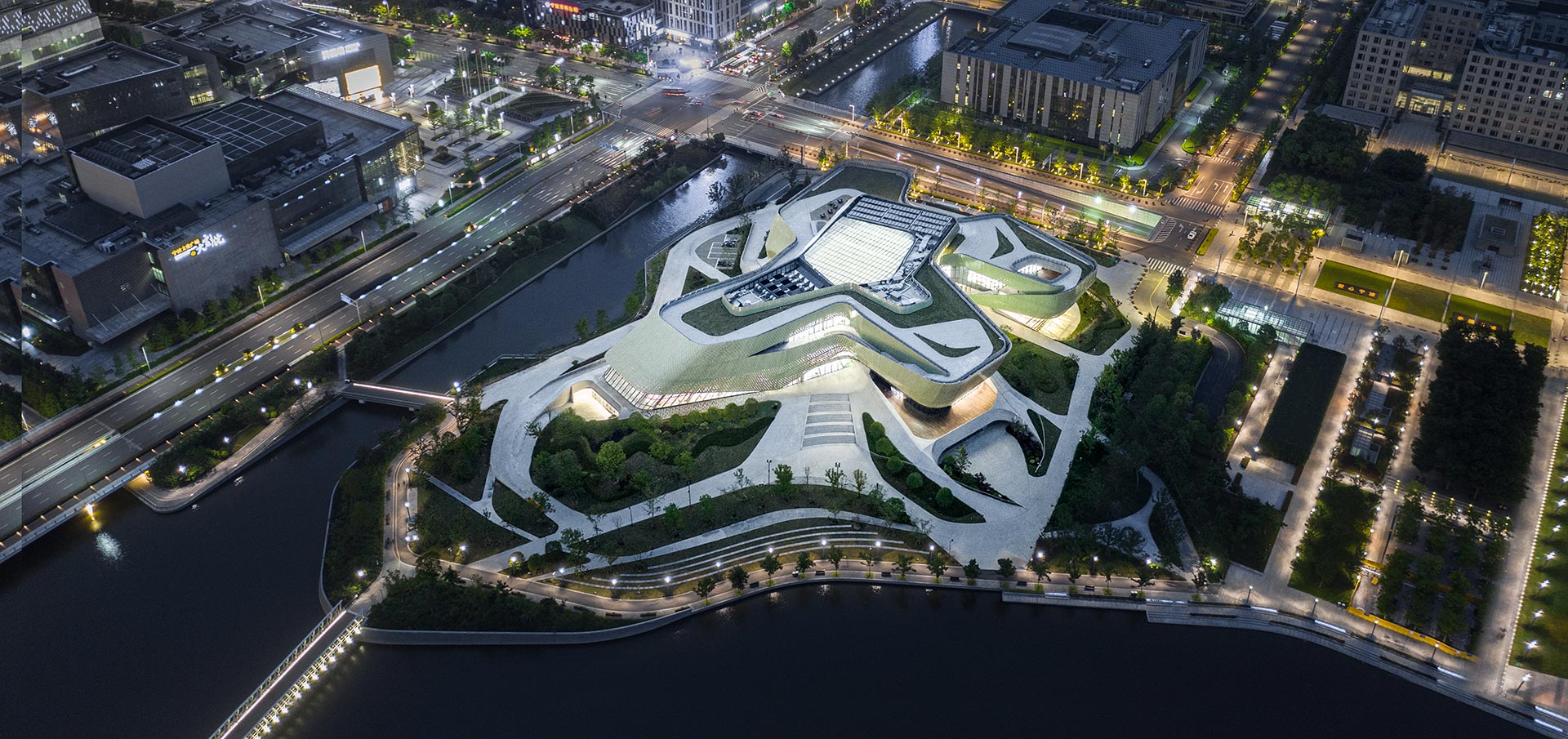
Our main goal was to create an accessible and attractive public space that would facilitate and promote communication between the city’s various stakeholders
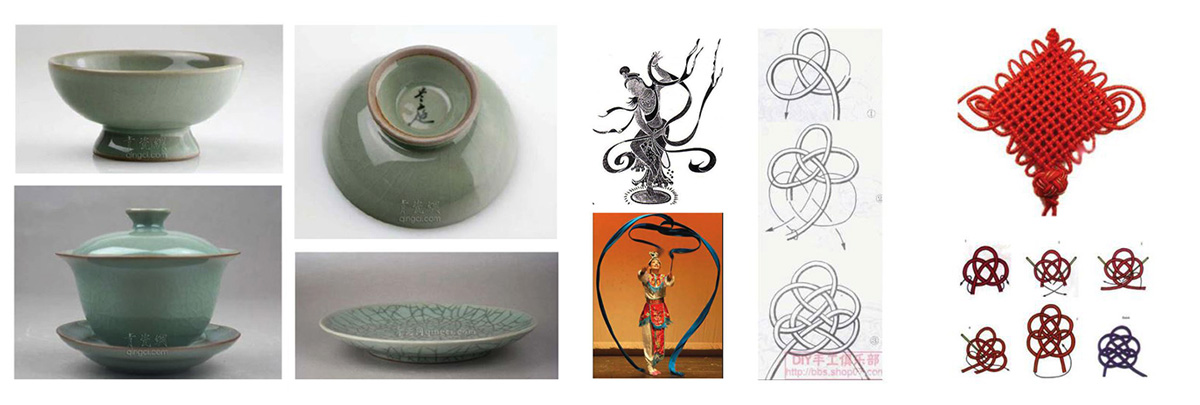
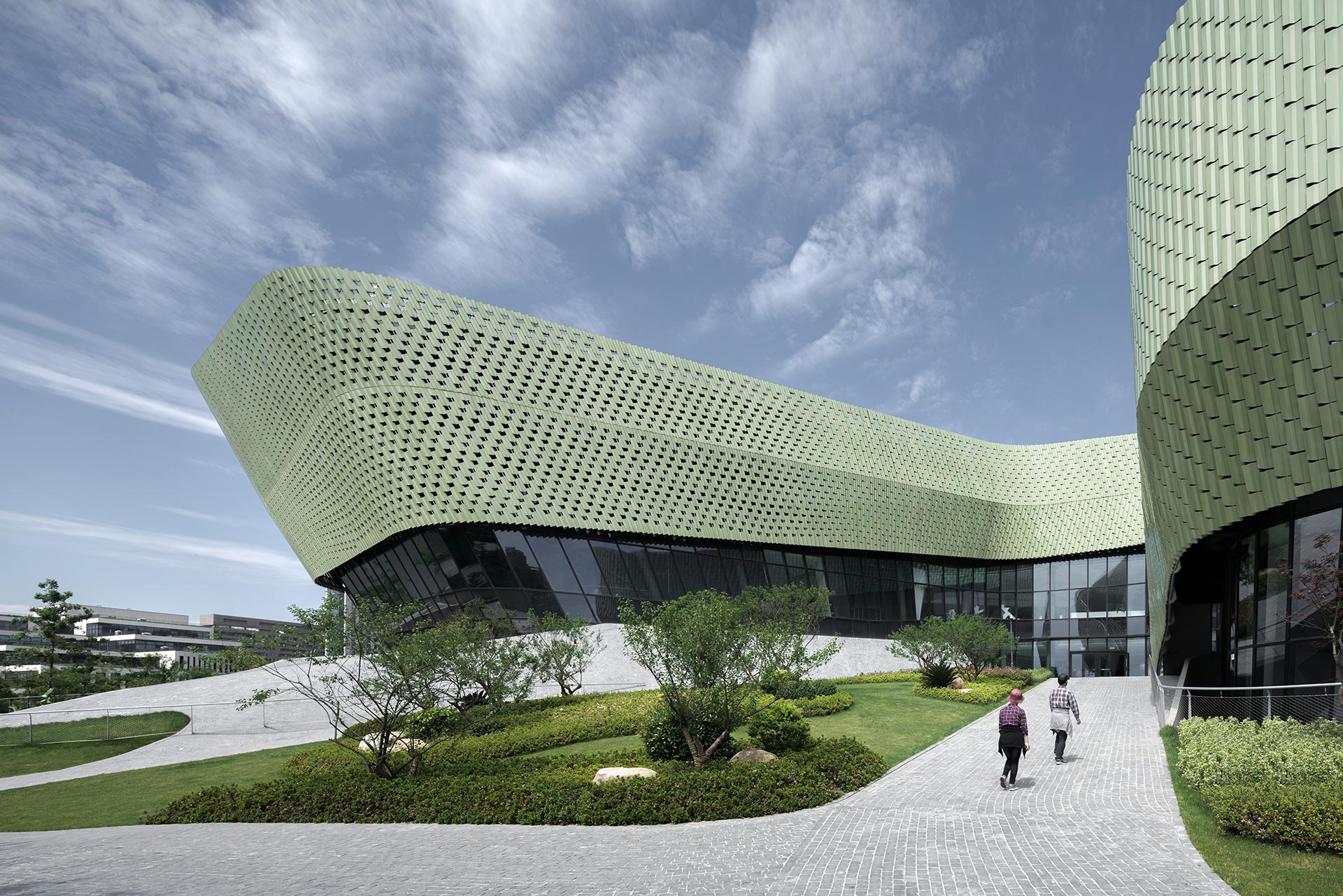
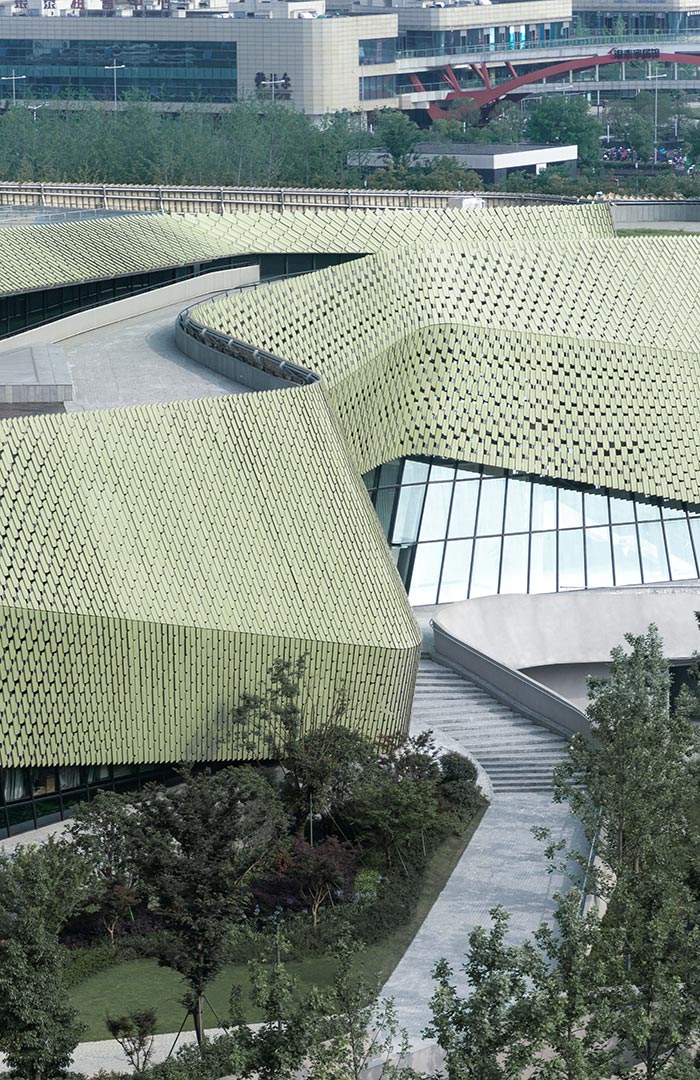
The reference of the chinese knot became a potential concept for the design as an organizational system for the exhibition and the ciculations inside the building. The green color of the facade comes from the traditional chinese craftmanship of cermamics.
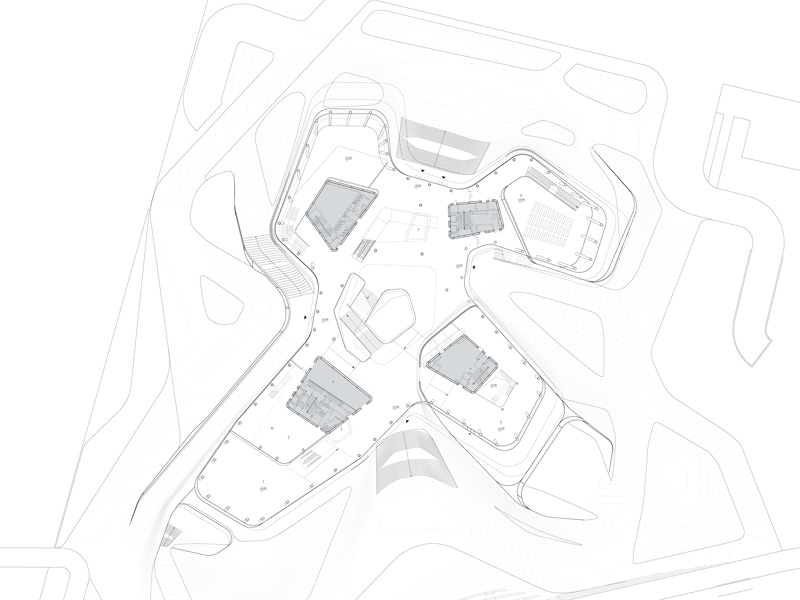
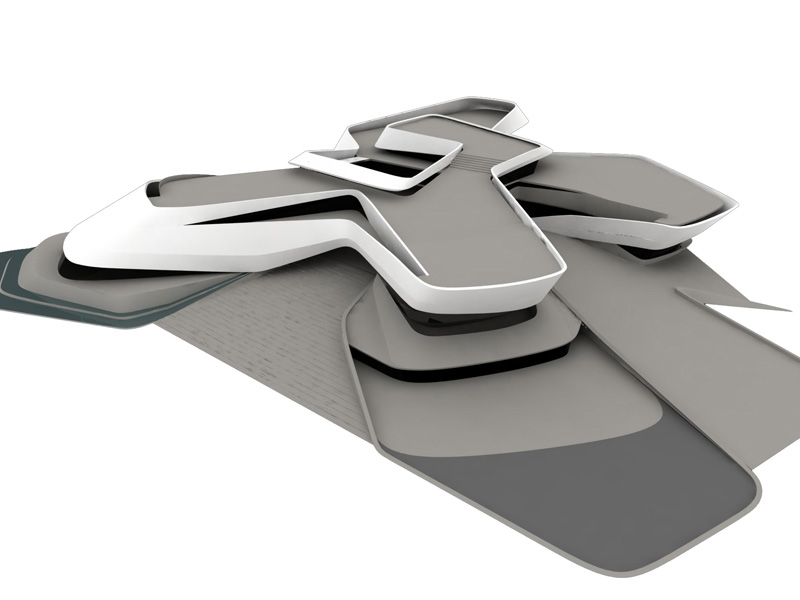
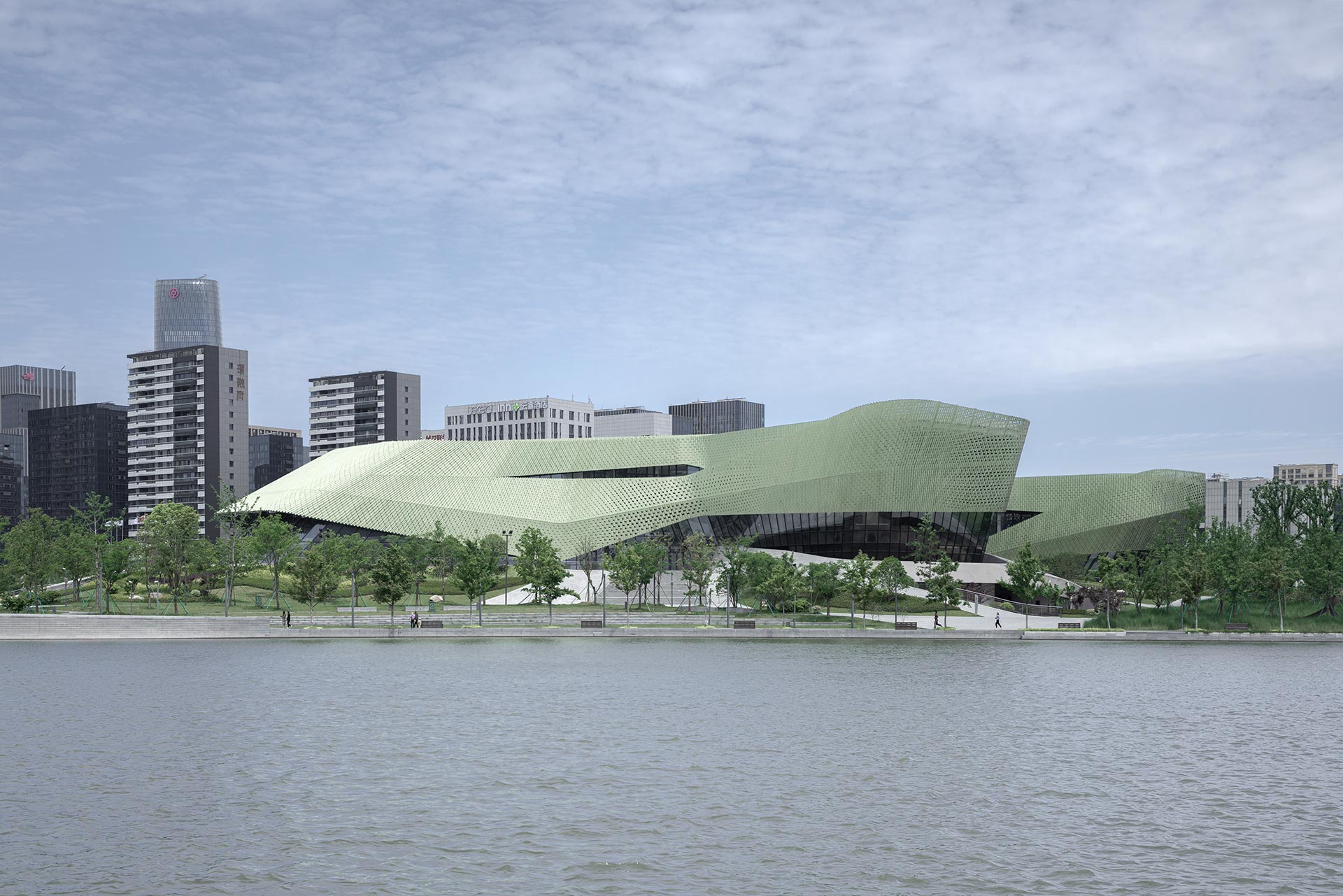
The Exhibition center anchors the urban district of Ningbo Eastern New City: a fresh suburban swath of equal parts high-rise and high-way, still searching for its own identity. Urbanistically speaking, the new Planning Exhibition Center aims to bring intimacy to these wild new spaces. The building’s faceted perimeter blends horizontally into it’s context, reacting and sometimes mirroring existing site conditions. The four large entrances lead to a lobby space and multi-story atrium.
The reference of the chinese knot became a potential concept for the design as an organizational system for the exhibition and the ciculations inside the building. The green color of the facade comes from the traditional chinese craftmanship of cermamics.
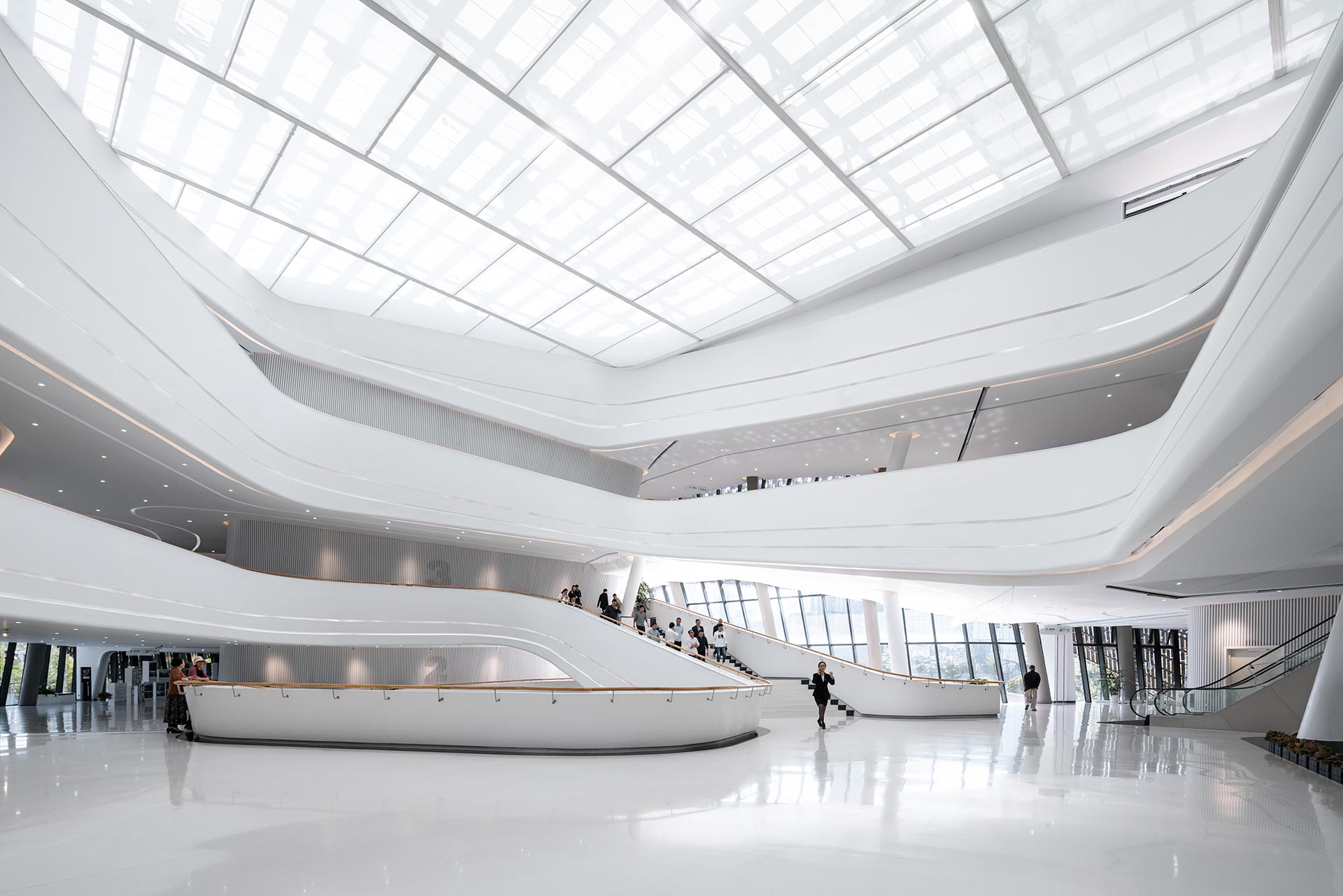
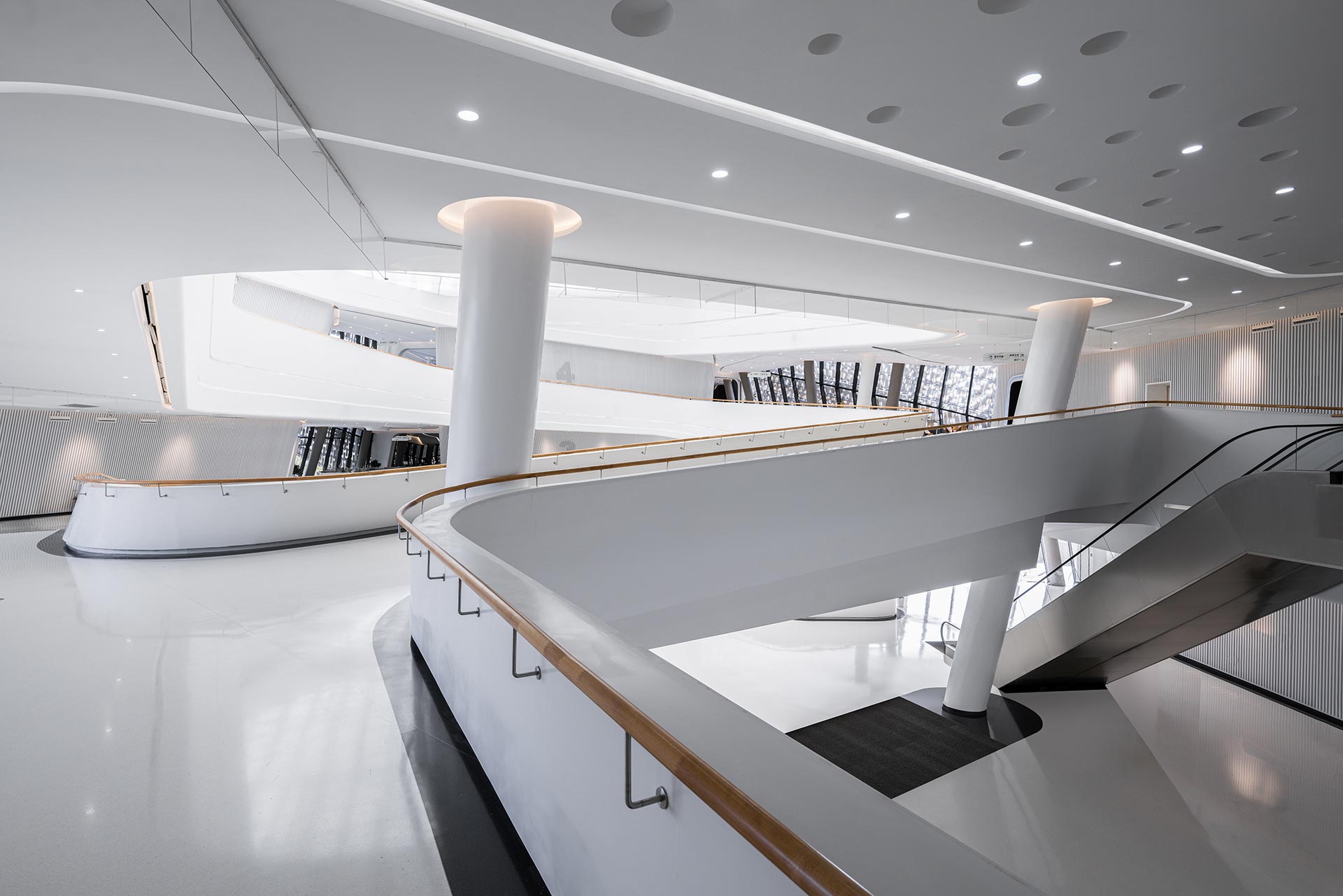
The City of Ningbo has a rich history in ceramic production. It was here that the so-called Ceramic Road began, and the city played an important role in the national and international trade of ceramics throughout the civilization’s history. That said, the use of ceramics is not simply an homage to the local traditions of Ningbo; the building’s textured glazedceramics also create ephemeral reflections of surrounding cityscape. These reflections animate the facade with varying intensity depending on time of day, season, weather, etc.
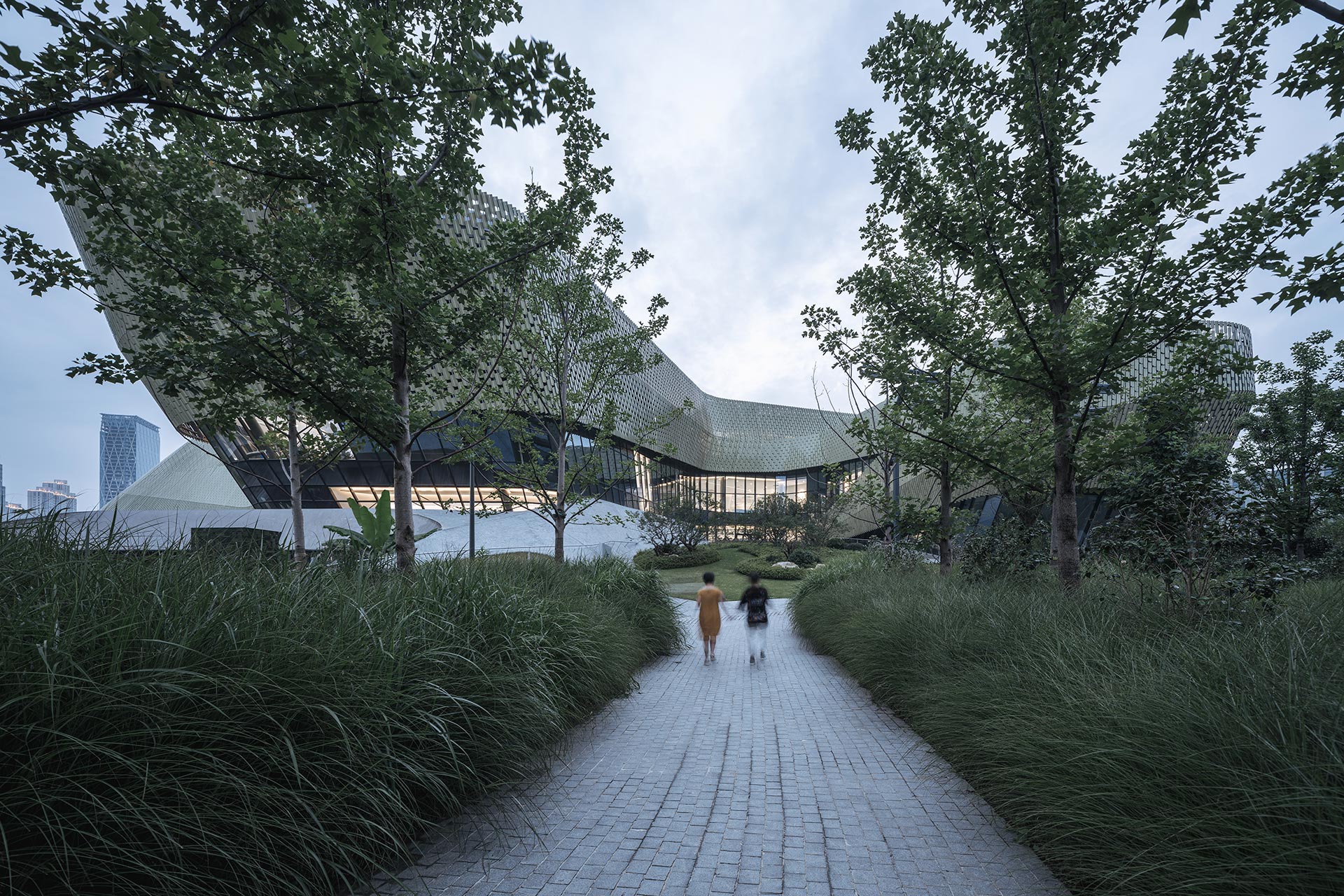

For us, this project came to epitomize boundless collaboration. From this international cooperation—which embraced partnership, digital and modern technology—a regional communication hub emerged.
It was never the intention to demonstrate the capabilities of digital tools by means of this project. Nevertheless, this building couldn’t have been designed, developed, produced and built without the help of cutting-edge digital technology. In order to cope with the complexity of the spatial allocation and coordination of the structure, curtainwall, secondary structure and ceramic skin a tailor-made computer script had to be coded. The script automatically generated a 3D model of the structure and façade, as well as production drawings for the respective contractors.
Projekte, Inhalte und Themen, die sie auch interessieren könnten:
P&G | Brand Pavilion
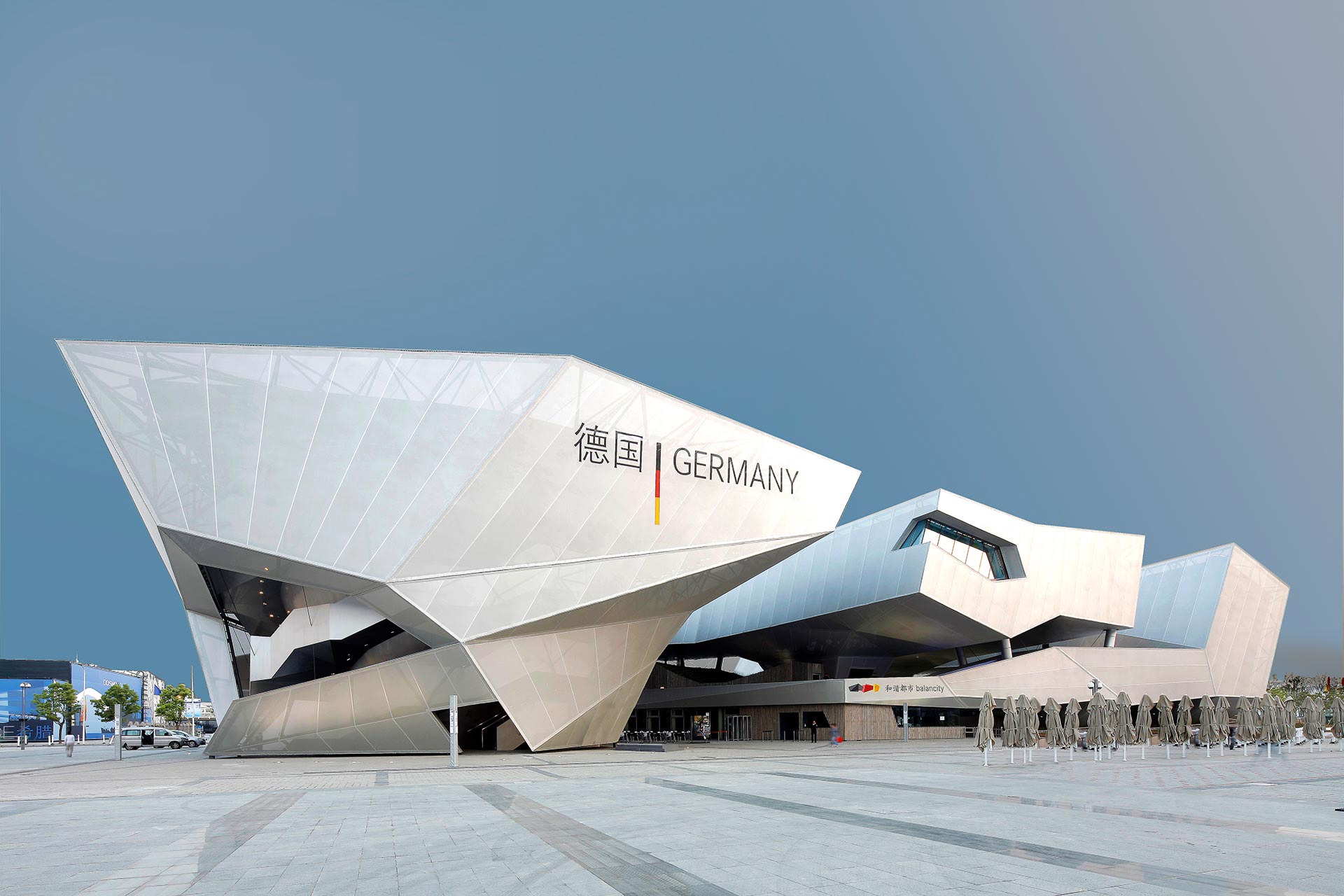
BMWI | Expo Shanghai
Audi | Dealer Meeting
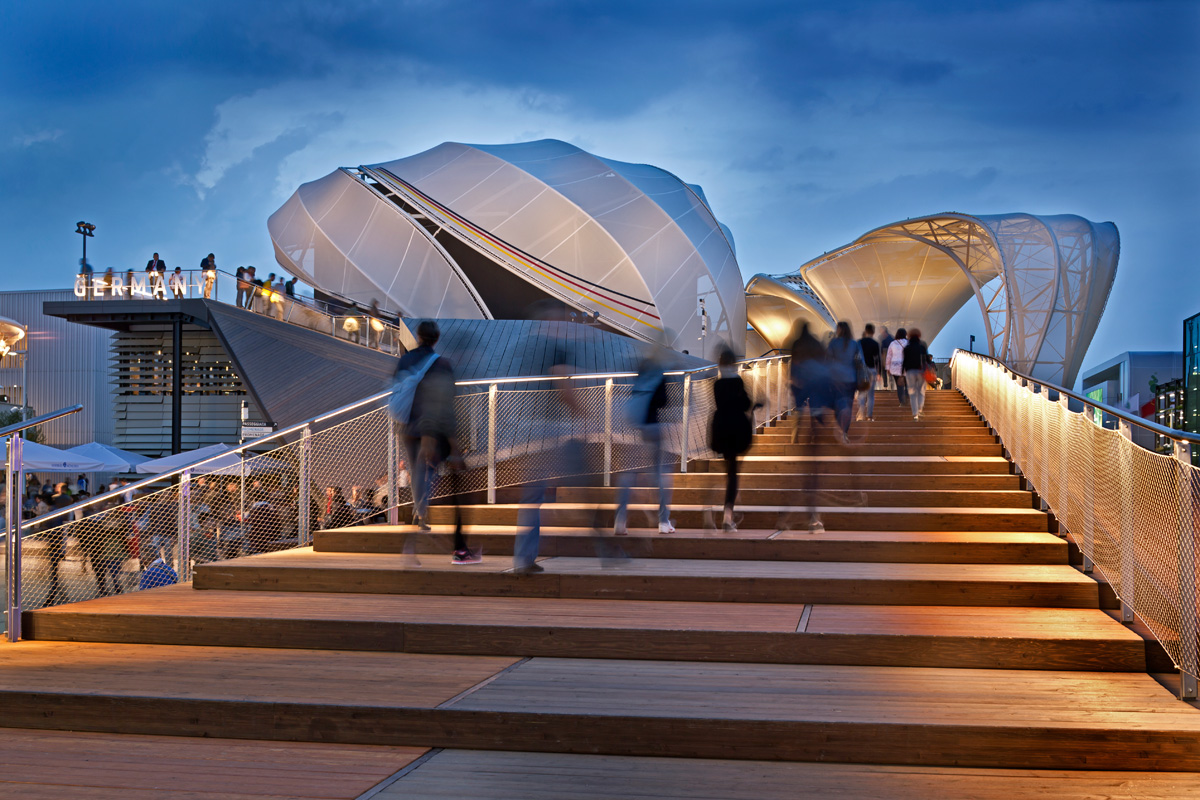
BMWI | Expo Mailand
Ruf uns an:
+49 89 157997-0
Oder schreib uns:
info@schmidhuber.de
„Feeding the Planet, Energy for Life“
EXPO 2015 in Milan showcases the theme “Feeding the Planet, Energy for Life”, offering answers to the major future challenges of human nutrition. In the context of a conceptual master plan, this world exhibition introduces a clear paradigm shift by dispensing with prestigious monumental buildings, and by presenting itself rather as a “sustainable AgroFood Park”.
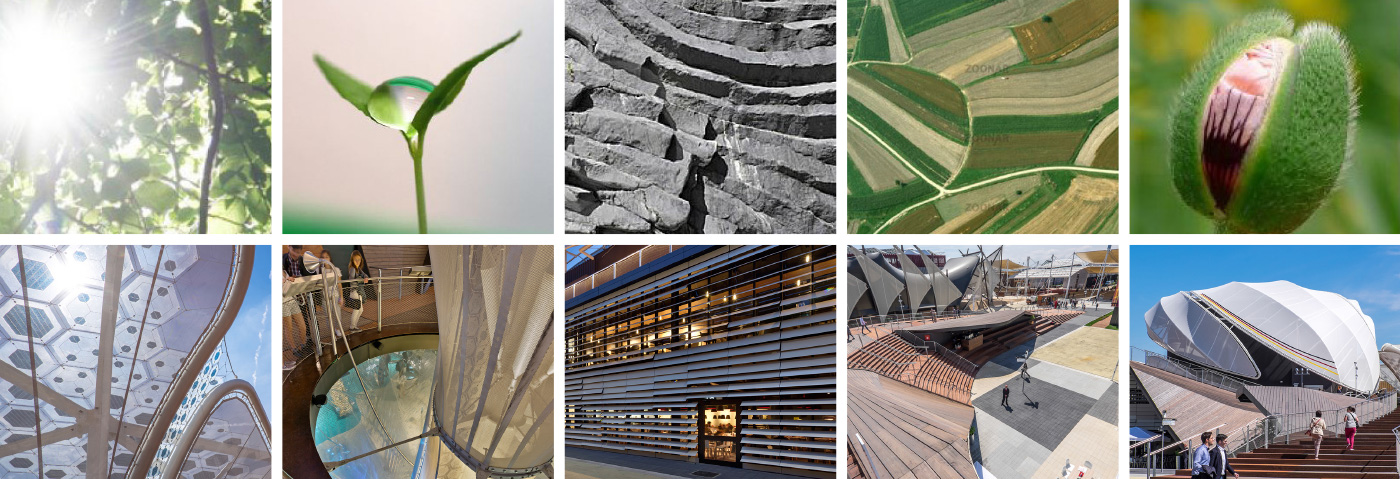
“What we’ve learnt from previous global exhibitions is that visitors enjoy an immersive experience when they visit a pavilion. They want to be able to pick something up, touch it, move it. That’s why we wanted to bring something extraordinary to Milan, something that would forever remain engrained on visitors’memories.”
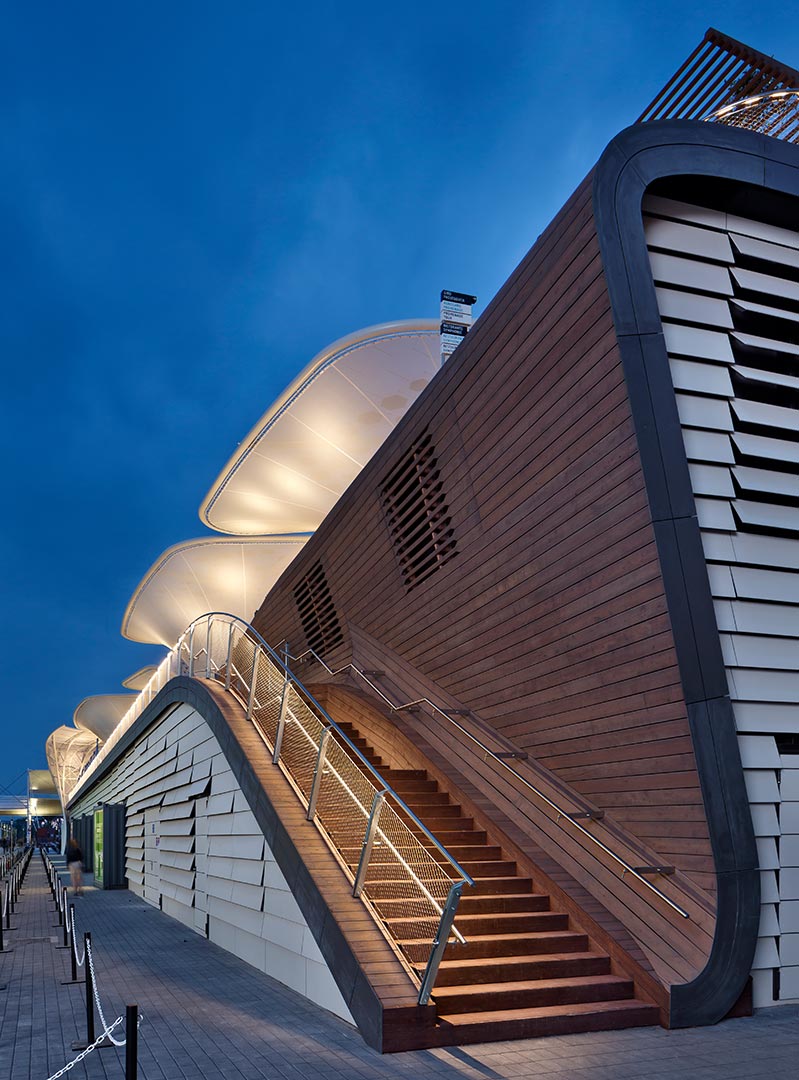
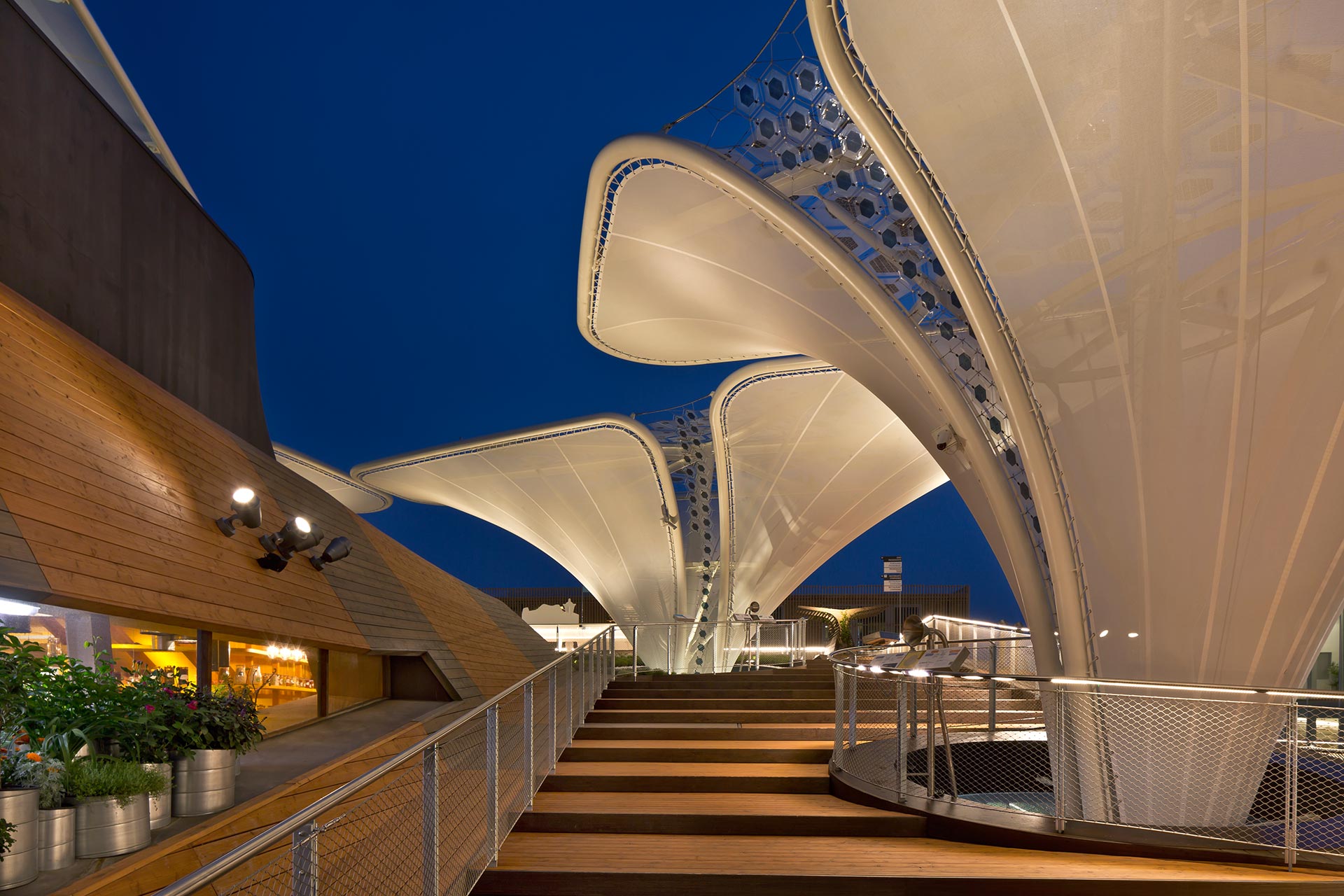
The German Pavilion offers visitors to EXPO 2015 insight into innovative and at times surprising approaches from Germany in human nutrition in the future, and invites visitors to take action themselves. Germany depicts agriculture as a strong, modern sector and an intrinsic aspect of its unique cultural landscape.
The pavilion offers visitors a new and quite unexpected Germany: open, warm, friendly and whimsical – clearly bringing the pavilion’s motto to life: “Fields of Ideas”.
You are currently viewing a placeholder content from YouTube. To access the actual content, click the button below. Please note that doing so will share data with third-party providers.
More Information

The German pavilion translates the German field and meadow landscape into its architecture in a striking and surprising way: a building consisting of a gently sloping landscape level with a freely accessible surface and a thematic exhibition inside.
Formally, the architecture is reminiscent of a “supplanted landscape” set in the pavilion’s premises which gradually slopes upward to a height of 10 meters. The German pavilion then applies the concept of stylised fields and meadows in great detail. The use of different native woods, with varied grains and tones, creates a highly distinctive design.
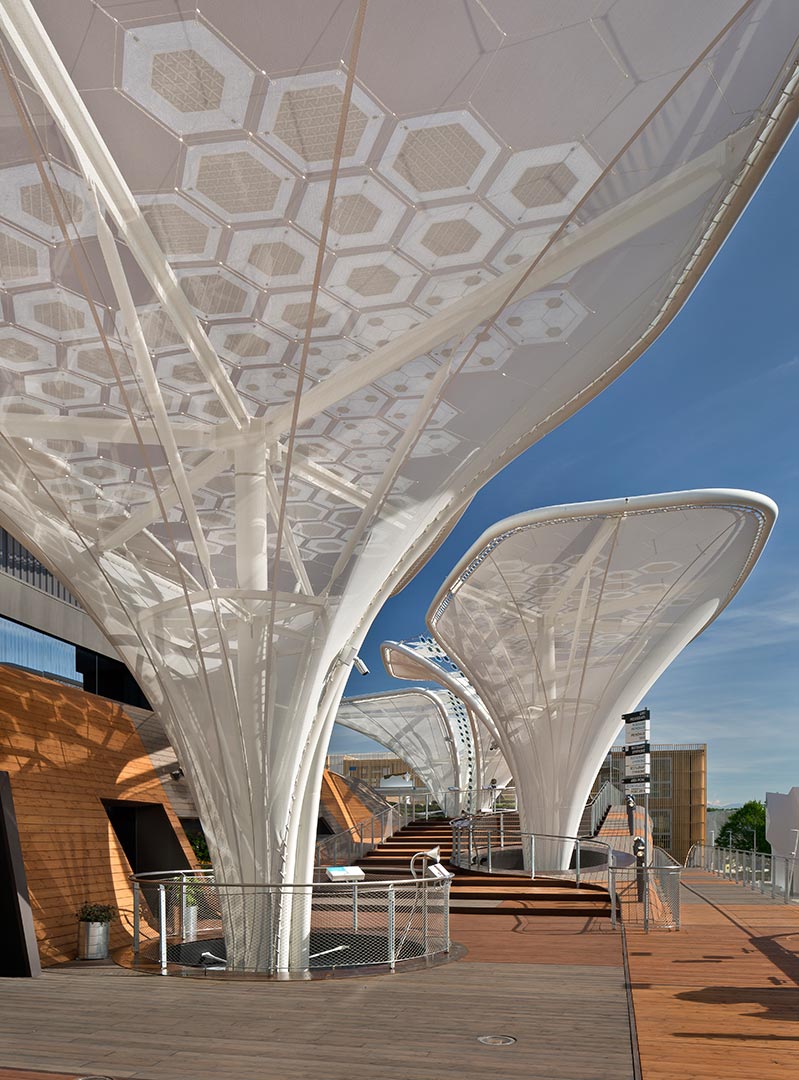
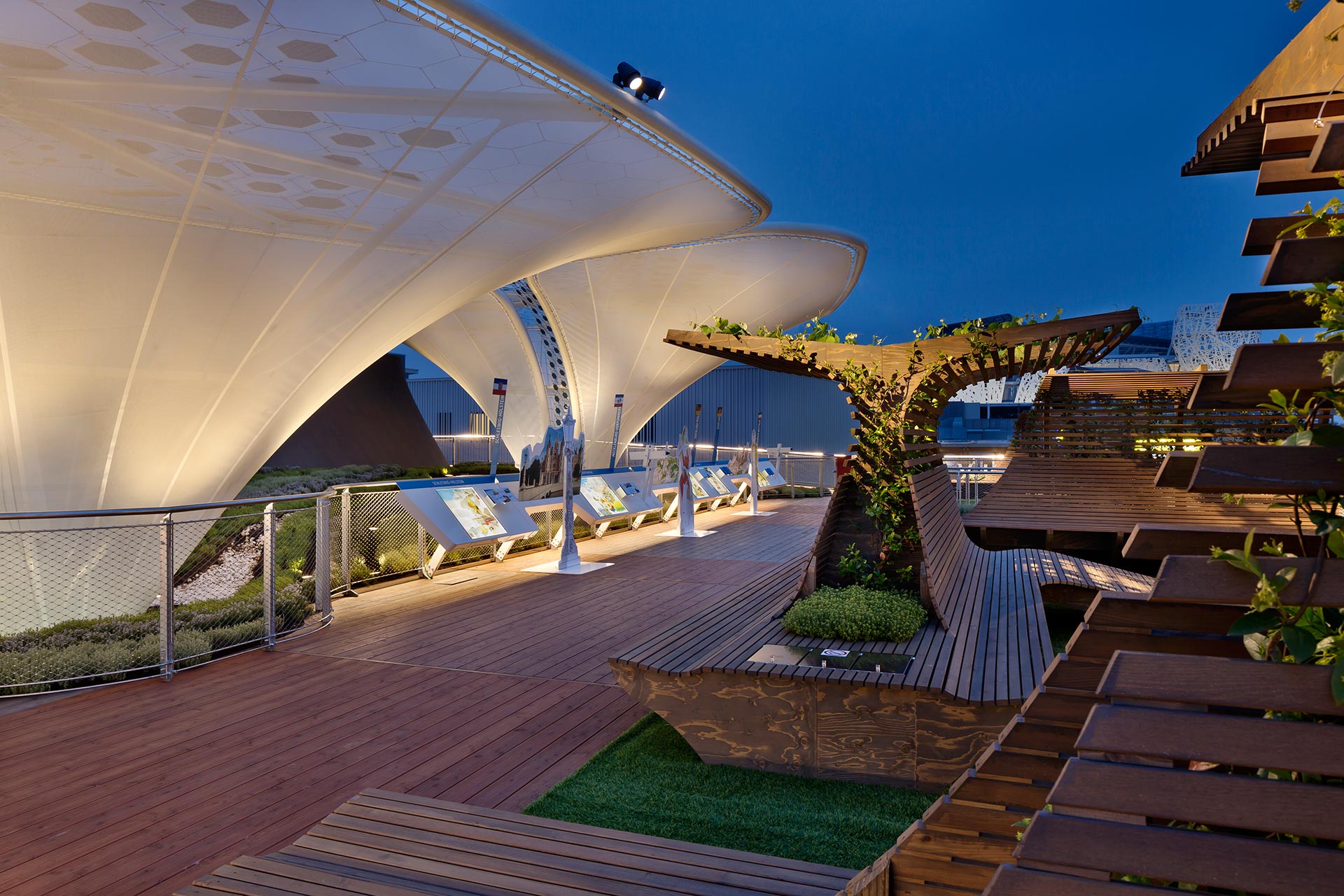
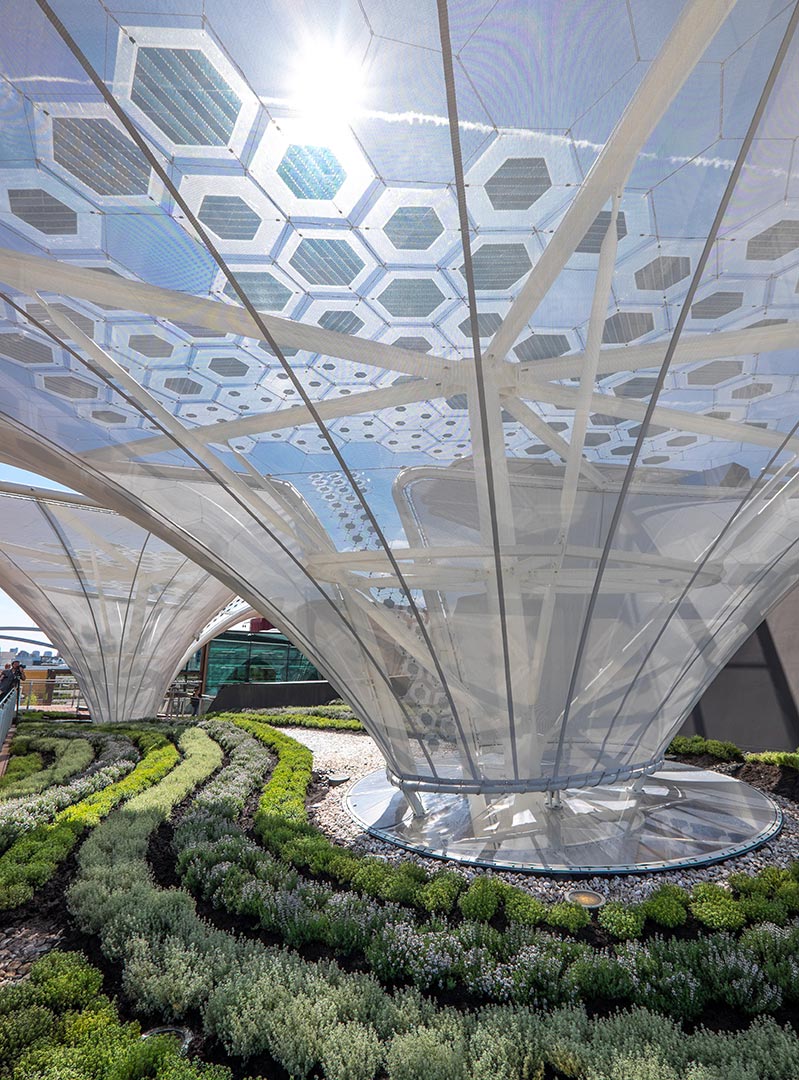
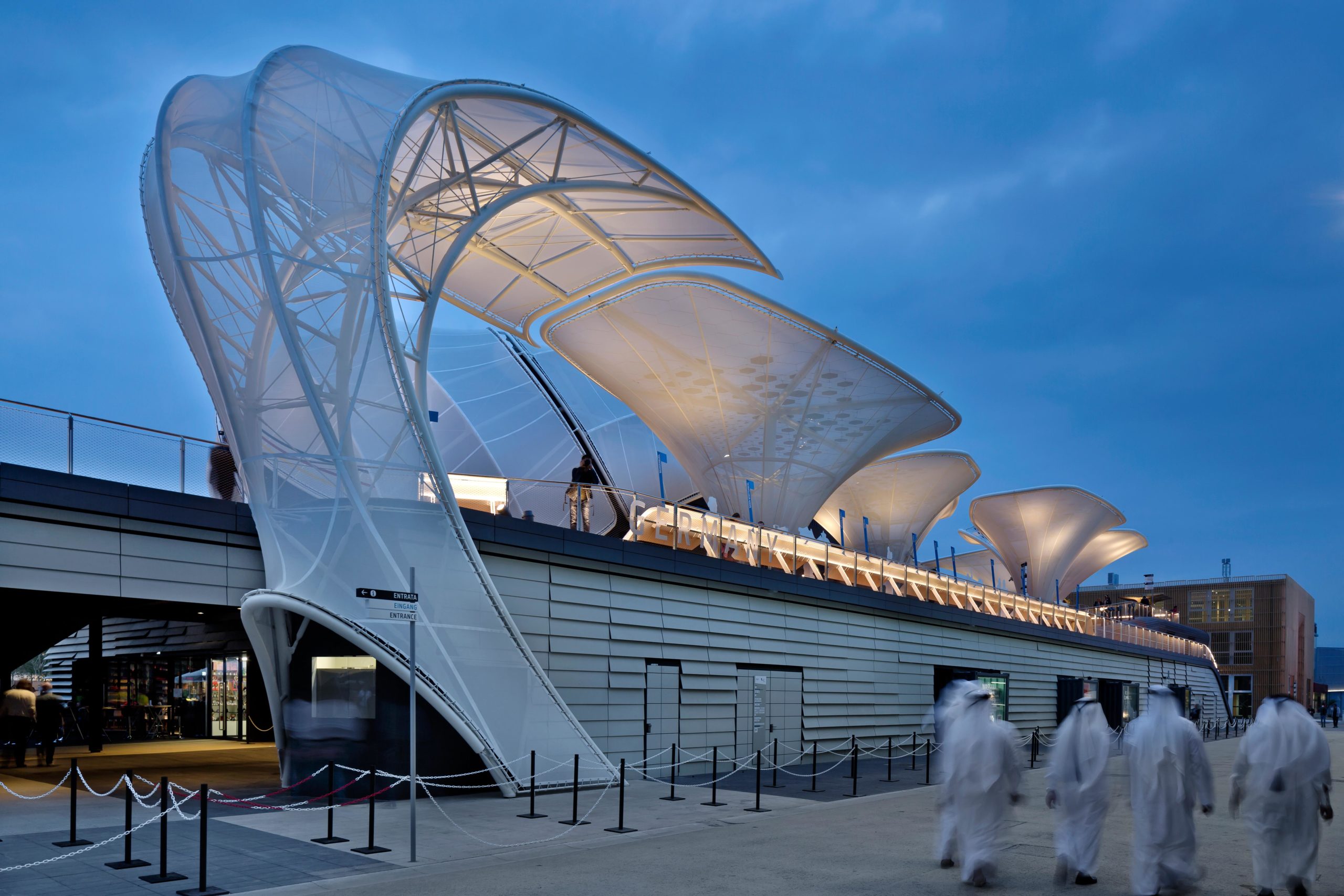
In this landscape, with clearly discernible fields, stylised plants grow as “idea seedlings” up from the exhibition to the exterior surface, creating a large, protective canopy. These are the connecting elements, dovetailing the exterior and interior, the architecture and the exhibition itself. The unusual, organic flowing lines express pioneering innovations inspired by nature.
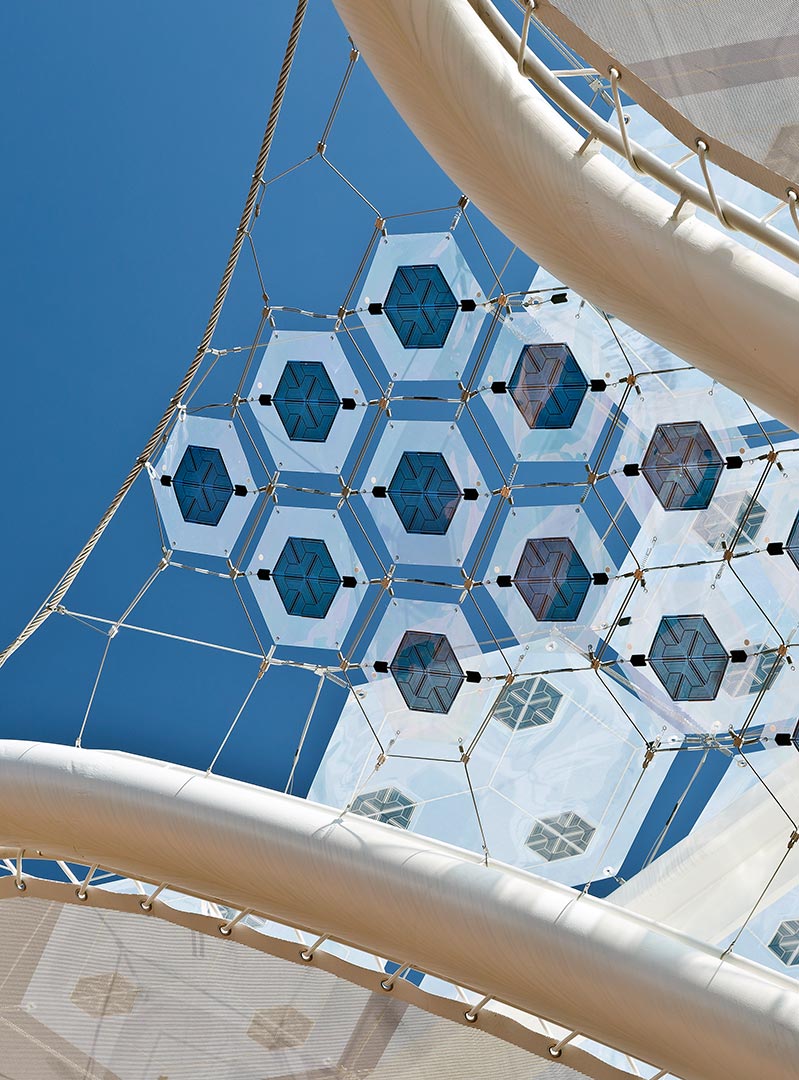
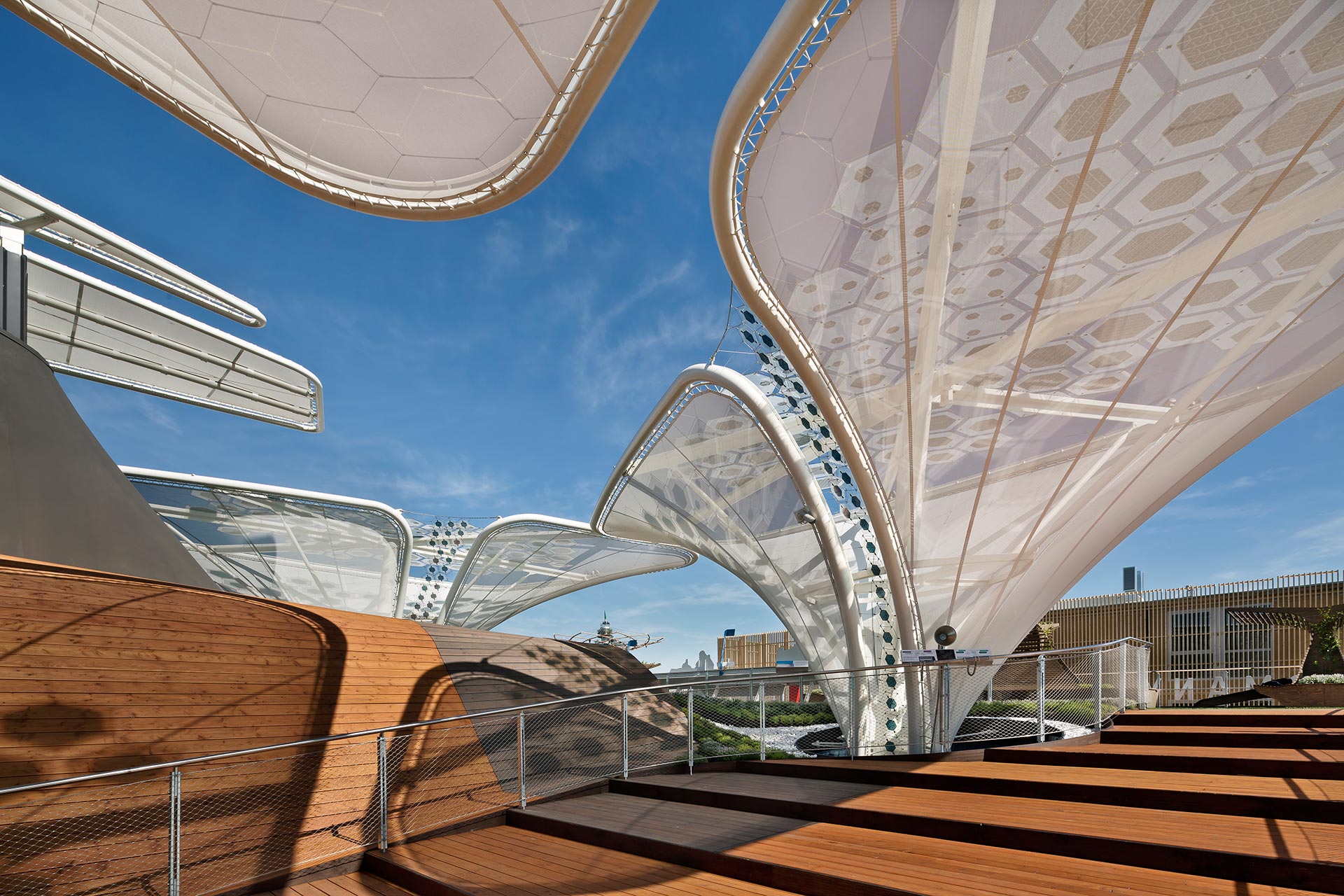
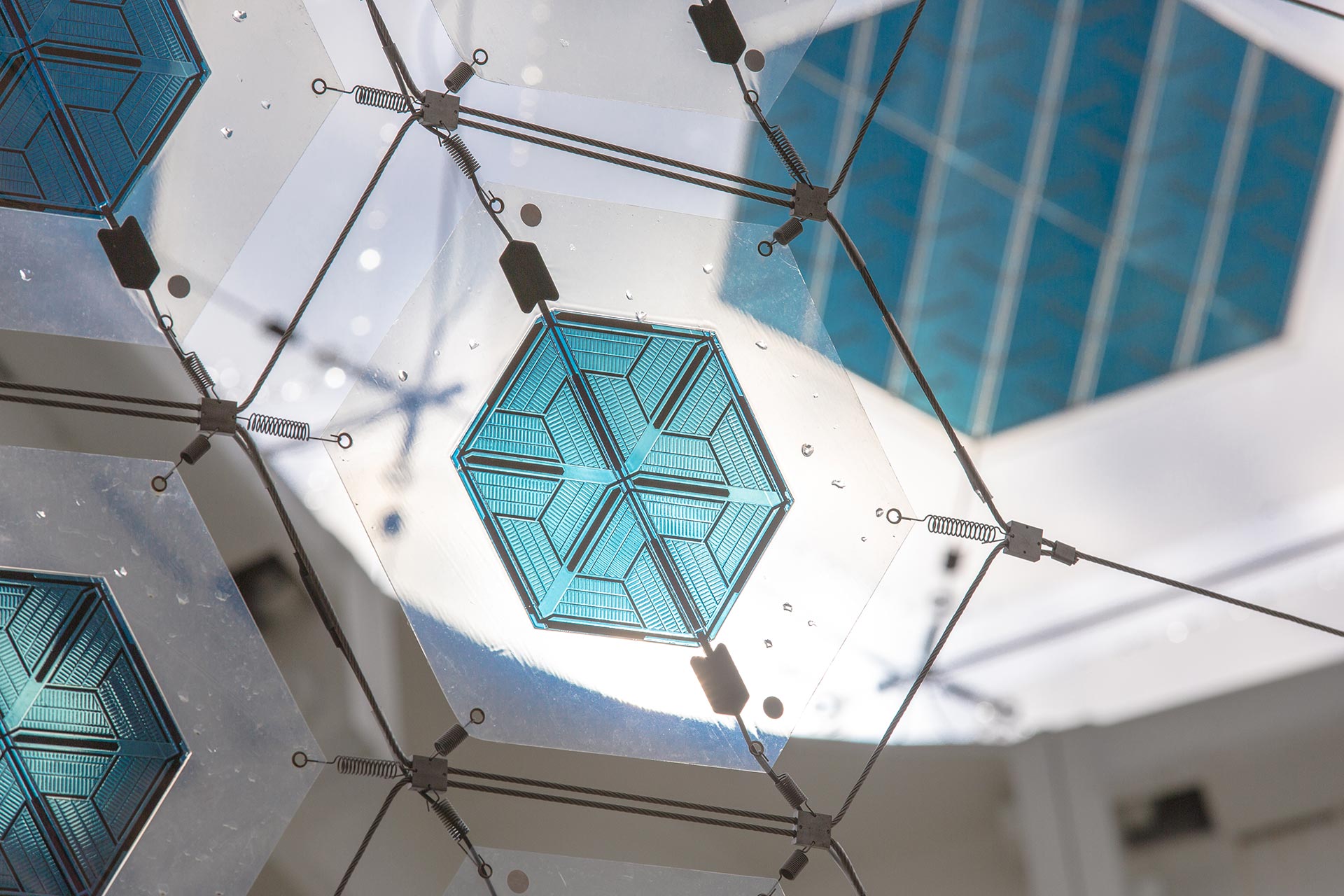
Thanks to integration of the pioneering organic photovoltaic technology (OPV), the energy-producing “solar trees” were created from the “idea seedlings”.
The German Pavilion is the first large international architecture project, in which the innovative products are used. Unlike conventional solar modules, the German Pavilion architectures had the possibility to use not only an existing technology here, but to design the flexible, leaf-integrated OPV modules to their optical appearance based on their own ideas, and to integrate them into the whole design of the pavilion.
“With this innovative technology, we developed a flexible system that offered almost unlimited design and application potential. Whether on buildings or in public spaces, next to railway stations, or squares—even mobile objects such as trucks could be fitted out.”
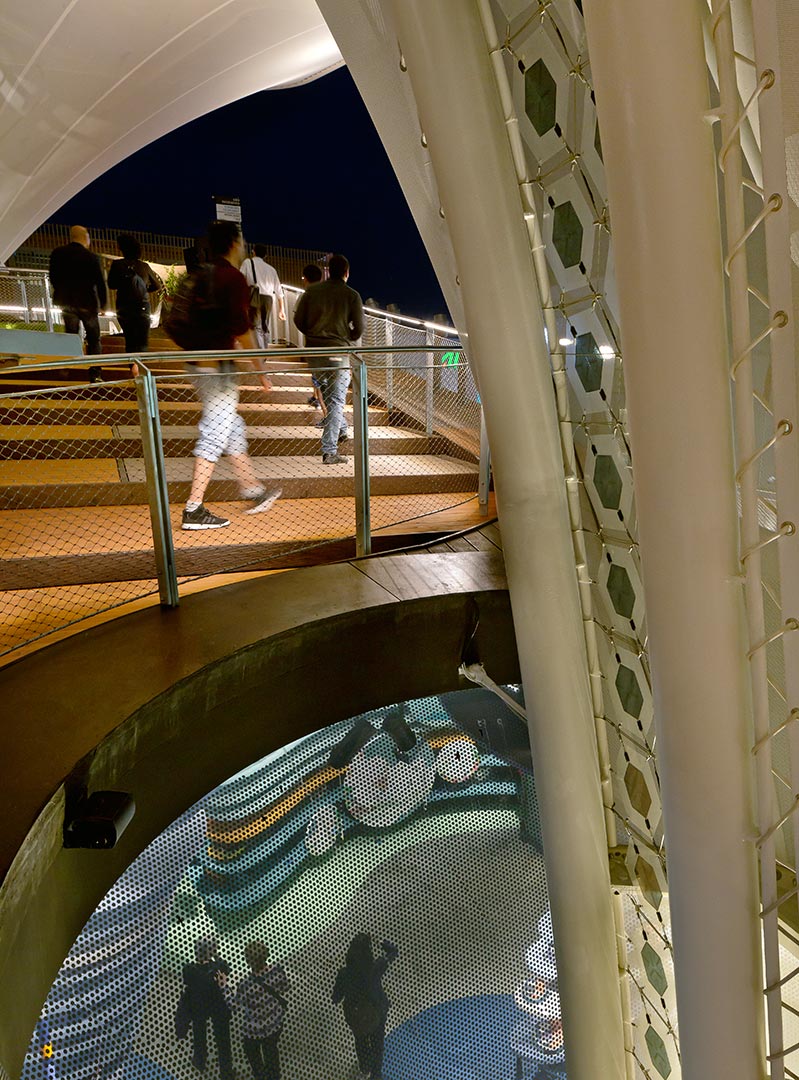
On the landscape level, the visitor embarks on a pleasurable and stimulating journey marked by exciting perspectives onto the textile leaf canopy – an intriguing interplay of light and shade, of relaxation and discovery. This is where visitors are offered the first “teasers” – from above down through the planting “holes” right into the heart of the exhibition.
The highest point of the open visitor route offers an impressive panoramic view of the pavilion, the vibrant visitor activities taking place below, and the sweeping EXPO grounds all the way down to the EXPO lake.
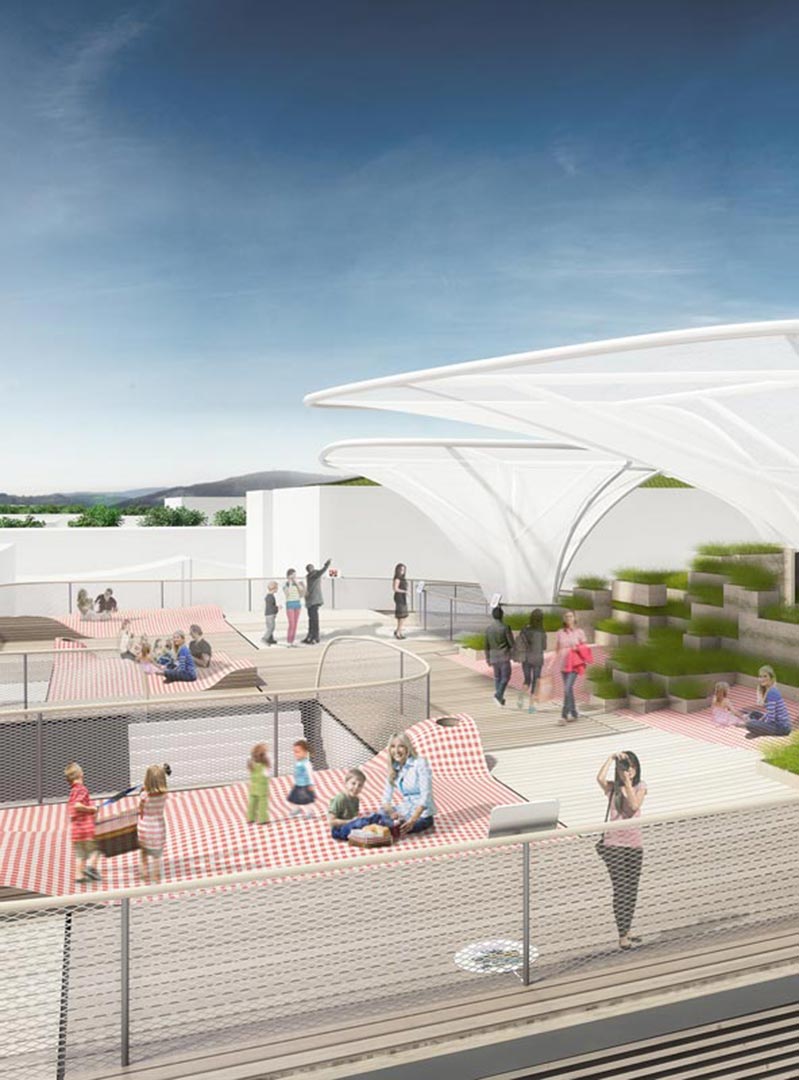
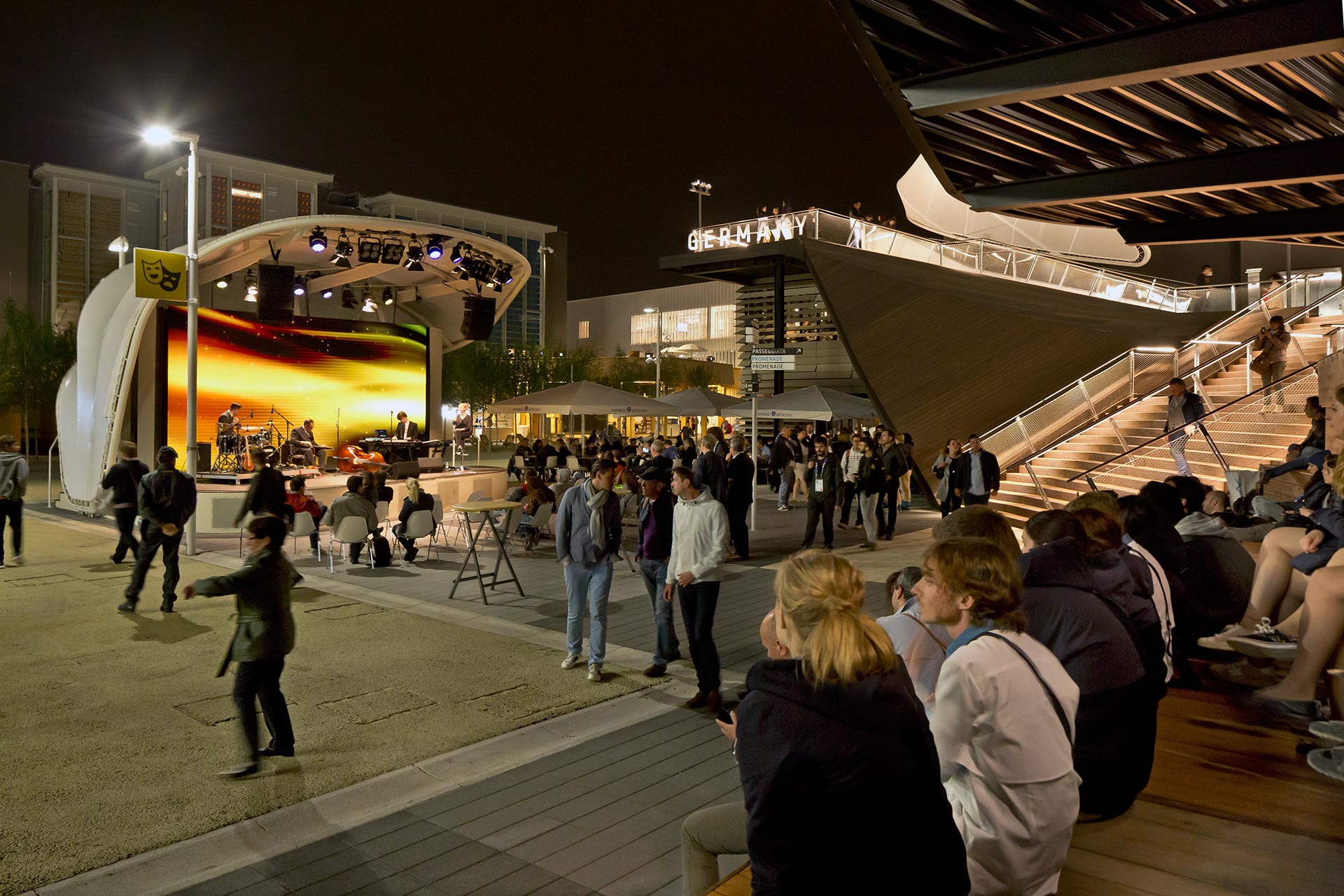
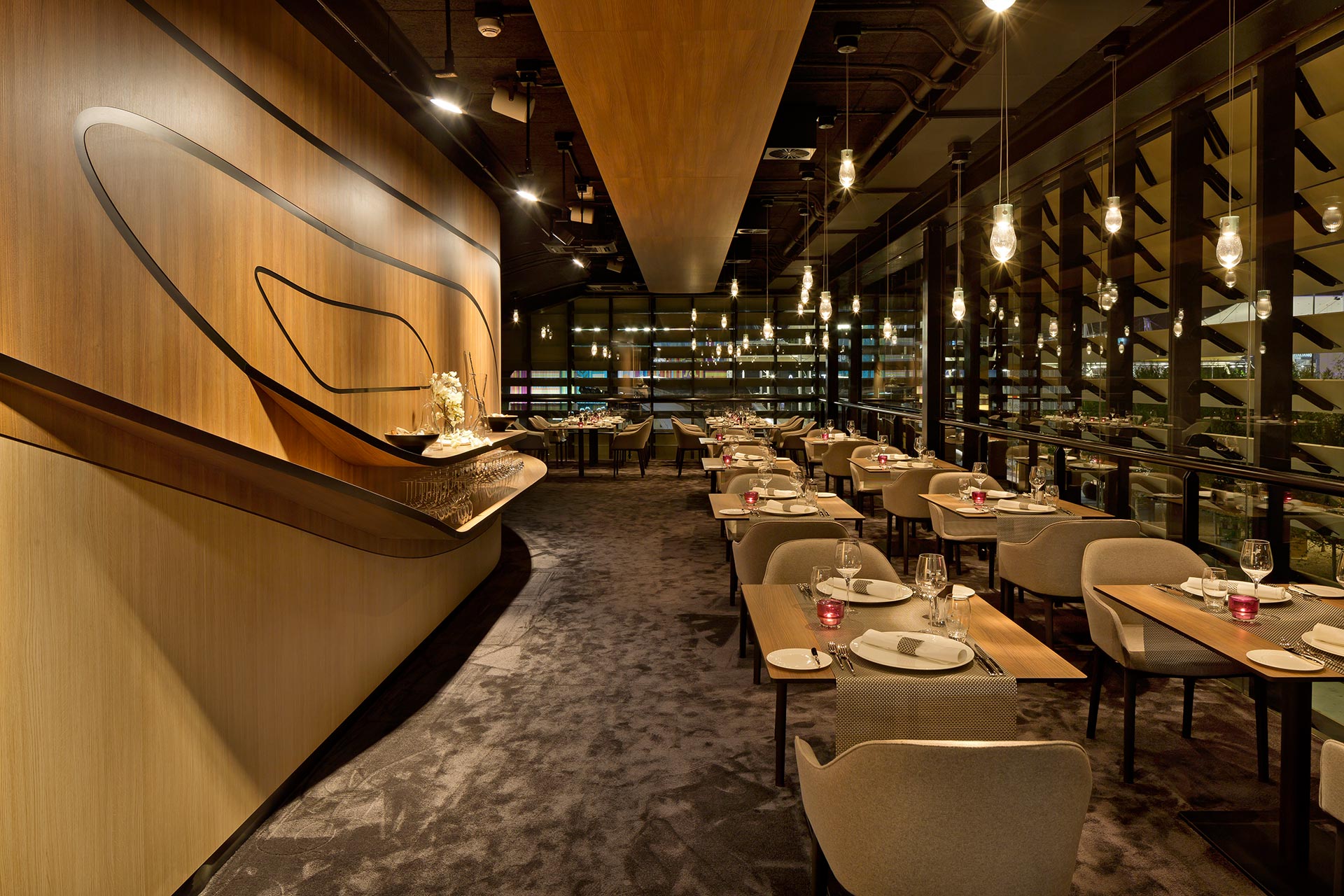
The German restaurant for 350 guests with a freely accessible outdoor seating area is located in the southwest corner of the German pavilion. From the restaurant, visitors have an unobstructed view of the event stage and the outdoor cultural program. Adjacently, a sweeping landscape tribune invites guests to take a seat. This area, the “German Piazza”, is the central and very lively spot where people can meet and interact.
Projekte, Inhalte und Themen, die sie auch interessieren könnten:
Ningbo | Exhibition Center
BMWI | Expo Shanghai
Greentech | Solar Trees
P&G | Brand Pavilion
Ruf uns an:
+49 89 157997-0
Oder schreib uns:
info@schmidhuber.de
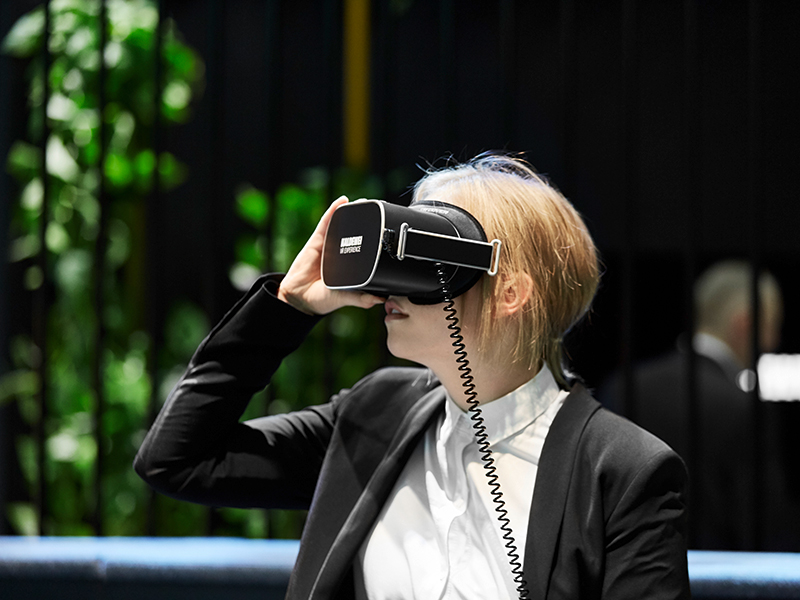
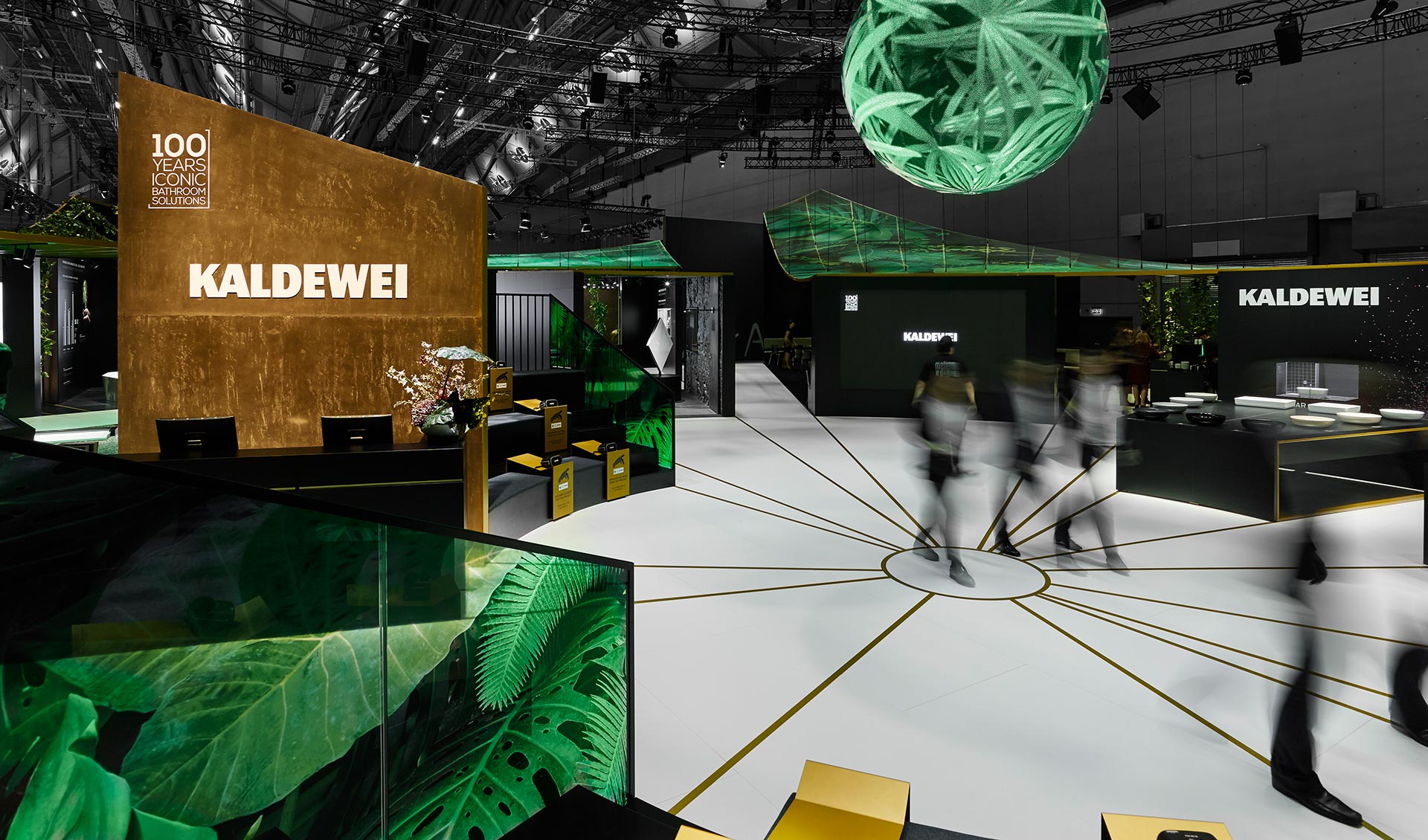
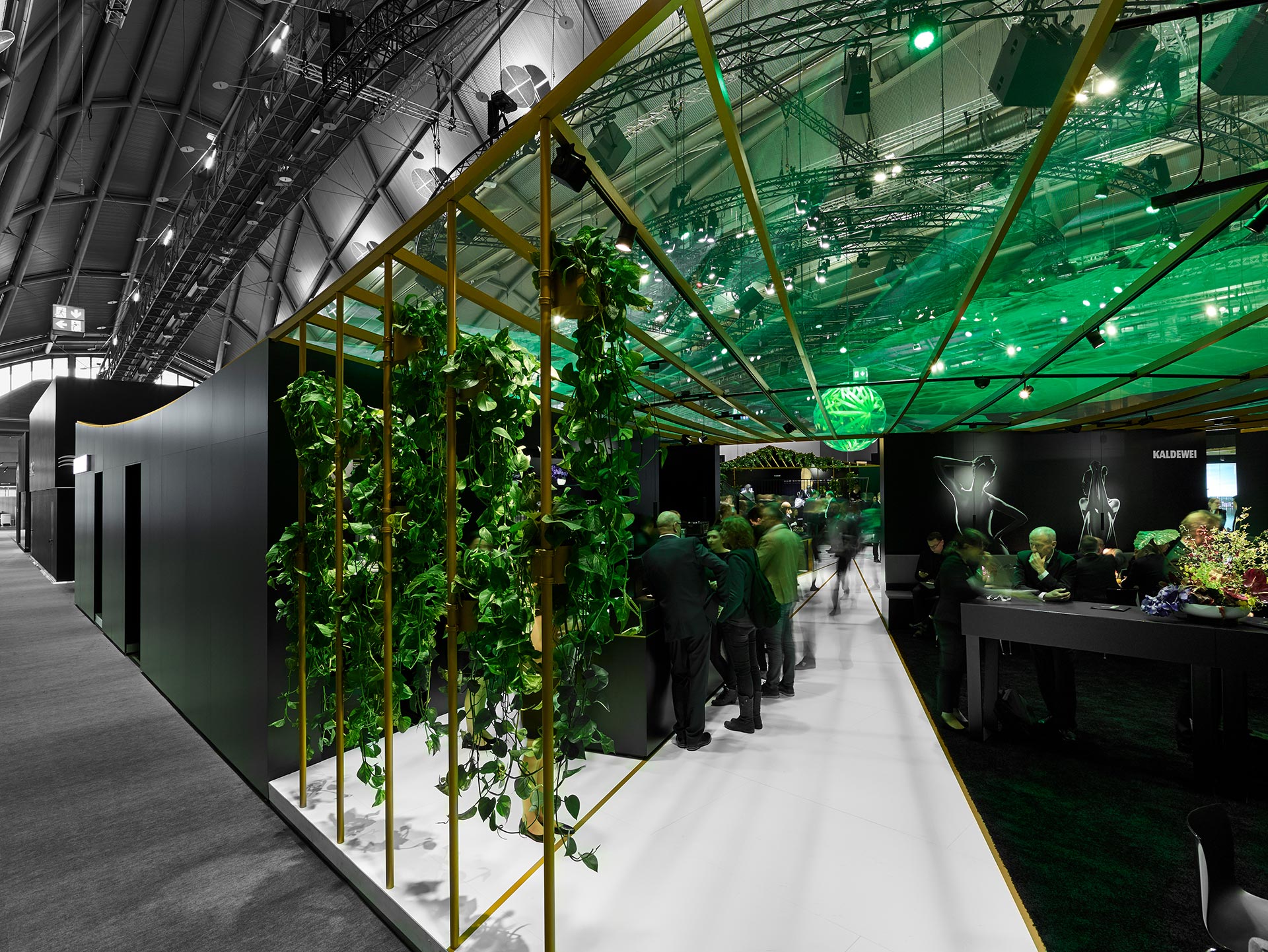
Visitors immerse themselves in the world of Kaldewei.
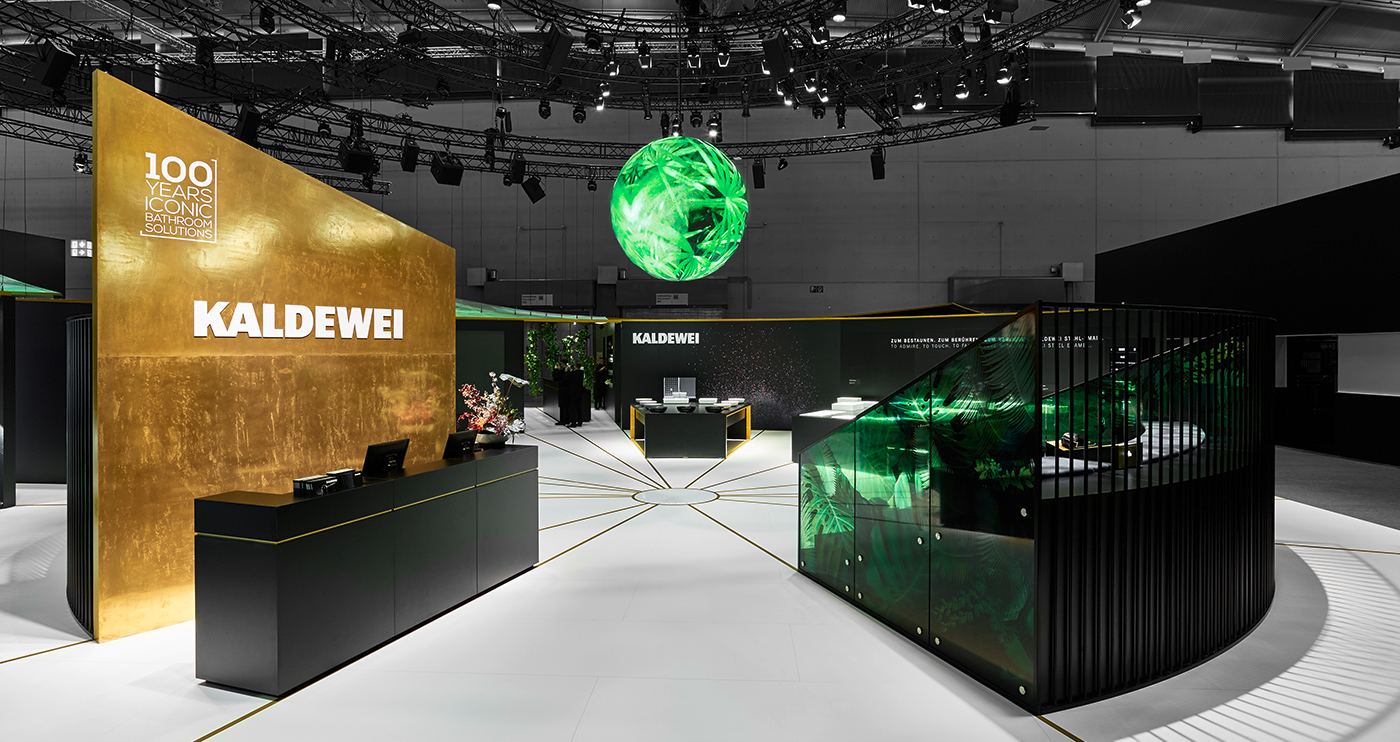
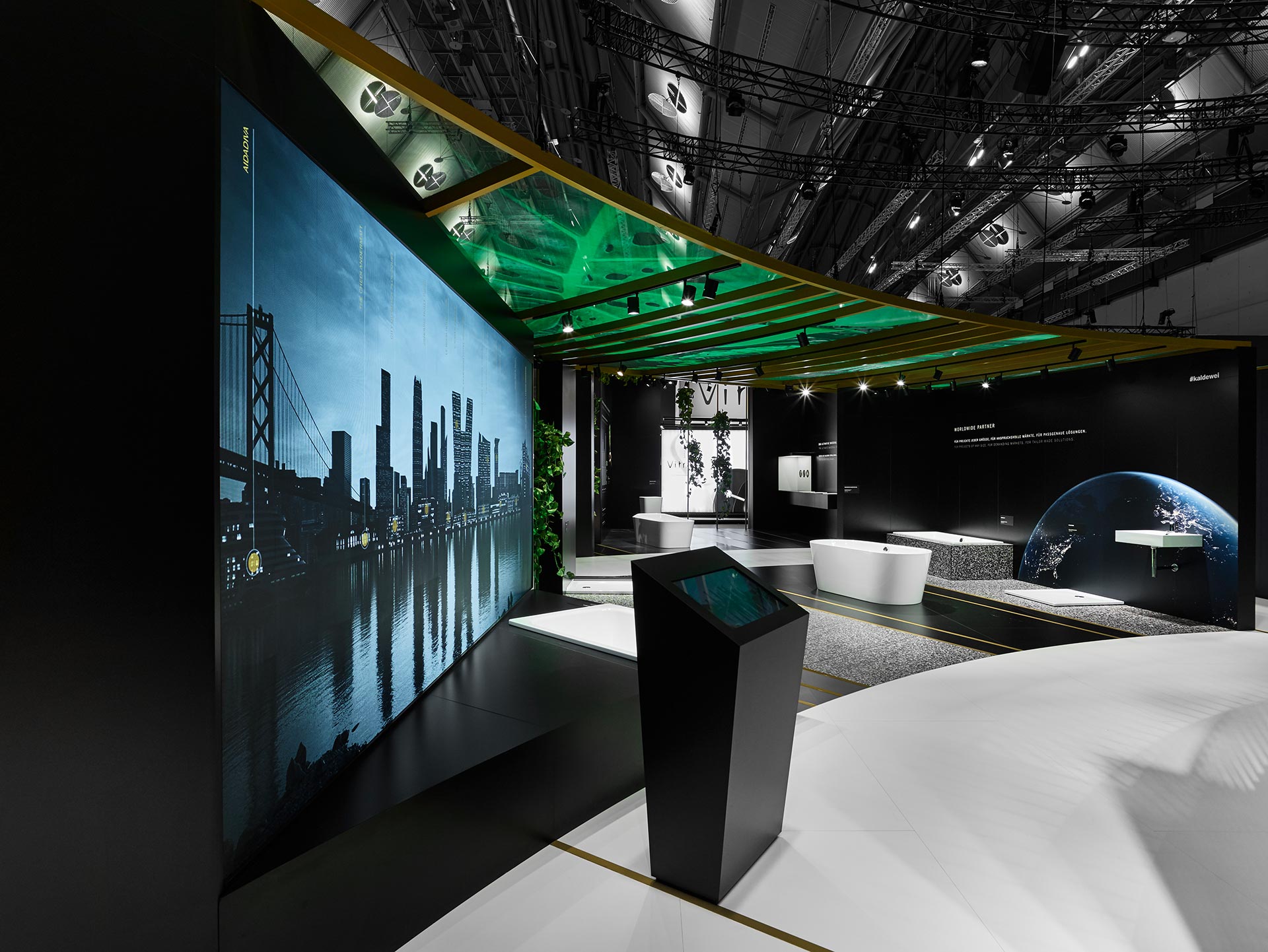
A sophisticated blend of sensual materials and formal perfection made this year’s stand unique. 750 m² full of competence in the field of design, digitality and materiality, which were perfectly staged by SCHMIDHUBER with the further developed stand concept.
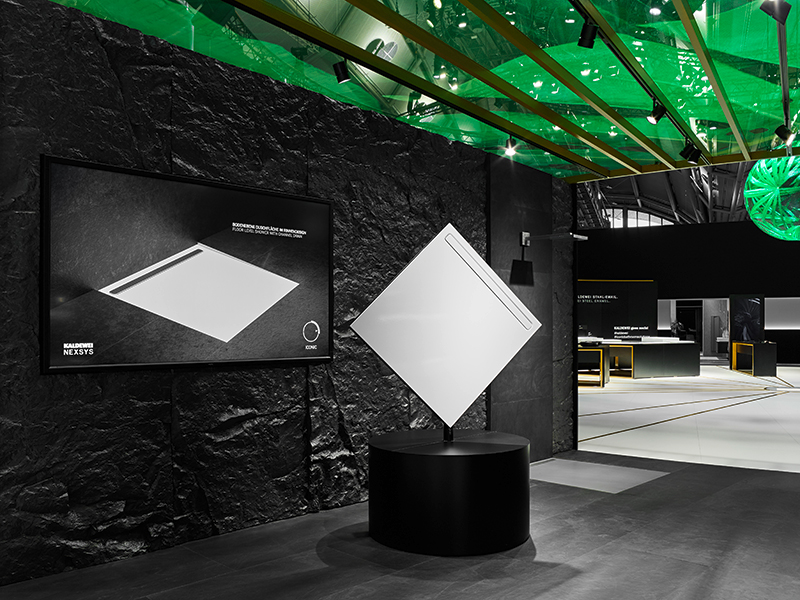
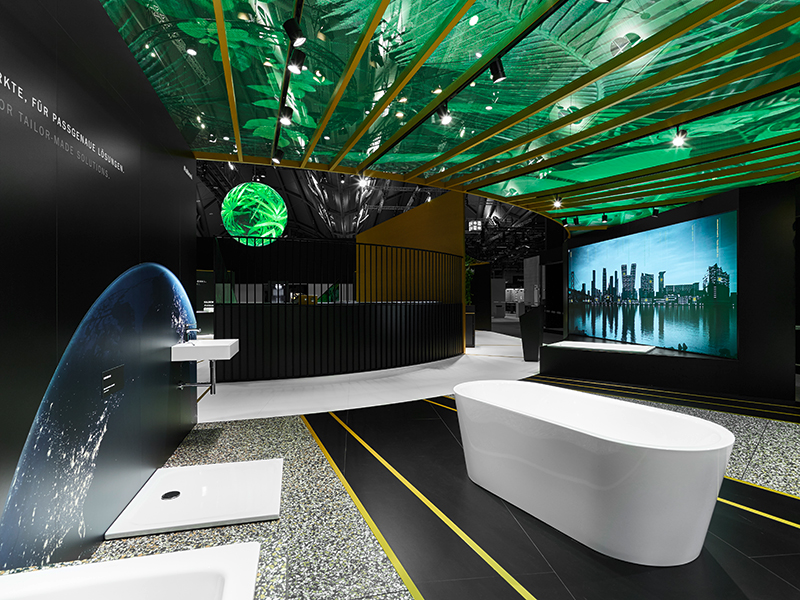
The bathroom of the future will be almost totally personalized. Exactly this vision was brought to life at the trade fair—with the help of augmented reality. SCHMIDHUBER even developed an app that would enable visitors to view inside products which might otherwise be concealed. They could also use it to play through and visualize various design and color options.
In the forum of the stand, the Digital Sphere and the LEDs behind it display all the brand’s relevant topics.
Guests can enter virtual reality and immerse themselves in Kaldewei’s product and service worlds.
The media show is underscored by an emotional sound concept which ties together the entire stand
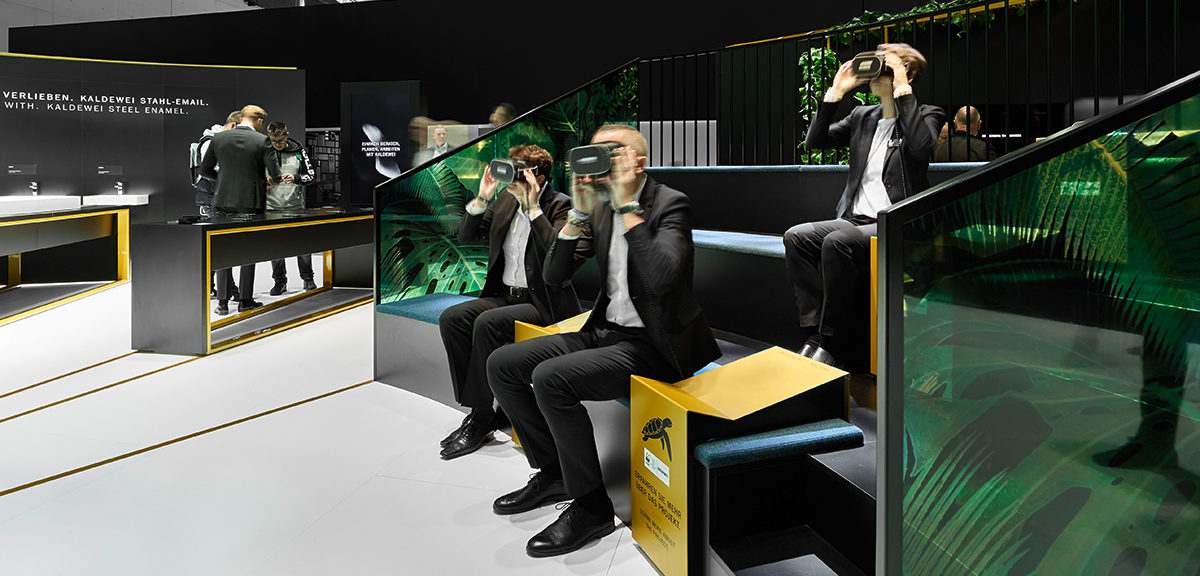
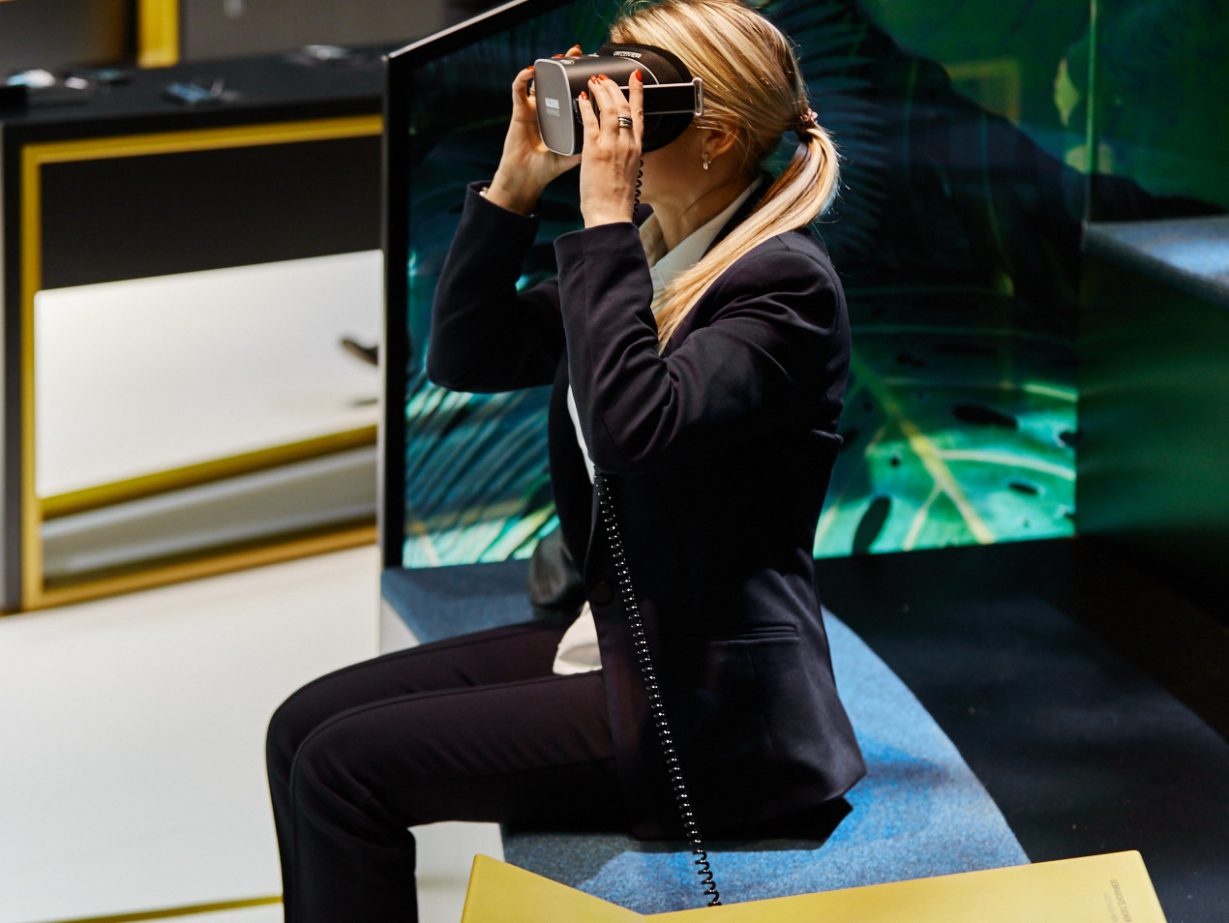
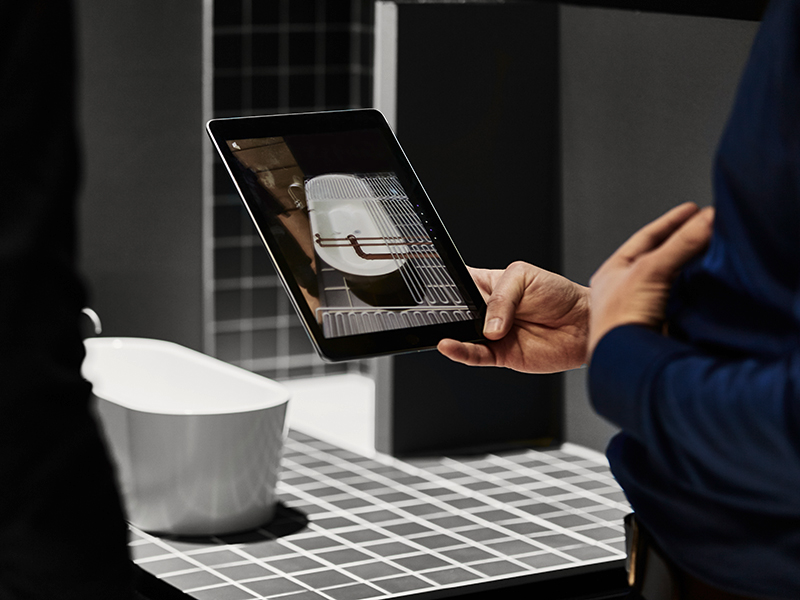
With five theme worlds, a new app and a multisensory experience, Kaldewei is making a bigger splash than ever as the industry’s driving force.
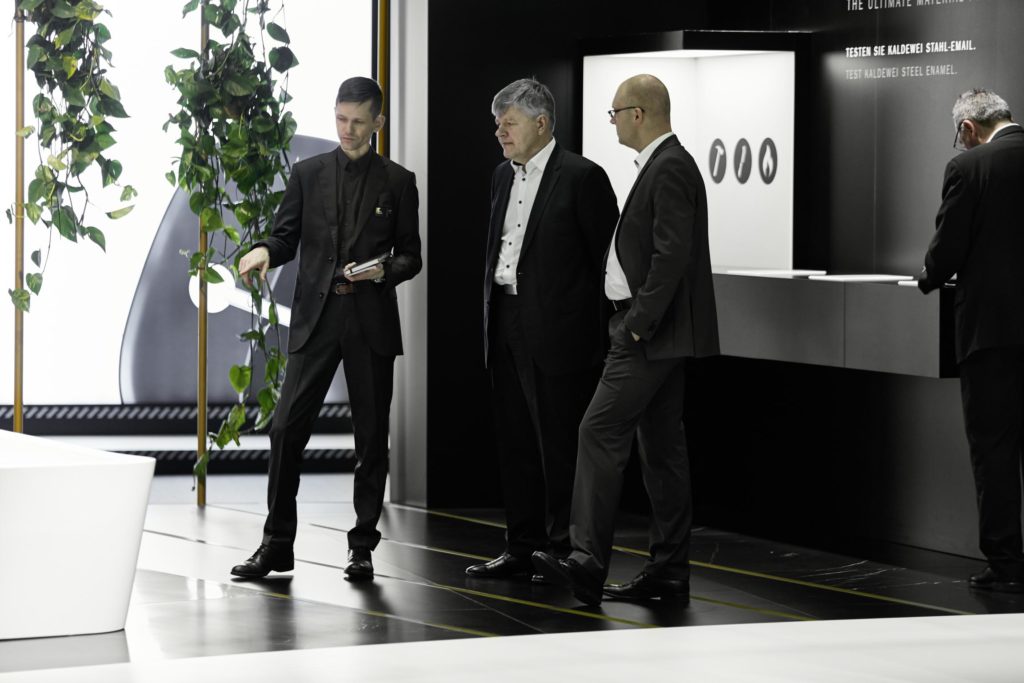
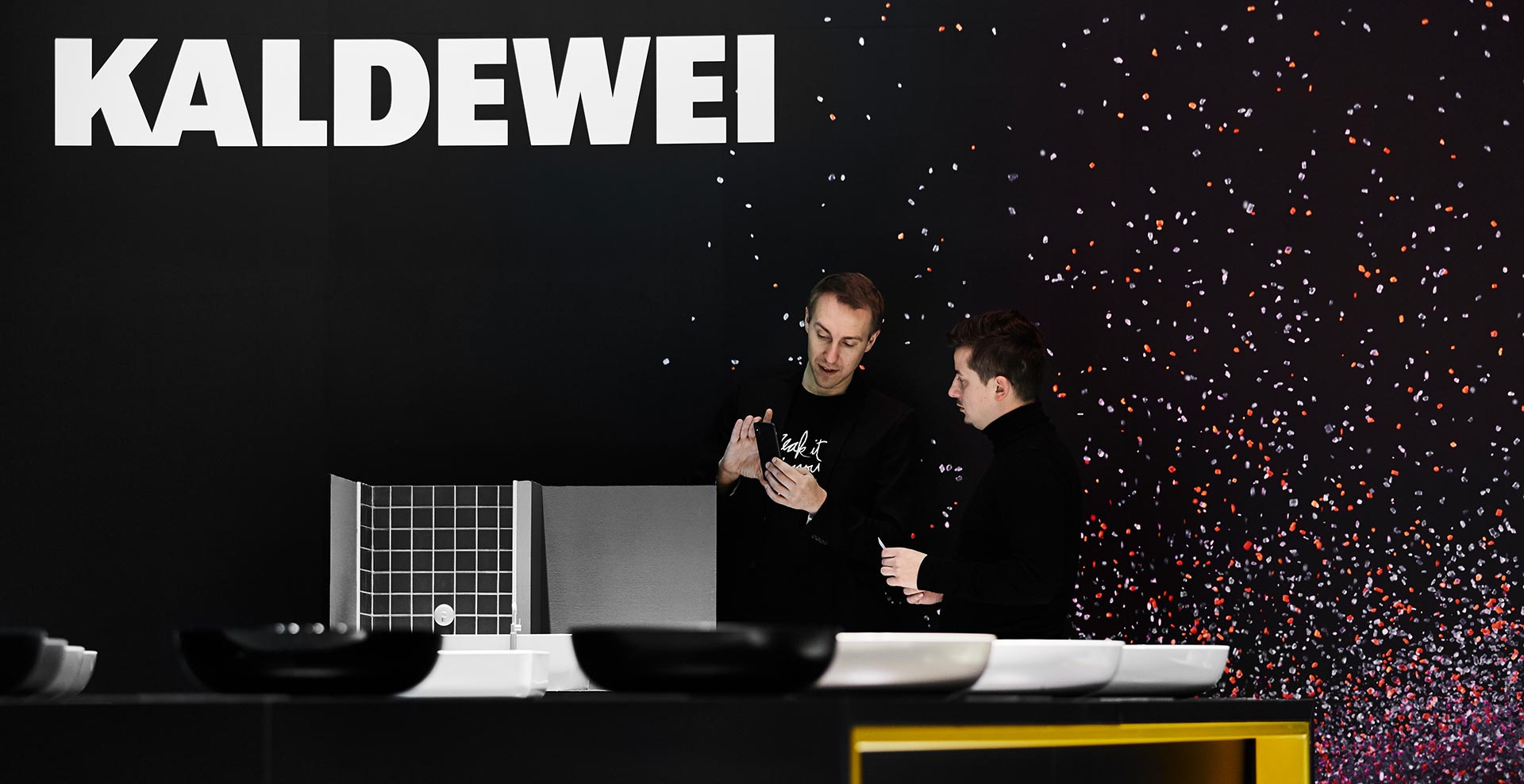
Kaldewei was also able to impressively demonstrate its position as an industry innovator at the ISH.
Projekte, Inhalte und Themen, die sie auch interessieren könnten:
BSH | Swissbau
Siemens | IFA
Grohe | ISH
Ruf uns an:
+49 89 157997-0
Oder schreib uns:
info@schmidhuber.de
Future is an attitude!
At the world’s first Audi brand store in Tokyo, customers can experience the latest developments from Audi and fully immerse themselves in the brand with the four rings: Changing events, workshops, test drives and an exhibition with the latest news in the field of electric mobility demonstrate Audi’s approach to brand values and sustainability.
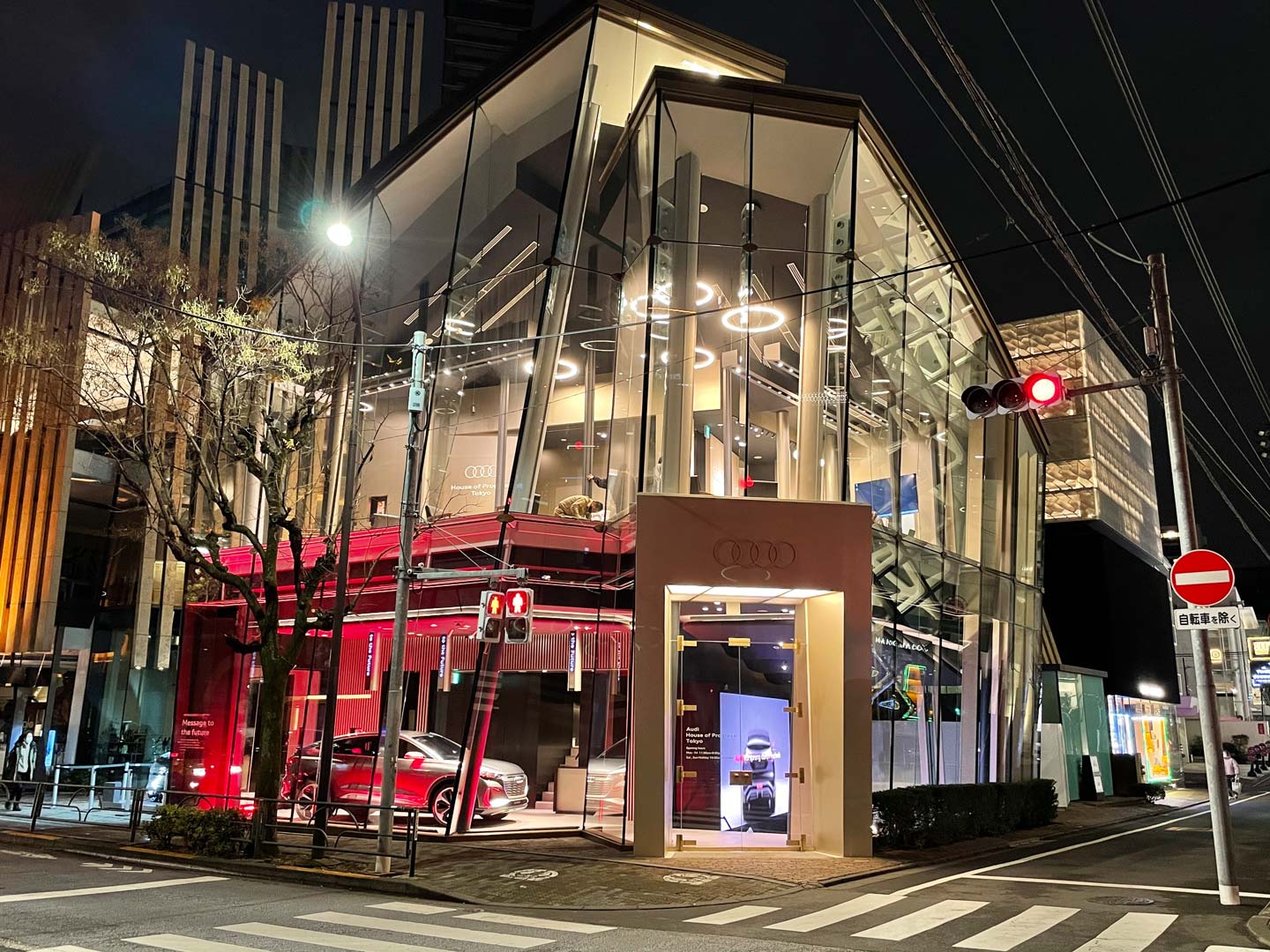
In Tokyo, we created the first House of Progress for Audi. The temporary showroom promotes the progressive image of the brand in all its facets. Now it’s time for roll-out.
Our task was to realize a pop-up branding space with an integrated driving experience station in the heart of Tokyo. The Audi House of Progress was intended to promote the progressive image of the brand and to highlight the focus themes Sustainability! Design! Digitalization! were to be pushed. What a job!
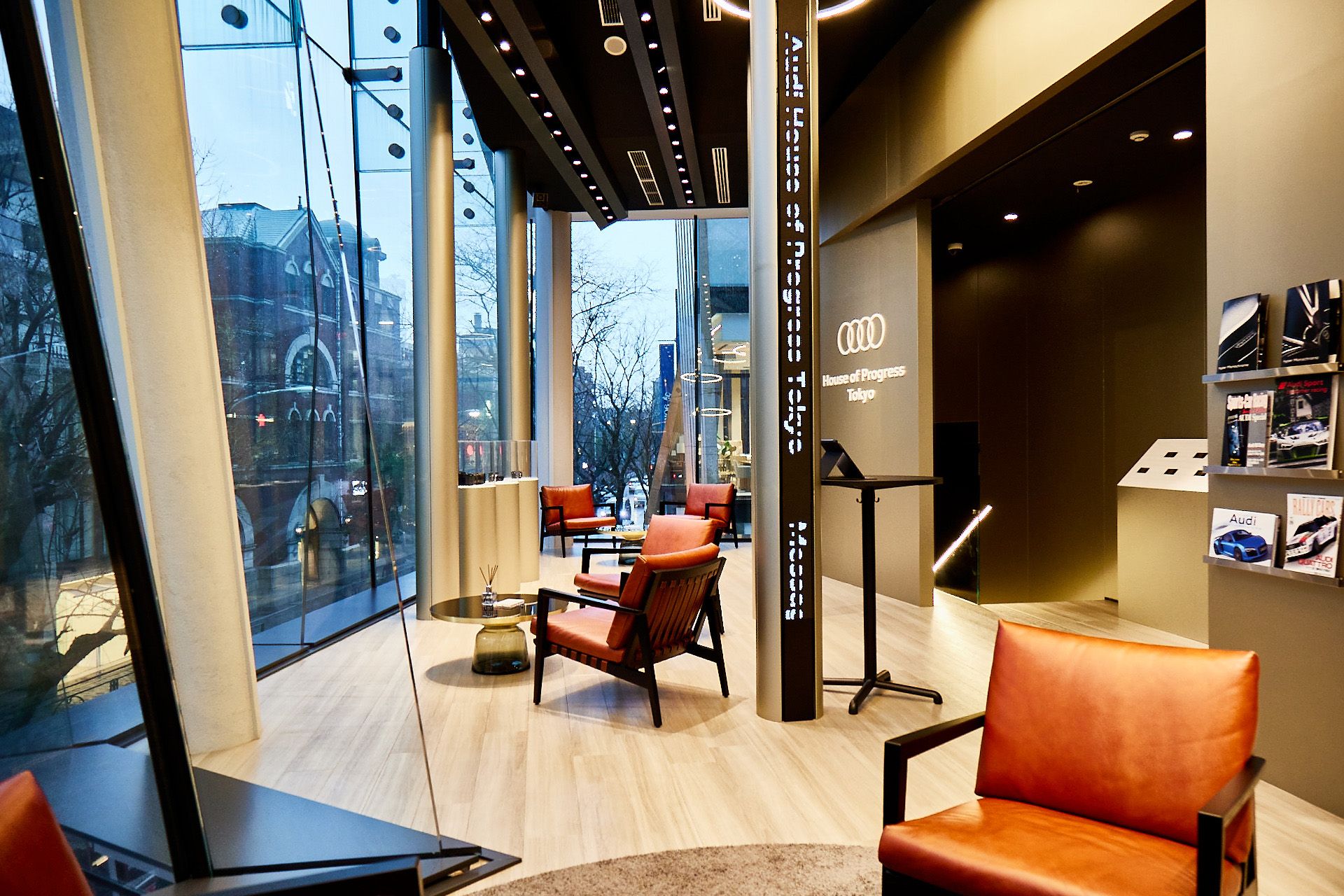
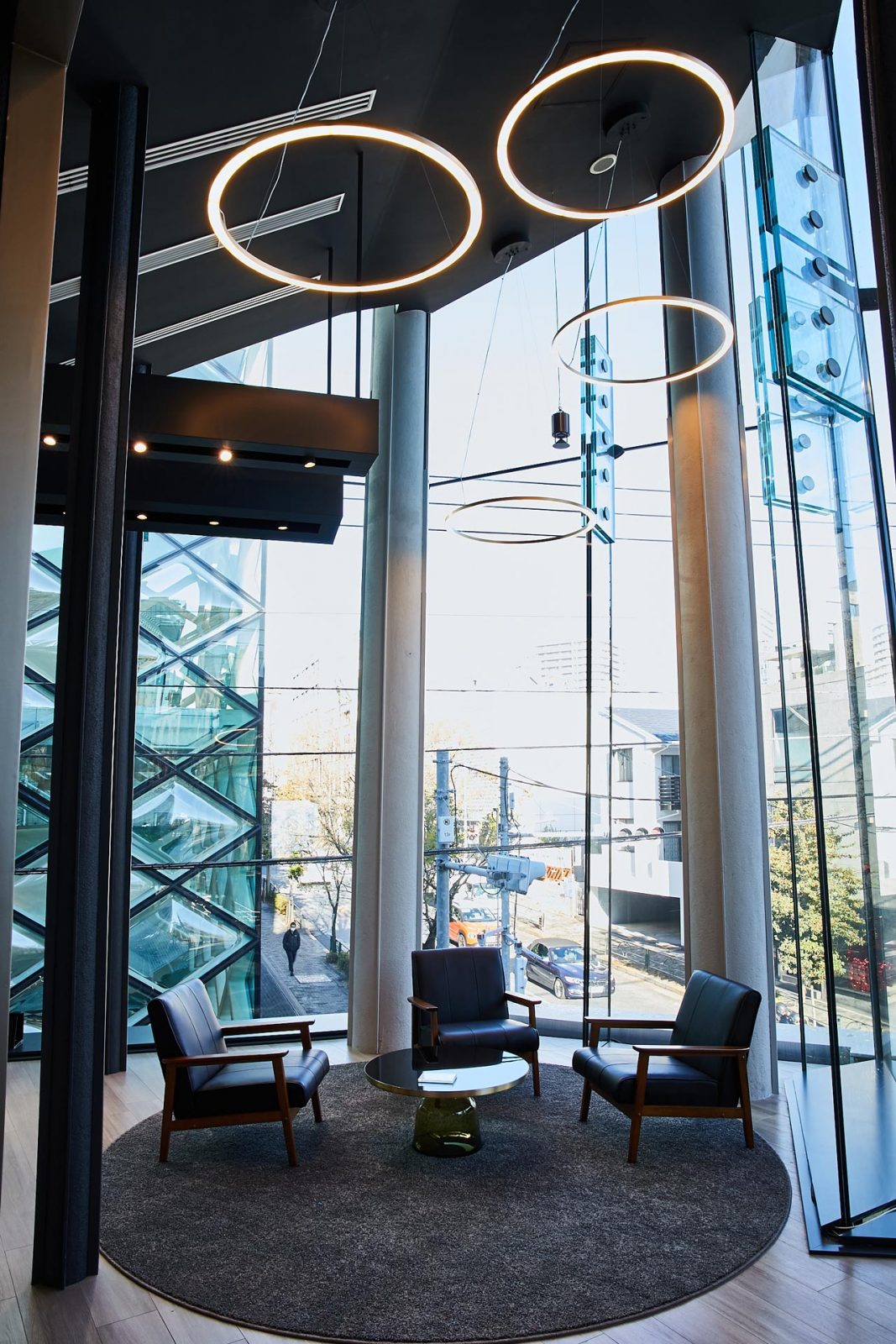
The open design lounge on the upper floor offers the opportunity for communication with visitors and contains the Sustainanbility competence area.
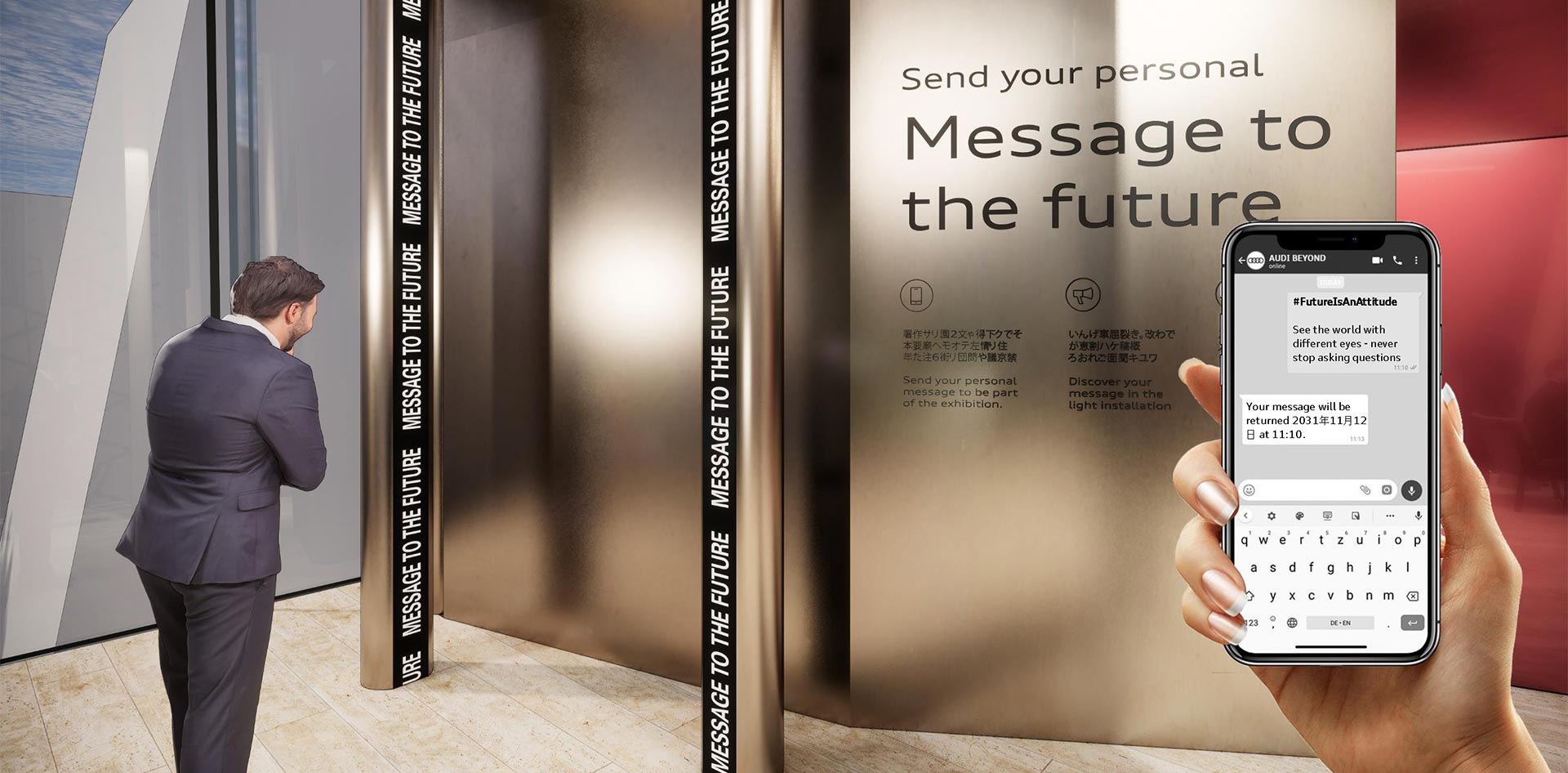
The motto “Message to the future” means that visitors can send personal text messages to the digital light bands and thus become part of the Audi brand story.
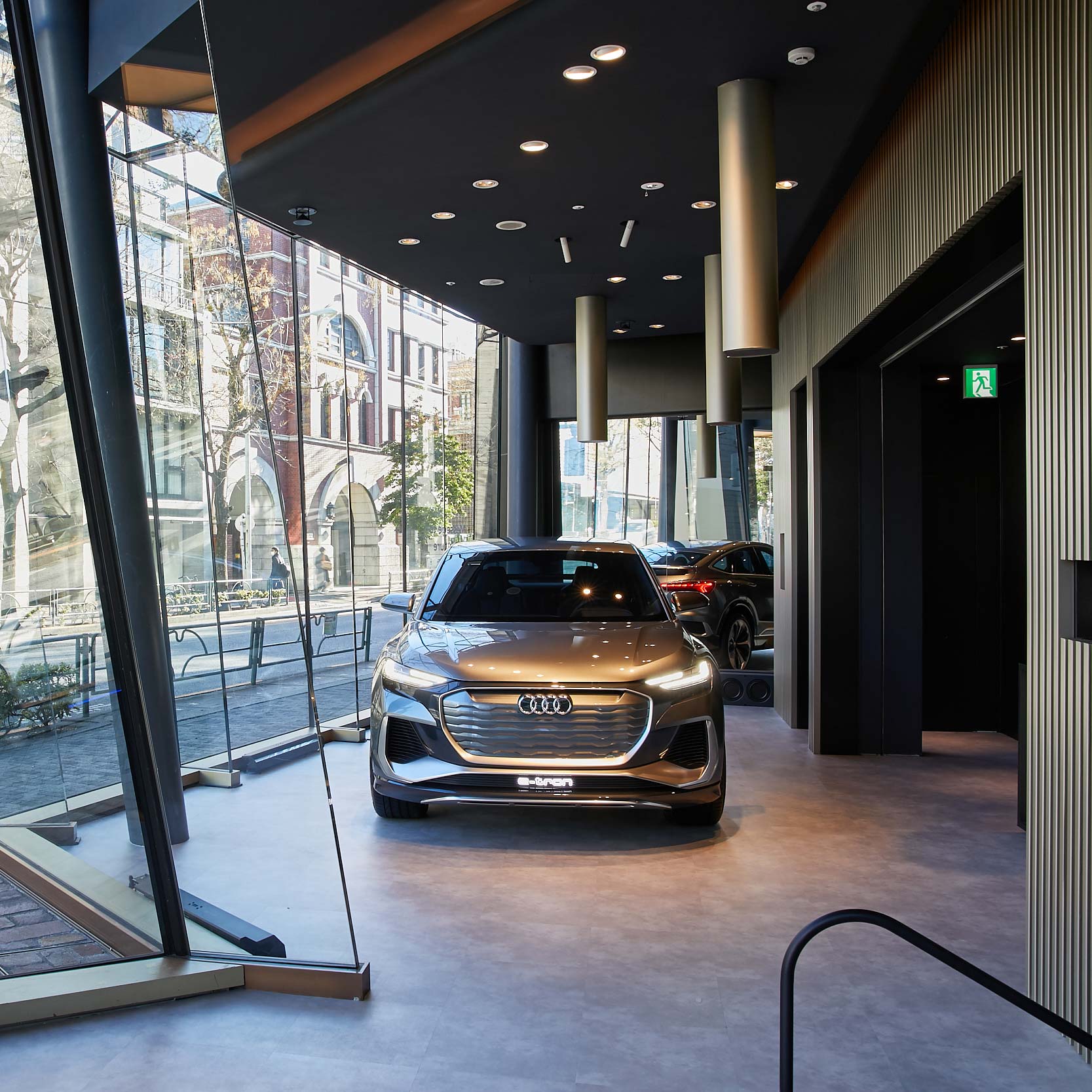
The Teaser Wall shows visitors the way to the Beyond Gallery in the basement. Under the slogan “Future is an attitude,” Audi’s expertise in design, technology and sustainability can be experienced here in various showcases.
Projekte, Inhalte und Themen, die sie auch interessieren könnten:
Siemens | Experience Center
BSH Hausgeräte
Audi | IAA
Ruf uns an:
+49 89 157997-0
Oder schreib uns:
info@schmidhuber.de
You are currently viewing a placeholder content from Vimeo. To access the actual content, click the button below. Please note that doing so will share data with third-party providers.
More InformationYou are currently viewing a placeholder content from YouTube. To access the actual content, click the button below. Please note that doing so will share data with third-party providers.
More InformationYou need to load content from reCAPTCHA to submit the form. Please note that doing so will share data with third-party providers.
More InformationYou are currently viewing a placeholder content from Vimeo. To access the actual content, click the button below. Please note that doing so will share data with third-party providers.
More InformationYou are currently viewing a placeholder content from YouTube. To access the actual content, click the button below. Please note that doing so will share data with third-party providers.
More InformationYou are currently viewing a placeholder content from Bunny Stream. To access the actual content, click the button below. Please note that doing so will share data with third-party providers.
More InformationYou are currently viewing a placeholder content from Wistia. To access the actual content, click the button below. Please note that doing so will share data with third-party providers.
More InformationYou are currently viewing a placeholder content from Facebook. To access the actual content, click the button below. Please note that doing so will share data with third-party providers.
More InformationYou are currently viewing a placeholder content from Instagram. To access the actual content, click the button below. Please note that doing so will share data with third-party providers.
More InformationYou are currently viewing a placeholder content from Google Maps. To access the actual content, click the button below. Please note that doing so will share data with third-party providers.
More InformationYou need to load content from hCaptcha to submit the form. Please note that doing so will share data with third-party providers.
More InformationYou need to load content from reCAPTCHA to submit the form. Please note that doing so will share data with third-party providers.
More InformationYou are currently viewing a placeholder content from Turnstile. To access the actual content, click the button below. Please note that doing so will share data with third-party providers.
More InformationYou are currently viewing a placeholder content from X. To access the actual content, click the button below. Please note that doing so will share data with third-party providers.
More Information